Author: Wanling Zhu

  • Two in a row! Stork helped Xu’s team publish papers


     Info

    "The authors extend their gratitude to Stork's Writing Assistant (https://www.storkapp.me/writeassistant) for its assistance in polishing some of the text in this article"

    Yuehua Xu Associate Professor
      

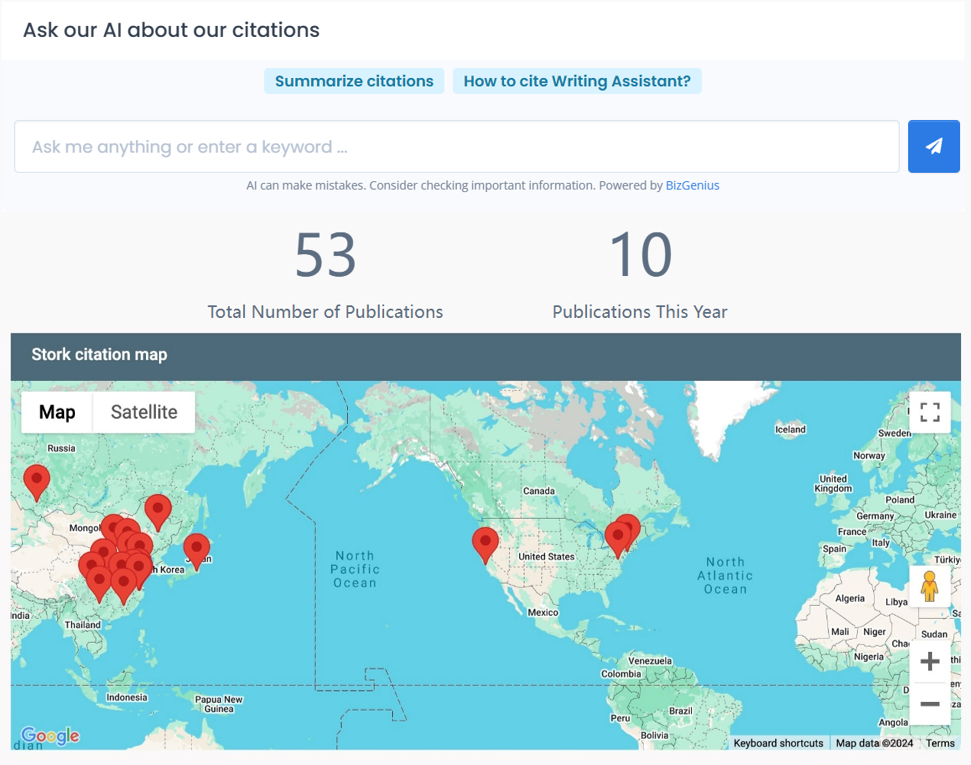
    Recently, Yuehua Xu and her team from School of Microelectronics and Control Engineering at Changzhou University in China published two articles citing Writing Assistant of Stork. Details of the articles are as follows:


    Title: Electronic transport and interface properties of FeOCl-type monolayer SnNCl for flexible nanodevices

    Journal: Surfaces and Interfaces (IF =6.3)

    Doi: https://doi.org/10.1016/j.surfin.2025.106524


    Title: Ferroelastic phase transition-modulated electronic transport and photoelectric properties in monolayer 1T′ ZrCl2

    Journal: Physical Chemistry Chemical Physics (IF = 2.9)

    Doi: https://doi.org/10.1039/d4cp04315d


    These articles cited Stork in the Acknowledgments section:


    "The authors extend their gratitude to Stork's Writing Assistant (https://www.storkapp.me/writeassistant) for its assistance in polishing some of the text in this article."


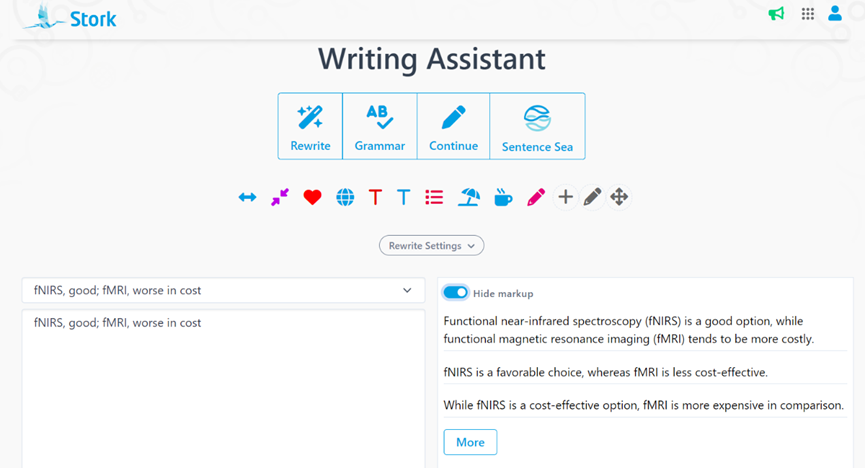
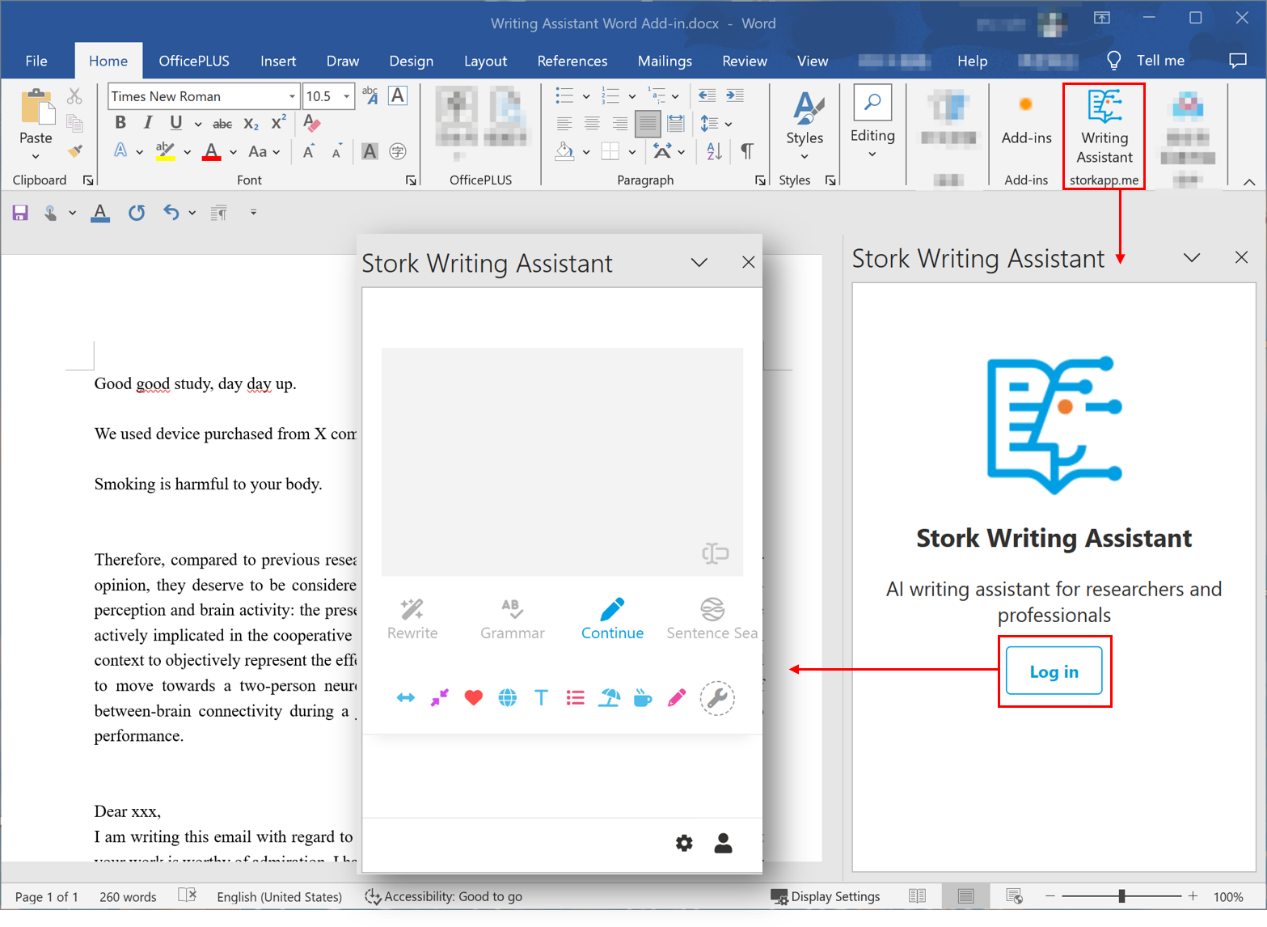
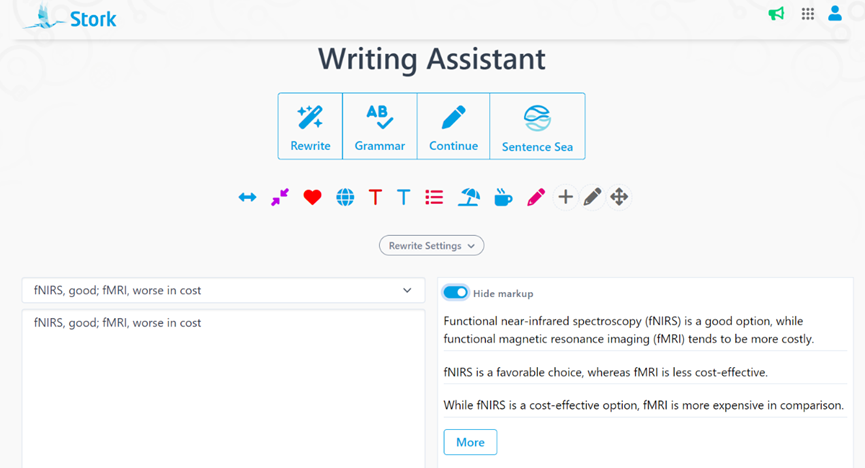
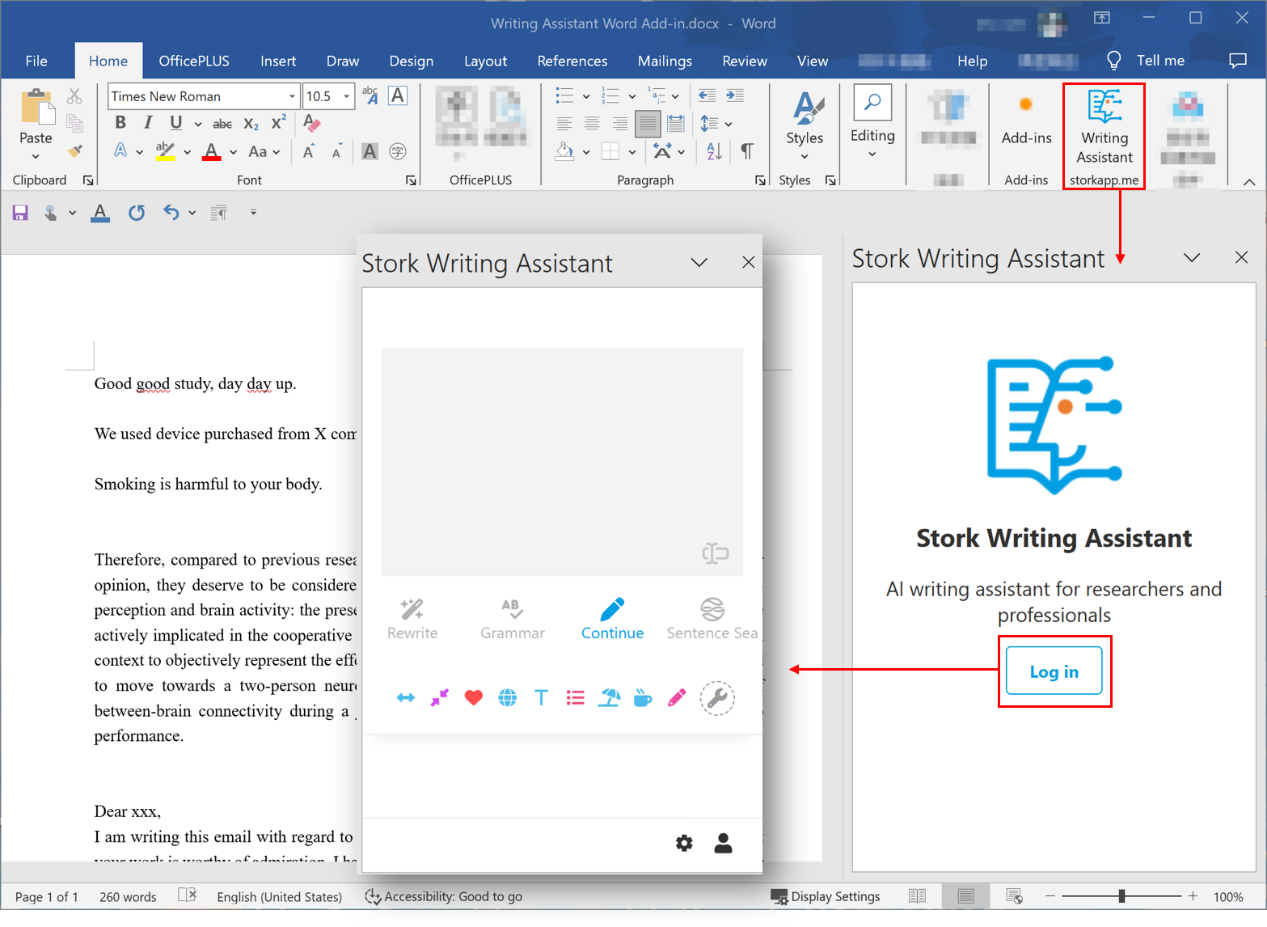
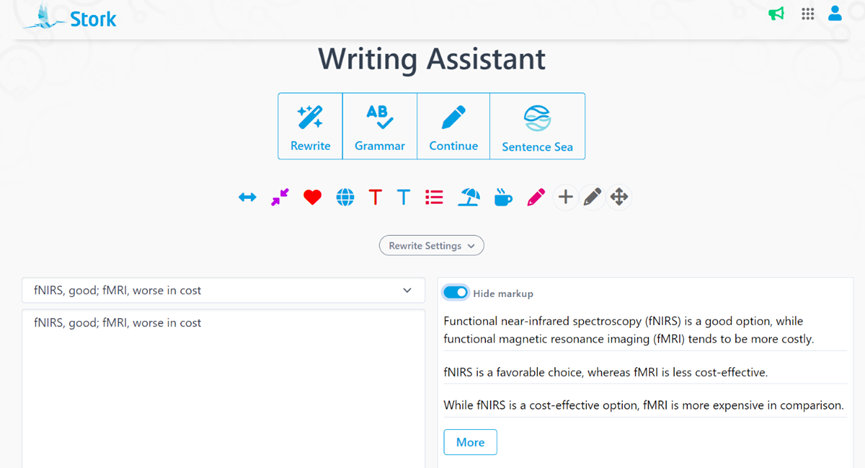
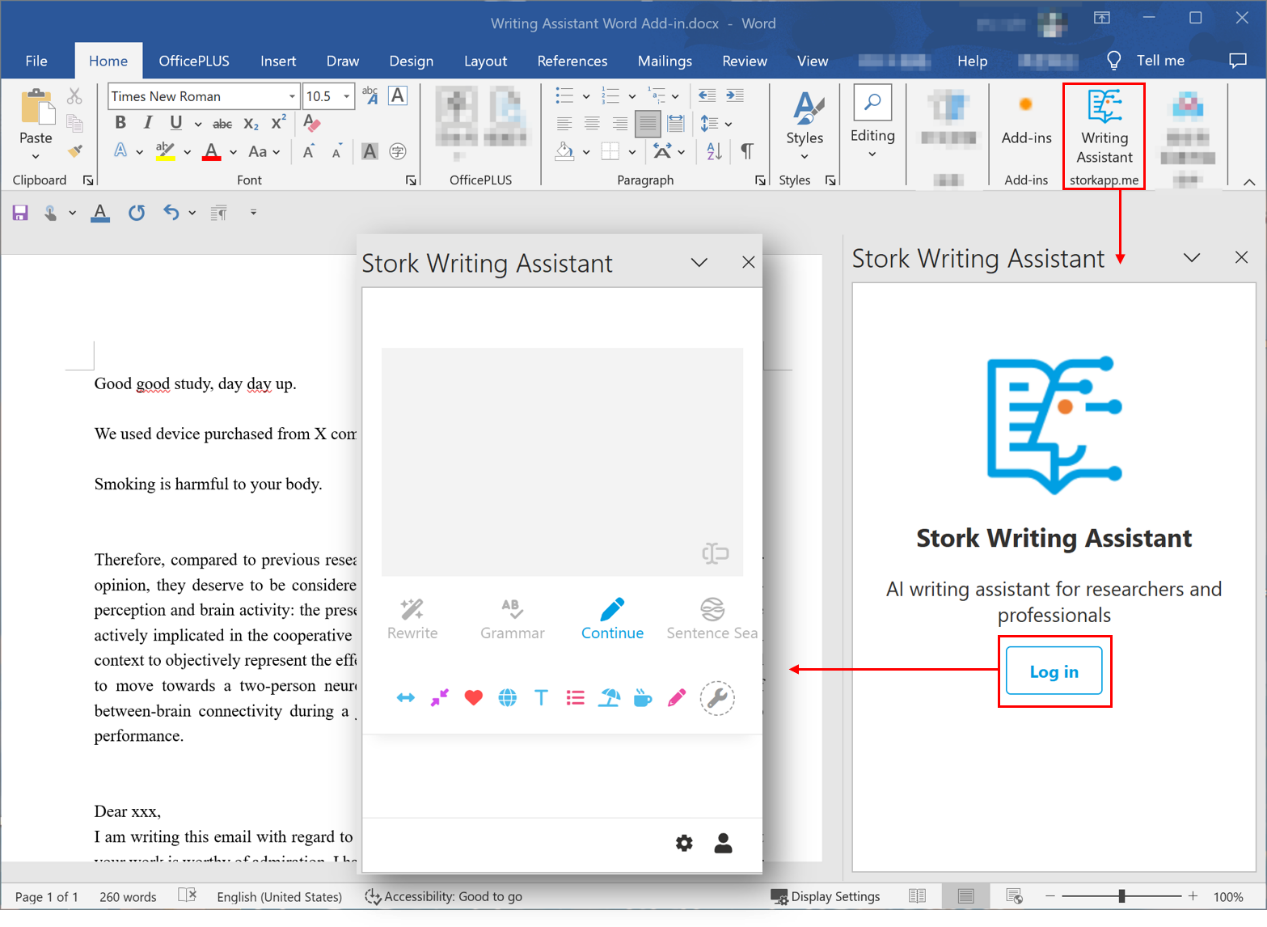
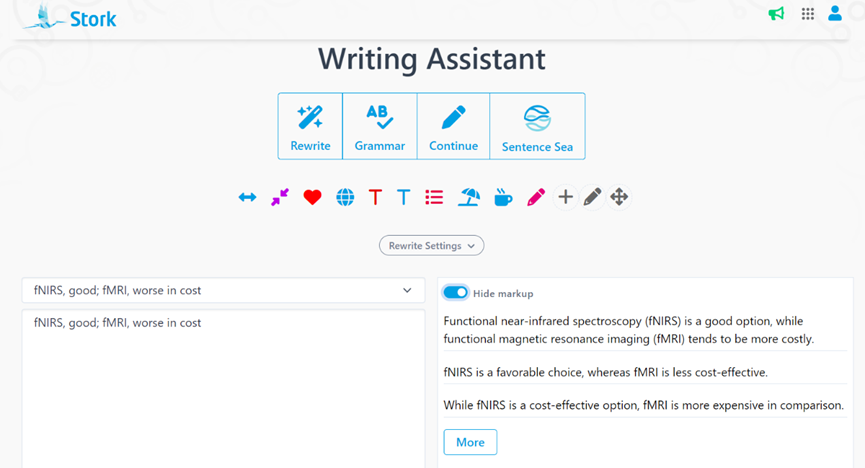
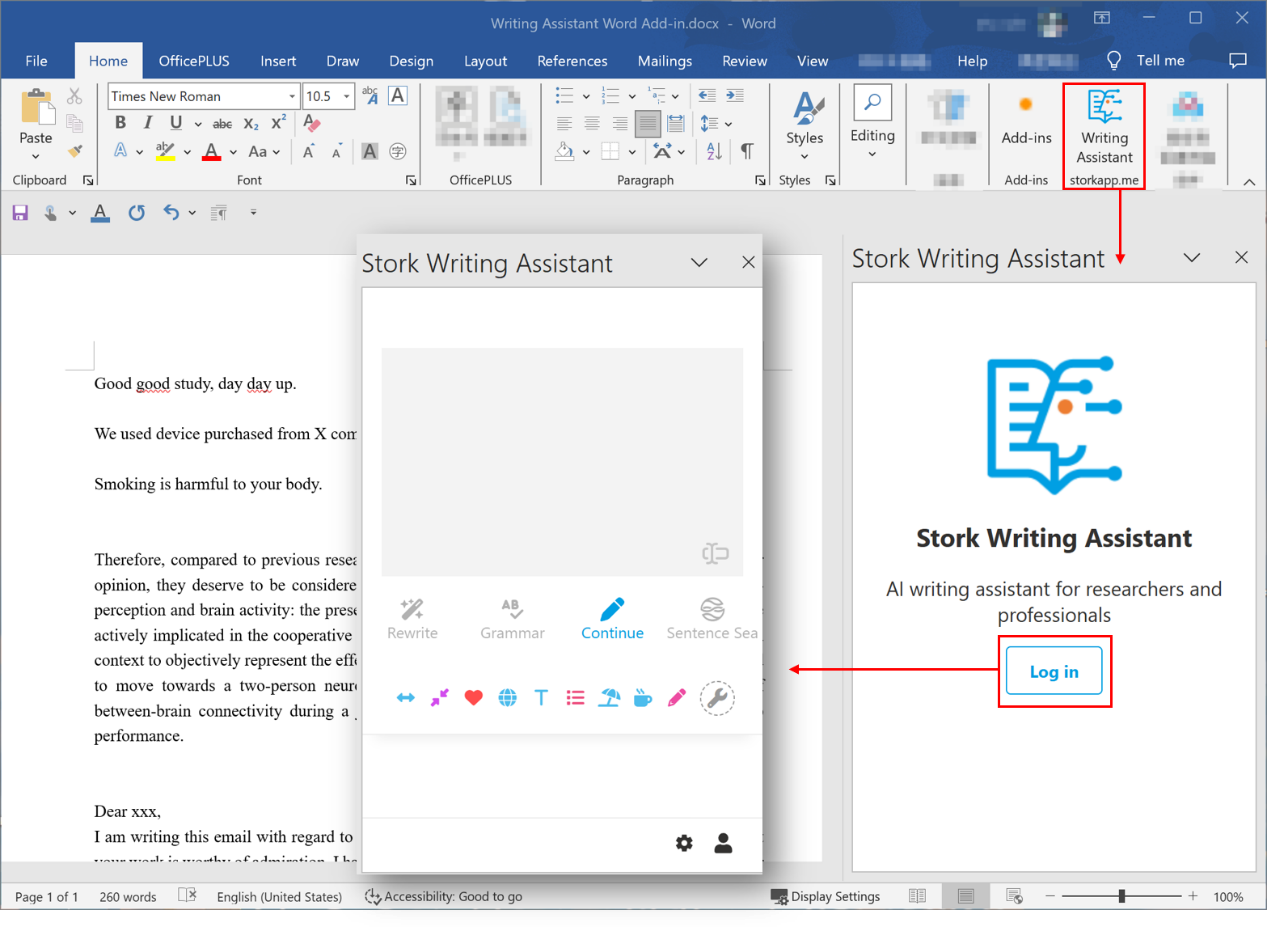
    Stork's Writing Assistant can help you with text polishing, grammar correction, and paragraph expansion, while also offering a Word Add-in for a smoother writing experience.


     【User Reviews】

    Eric Li, Ph.D

    Stanford University

    "Writing Assistant is an excellent tool for scientists and researchers to improve the quality of their publication writing. I highly recommend Writing Assistant for those whose native language is not English or who lack writing skills and ideas."

    Juanjuan Du, Professor

    Tsinghua University

    "In the past, the task of writing was often time-consuming. Fortunately, Writing Assistants have made this process much simpler by providing multiple sentences with the same meaning. This has made writing much more efficient and enjoyable."

    Xiaoyan Zheng, Processor

    GWU

    "Writing Assistant is an exceptional platform for verifying spelling and grammar. It also provides users with a variety of suggestions to alter their tones or enhance their writing's clarity. Highly recommended!"

    Xiaomeng Pei, Associate Research Fellow

    Hong Kong Polytechnic University

    "When I first started writing papers, in order to make the sentences more accurate, I would revise a sentence back and forth many times but still not be completely satisfied. If you are also facing the same problem, try Writing Assistant. It will undoubtedly assist you in effortlessly and efficiently writing the most genuine and seamlessly fluent English papers!"


     【How to use】

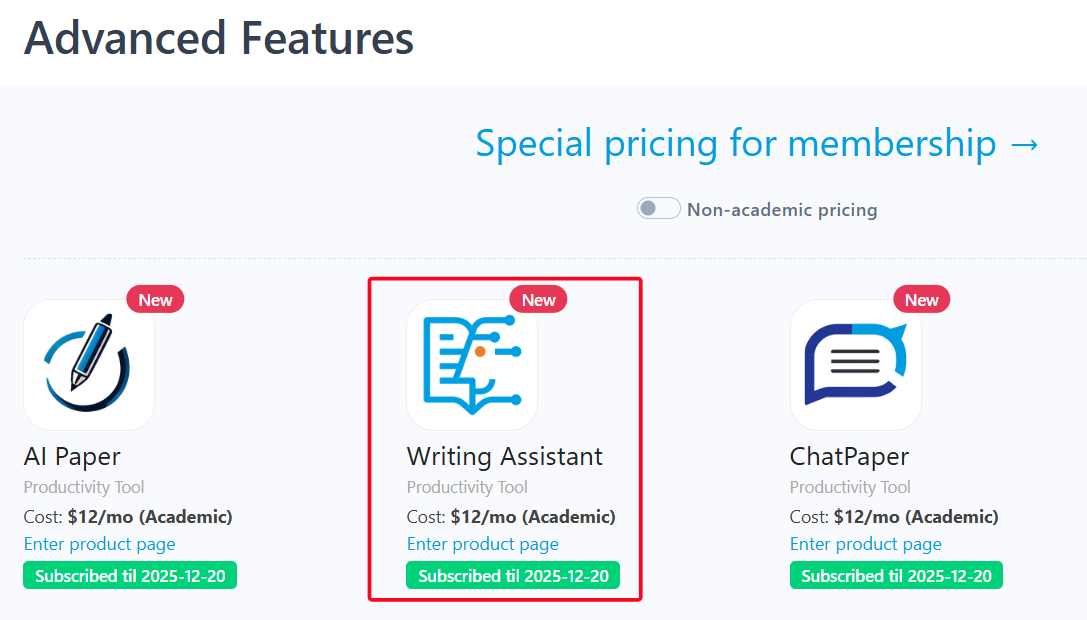
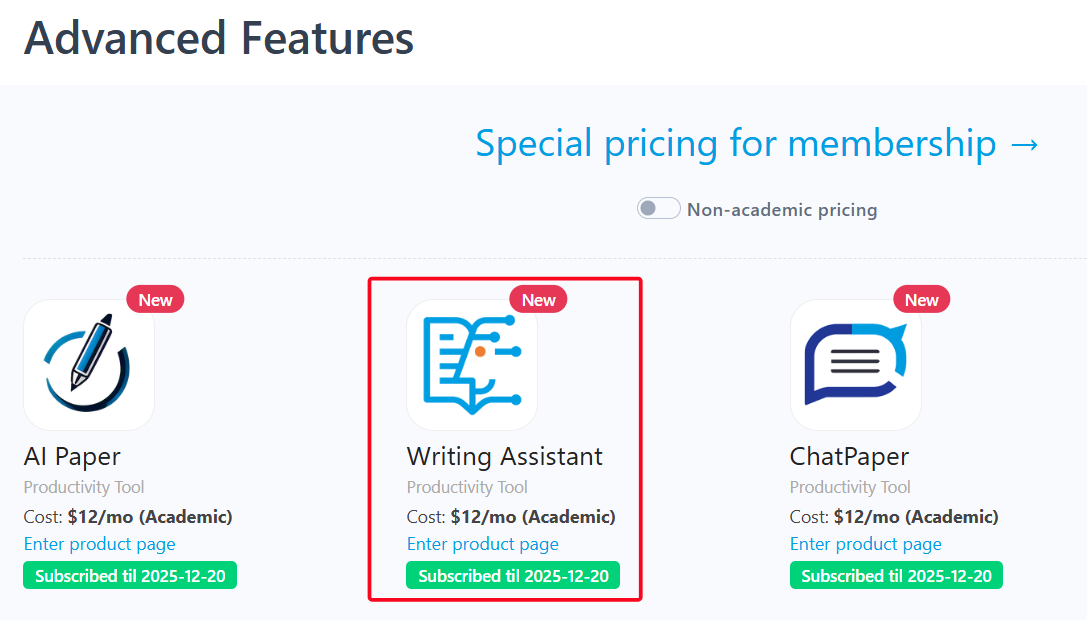
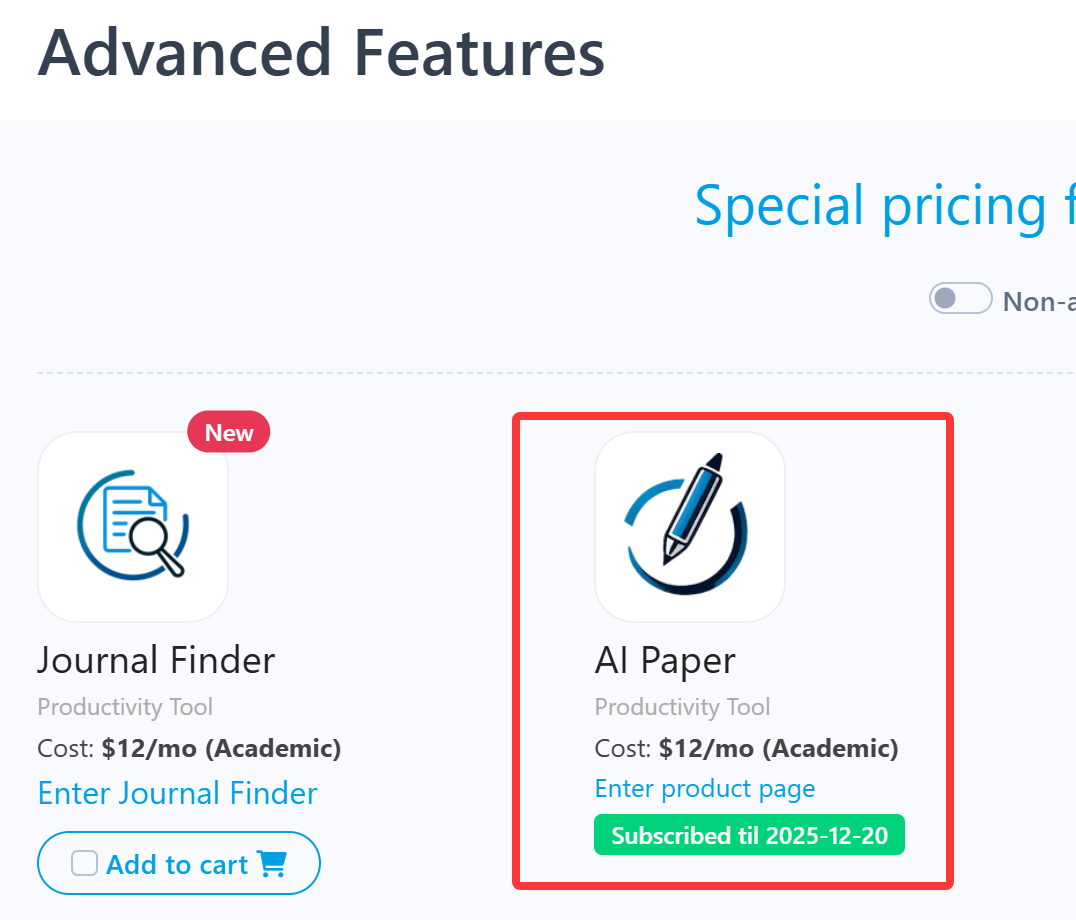
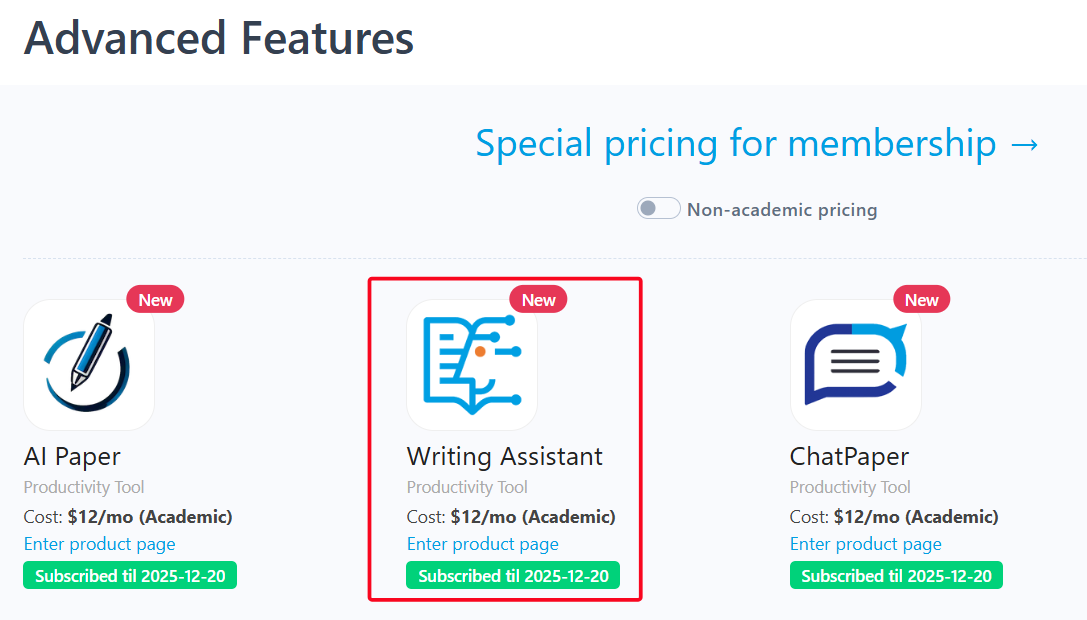
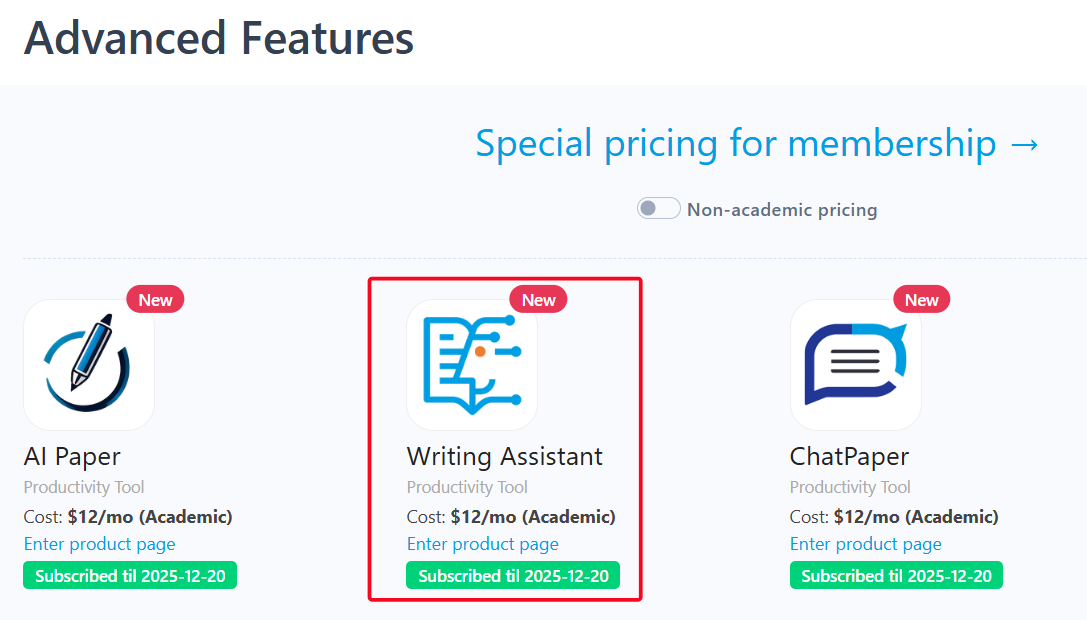
    Writing Assistant is an advanced feature offered by Stork (free trial is available). After registering/logging into Stork (https://www.storkapp.me), you can find Writing Assistant under the "Advanced Feature" section. Then you can try it out or subscribe. Alternatively, you can visit Writing Assistant website directly at https://www.storkapp.me/writeassistant/


     Tips

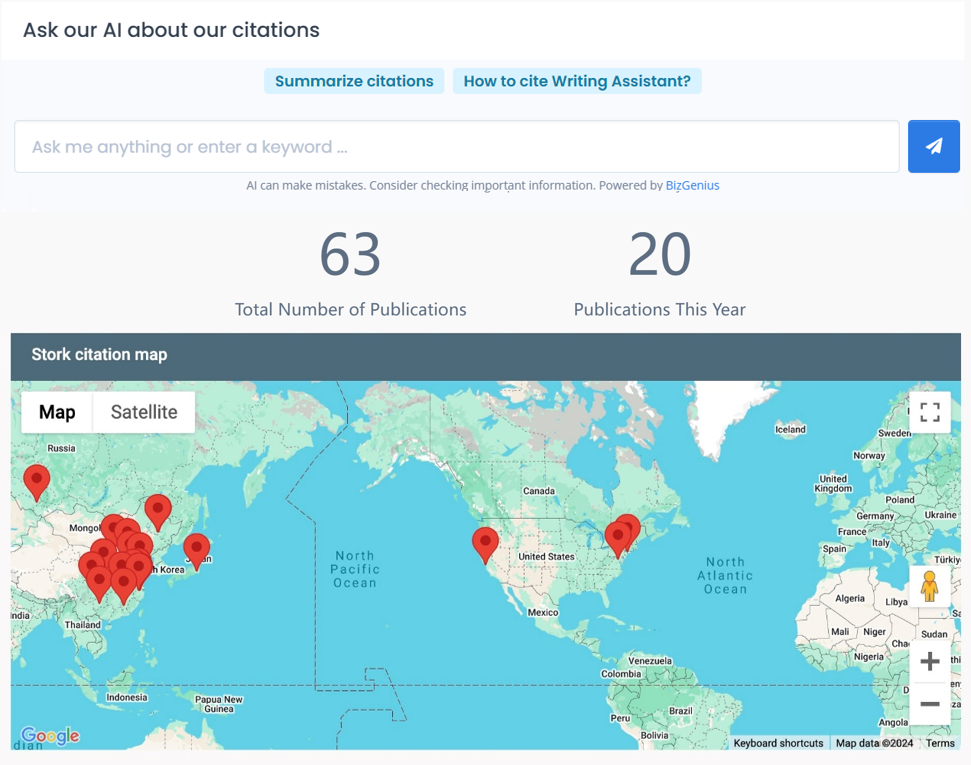
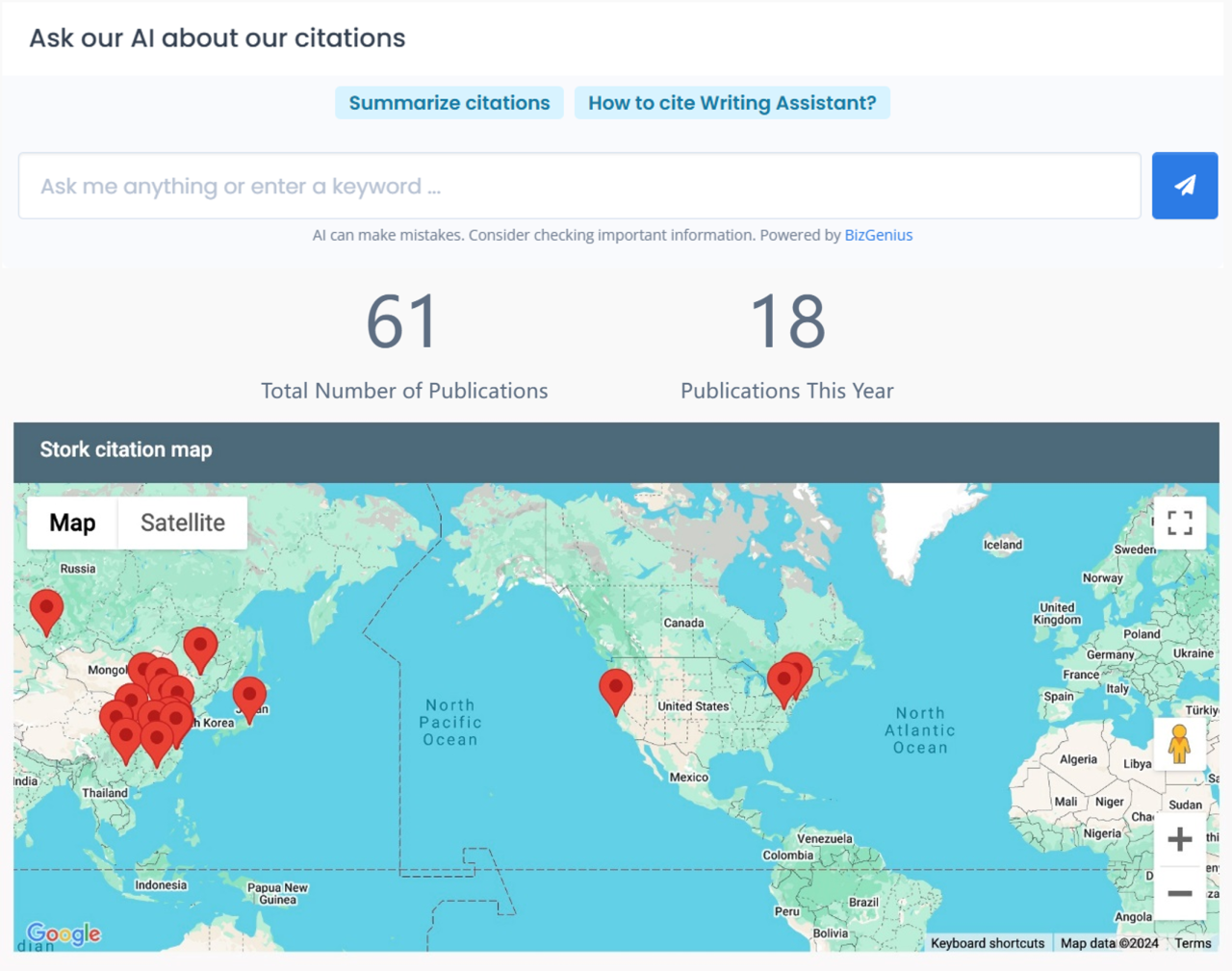
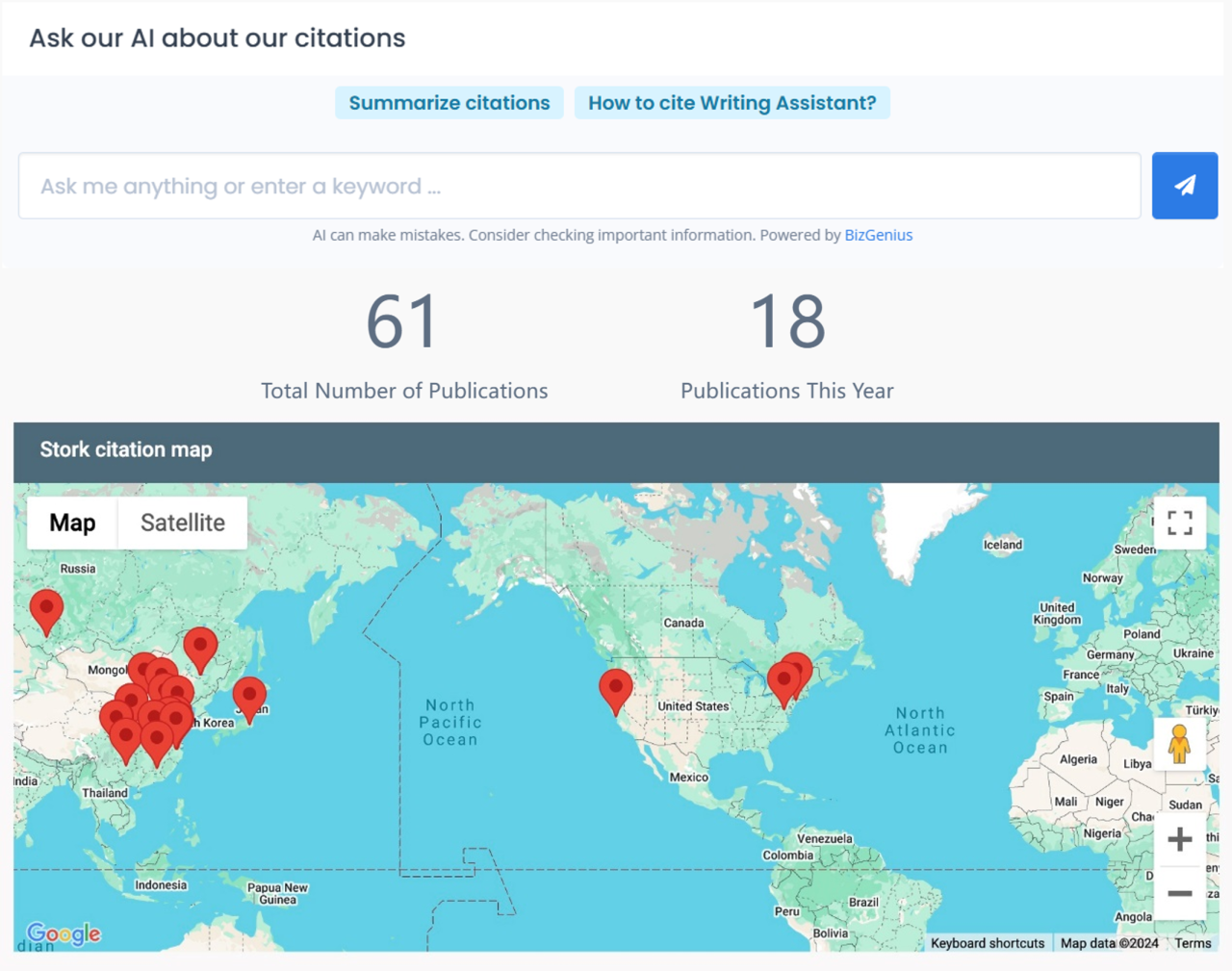
    To date,  more than 60 scientific papers have cited Stork. If you cite Stork in your paper, please let us know at support@storkapp.me, and we'll offer you a discount based on the journal's impact factor when you subscribe to Writing Assistant or other advanced features.


  • Stork Helped Yiğit Save $400 and Get Published


     Info

    "The texts in this paper are polished and significantly improved by Stork's Writing Assistant (https://www.storkapp.me/writeassistant/)."


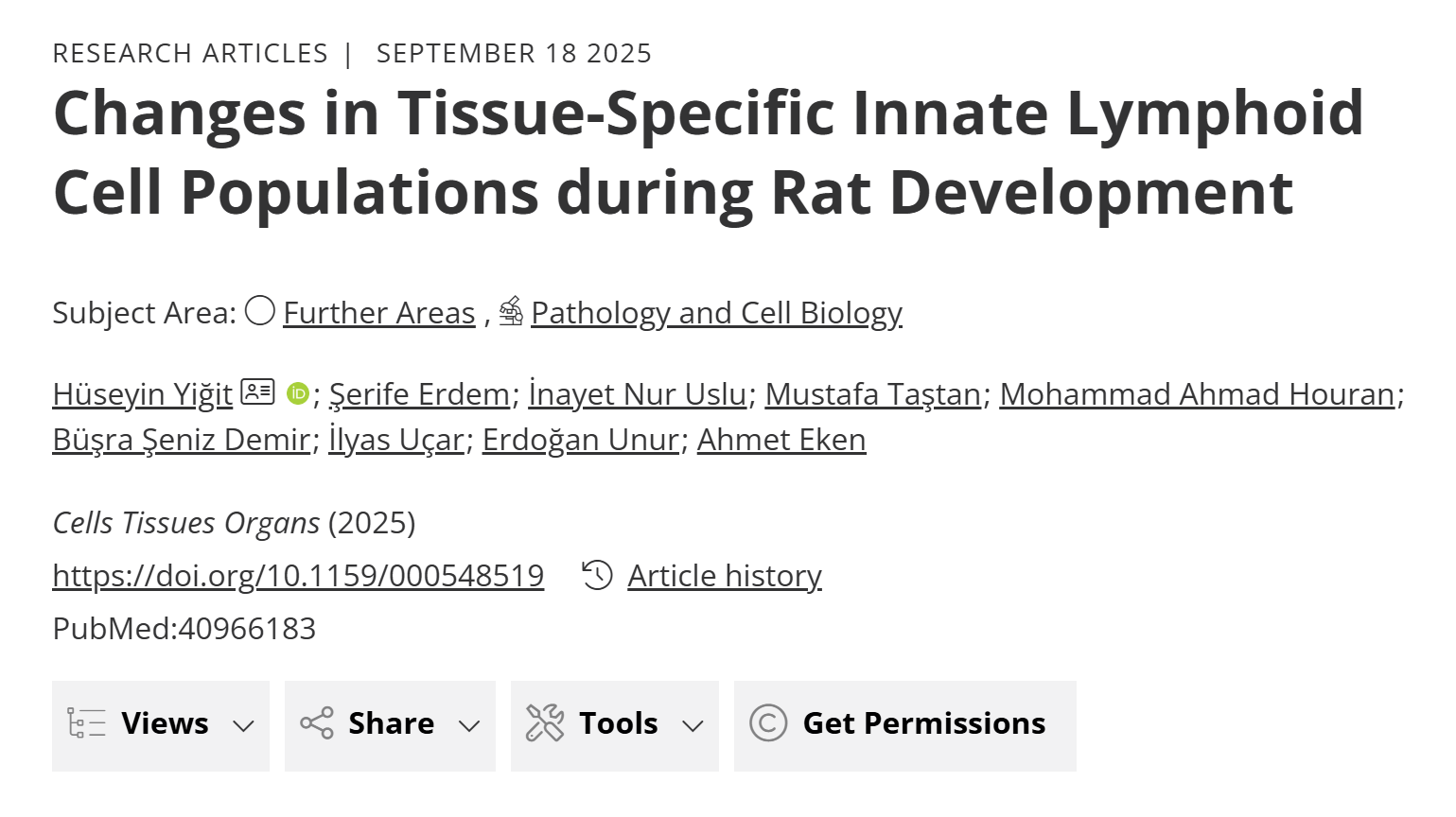
    Recently, Hüseyin Yiğit Department of Anatomy, Institute of Health Sciences at Erciyes University in Turkey published a paper titled "Changes in Tissue-Specific Innate Lymphoid Cell Populations during Rat Development" in the journal Cells Tissues Organs.  The paper cited Writing Assistant of Stork. You can access the paper here: https://doi.org/10.1159/000548519


    This article acknowledged Stork in the Acknowledgment section:


    "The texts in this paper are polished and significantly improved by Stork's Writing Assistant (https://www.storkapp.me/writeassistant/)."


    In addition, the author shared his experience in an email to Stork:


    "I needed some support with English language and grammar during the publication process of my work. For this purpose, I applied to various language services, and their cost exceeded $400. With Stork, I resolved the language and grammar needs of my manuscript for only $12. Stork saved me $400. I thank the Stork team."


    Stork's Writing Assistant can help you with text polishing, grammar correction, and paragraph expansion, while also offering a Word Add-in for a smoother writing experience.


     【User Reviews】

    Eric Li, Ph.D

    Stanford University

    "Writing Assistant is an excellent tool for scientists and researchers to improve the quality of their publication writing. I highly recommend Writing Assistant for those whose native language is not English or who lack writing skills and ideas."

    Juanjuan Du, Professor

    Tsinghua University

    "In the past, the task of writing was often time-consuming. Fortunately, Writing Assistants have made this process much simpler by providing multiple sentences with the same meaning. This has made writing much more efficient and enjoyable."

    Xiaoyan Zheng, Processor

    GWU

    "Writing Assistant is an exceptional platform for verifying spelling and grammar. It also provides users with a variety of suggestions to alter their tones or enhance their writing's clarity. Highly recommended!"

    Xiaomeng Pei, Associate Research Fellow

    Hong Kong Polytechnic University

    "When I first started writing papers, in order to make the sentences more accurate, I would revise a sentence back and forth many times but still not be completely satisfied. If you are also facing the same problem, try Writing Assistant. It will undoubtedly assist you in effortlessly and efficiently writing the most genuine and seamlessly fluent English papers!"


     【How to use】

    Writing Assistant is an advanced feature offered by Stork (free trial is available). After registering/logging into Stork (https://www.storkapp.me), you can find Writing Assistant under the "Advanced Feature" section. Then you can try it out or subscribe. Alternatively, you can visit Writing Assistant website directly at https://www.storkapp.me/writeassistant/


     Tips

    To date,  more than 60 scientific papers have cited Stork. If you cite Stork in your paper, please let us know at support@storkapp.me, and we'll offer you a discount based on the journal's impact factor when you subscribe to Writing Assistant or other advanced features.

  • AI Paper Update: Upload Your Own References


    TL; DR

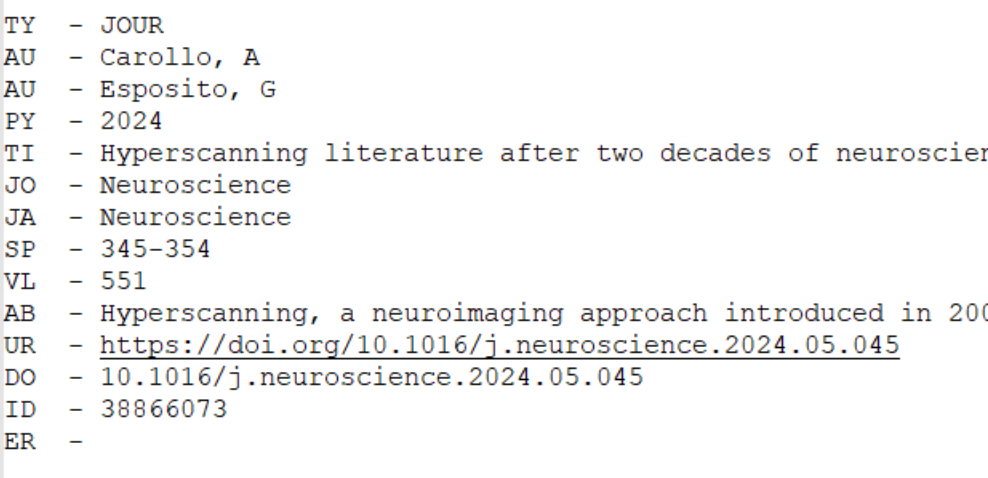
    you can now upload your own reference list (.ris or .nbib files), and AI Paper will write based on the references you provide.


    There are moments in academic writing when you're just staring at a blank page, not sure where to begin. You can type in your paper title, and AI Paper will search real scientific literature and build you a high-quality draft.

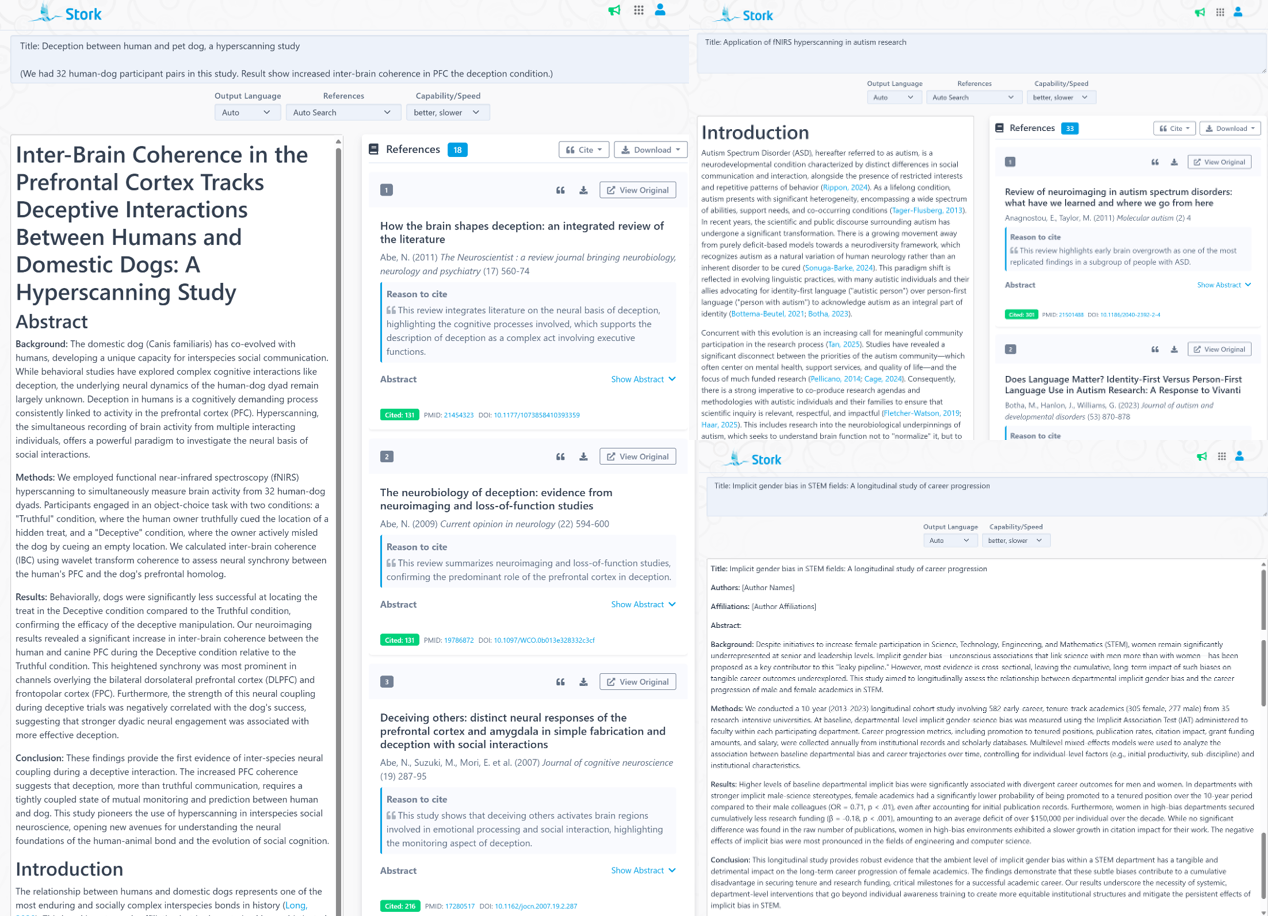
    Other times, you've already read a pile of papers but aren't sure how to turn them into a clear, coherent paper. To meet this need, this latest update allows you to upload your own reference list, either in .ris or .nbib format. AI Paper will write based on your chosen papers — keeping the draft closer to your research.


    How to upload your references?


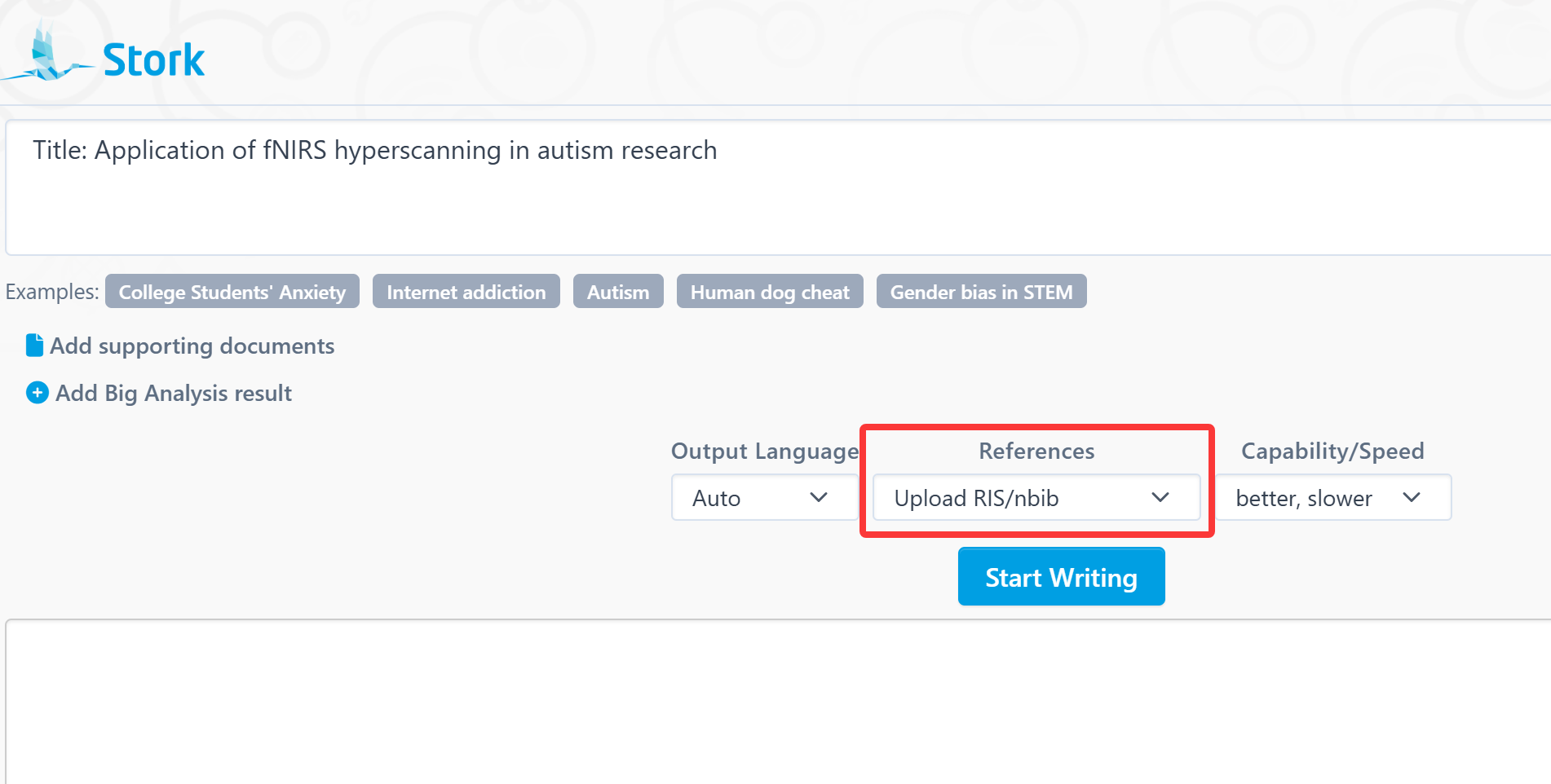
    Step1: Go to AI Paper and choose any writing type (e.g., full paper, introduction, essay, etc.).


    Step2: Enter your title and any other relevant materials. Under References, click [Upload RIS/nbib] and start writing.


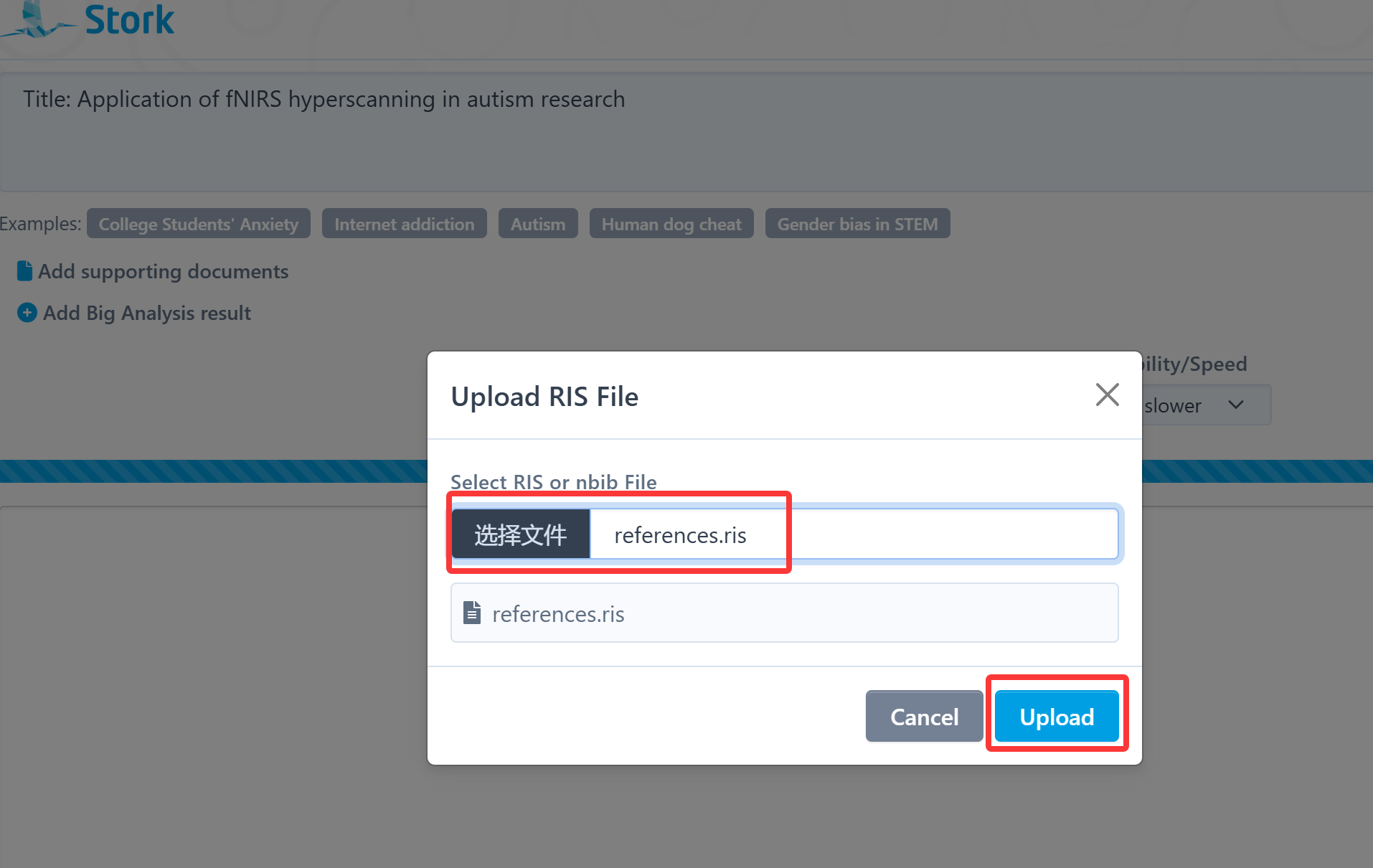
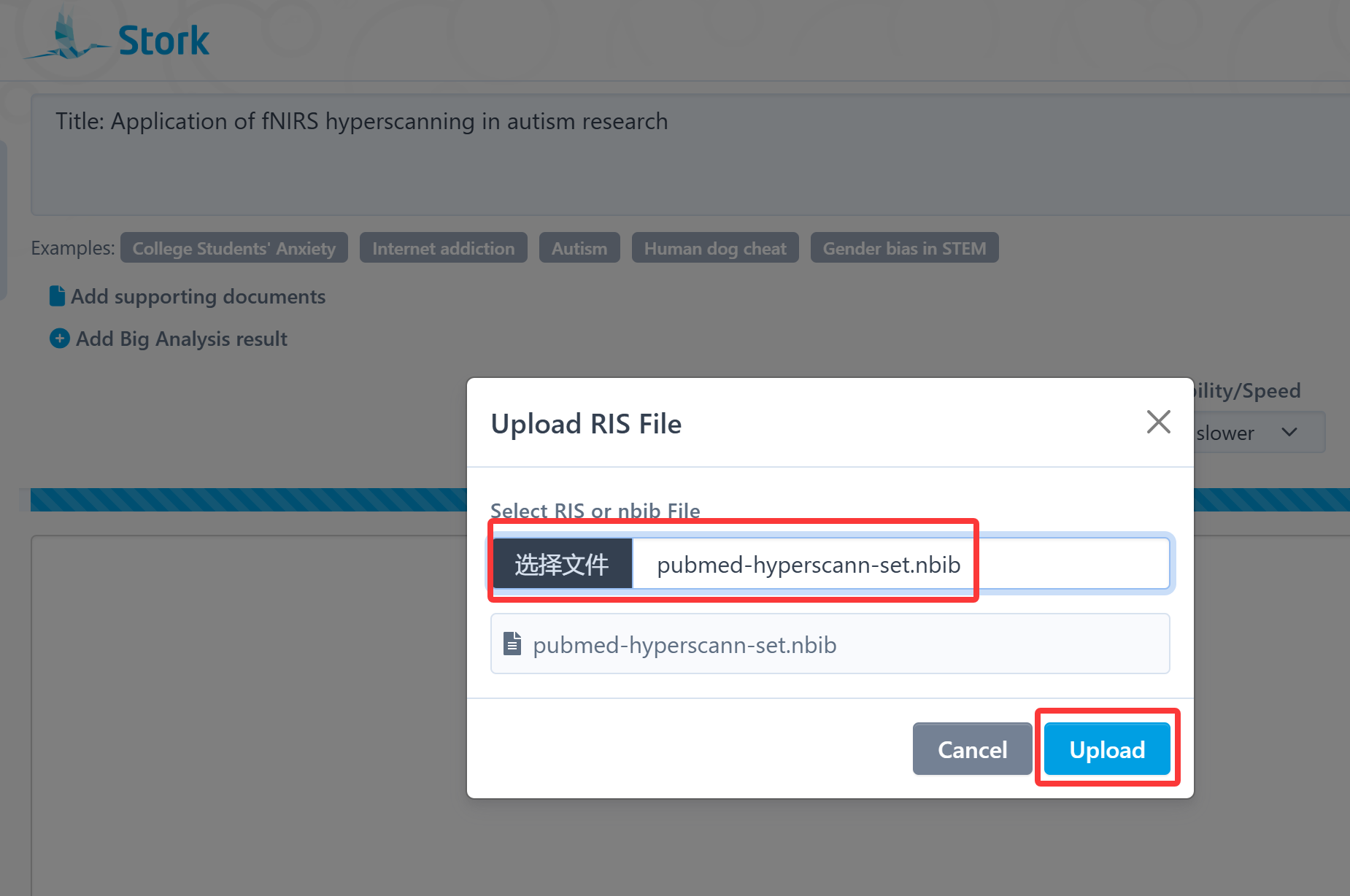
    Step3: Choose your file and upload it.

    • .ris —— common to EndNote, Zotero, Mendeley, and other reference managers

    • .nbib —— standard format exported from PubMed

    Currently, AI Paper reads up to 100 references per uploaded file. 


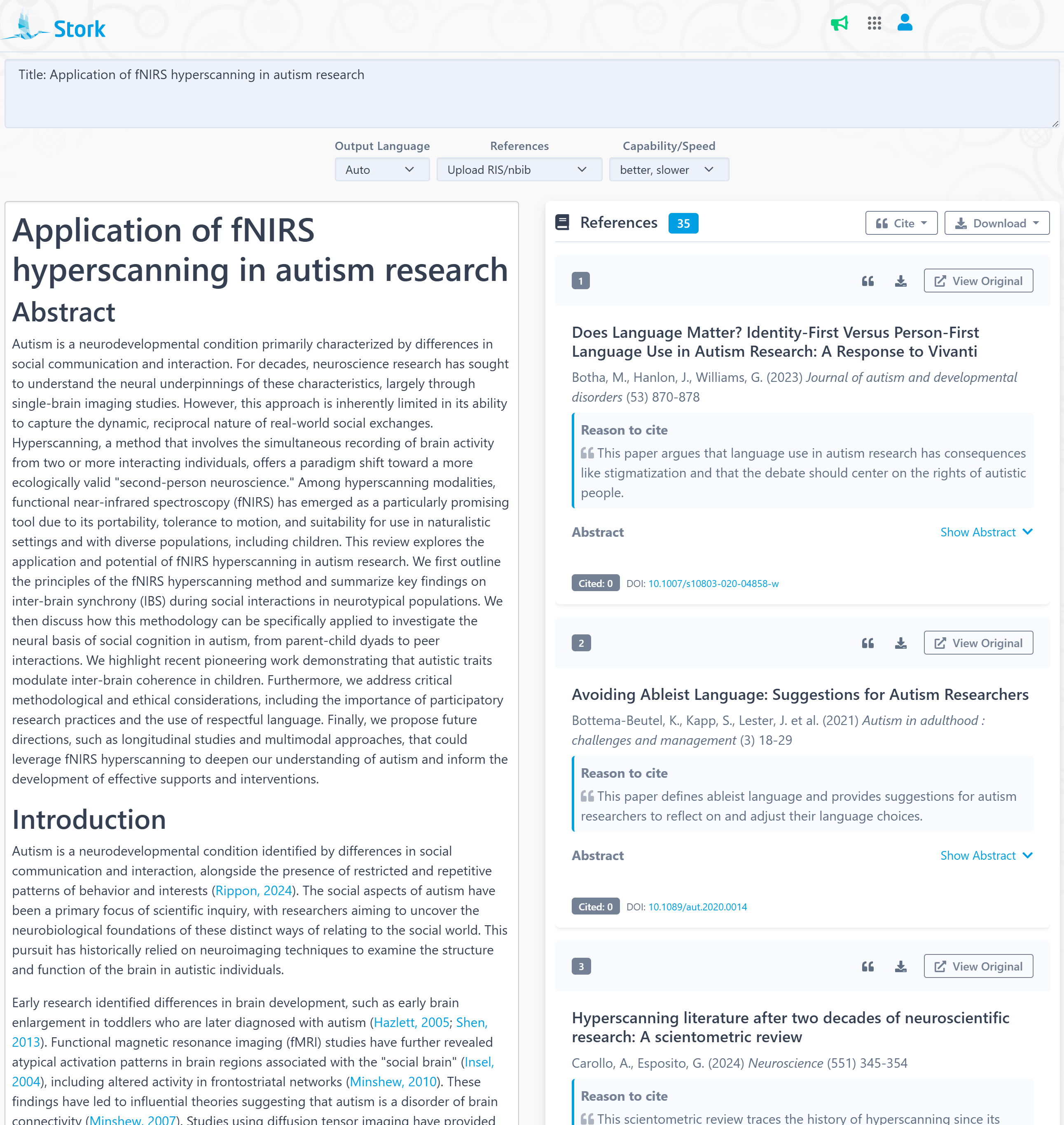
    Once uploaded, your paper will be written using those literatures, and each reference will appear on the right side of the screen.


    In practice, you can first let AI Paper automatically search for new literature to broaden your reference base, then upload your own curated list to refine the results. Try uploading your own references and see how AI Paper starts to write more like you.


    【How to Use?】

    AI Paper is an advanced feature offered by Stork, which requires subscription (registered users can try 10 articles for free). After registering/logging in to Stork (https://www.storkapp.me), you can find AI Paper under the advanced features section. Then you can try it out or subscribe. Alternatively, you can visit the official AI Paper website directly at https://www.storkapp.me/aipaper/


  • Writing Assistant helped Chen publish in Nano-Structures & Nano-Objects

     Info

    “We express our gratitude to Stork (https://www.storkapp.me) for their assistance in linguistic refinement.”


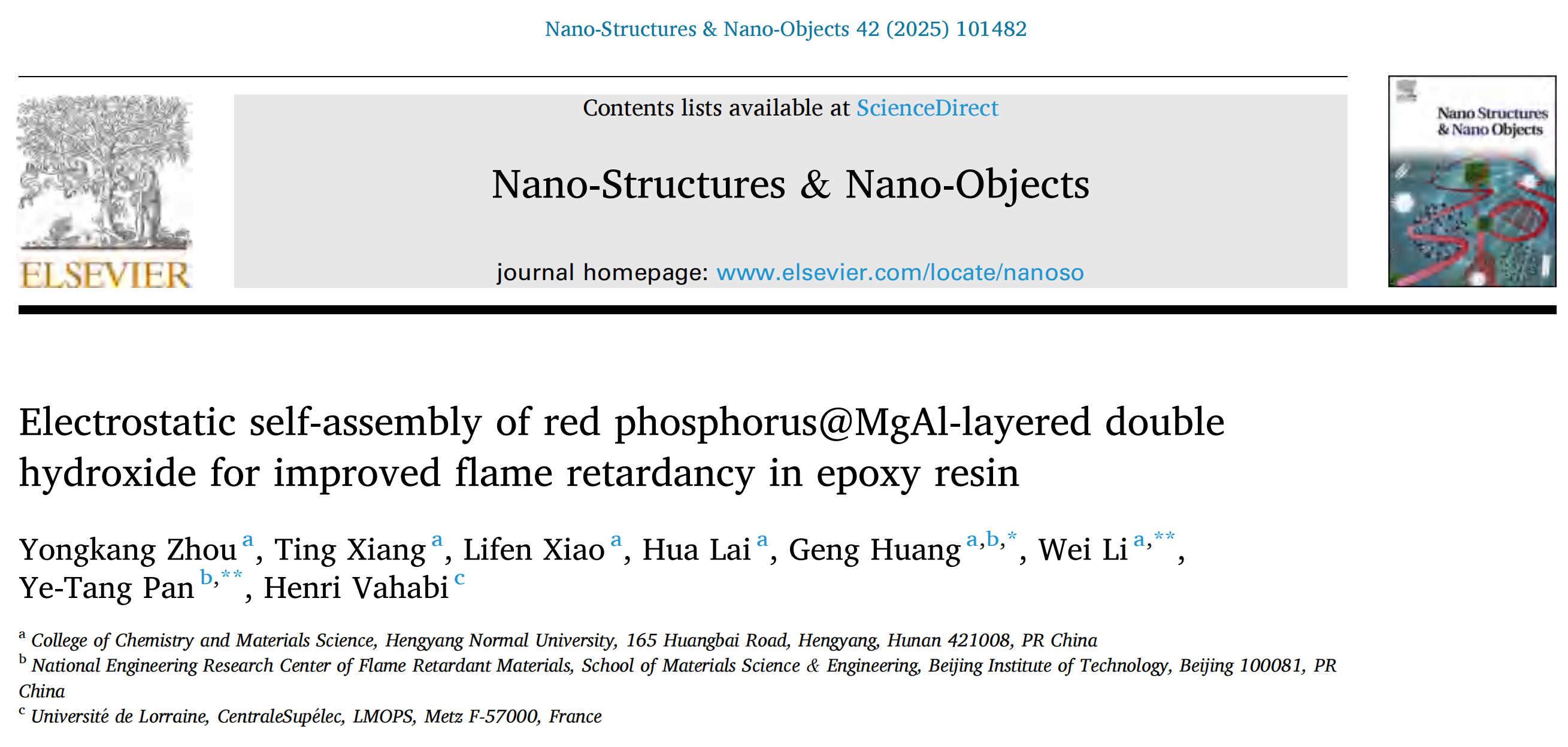
    Recently, Geng Huang from College of Chemistry and Materials Science at Hengyang Normal University in China published a paper titled ” Electrostatic self-assembly of red phosphorus@MgAl-layered double hydroxide for improved flame retardancy in epoxy resin ” in the journal Nano-Structures & Nano-Objects. The paper cited Writing Assistant of Stork. You can access the paper here: https://doi.org/10.1016/j.nanoso.2025.101482


    This article acknowledged Stork in the Acknowledgment section:


    “We express our gratitude to Stork (https://www.storkapp.me) for their assistance in linguistic refinement.”


    Stork’s Writing Assistant can help you with text polishing, grammar correction, and paragraph expansion, while also offering a Word Add-in for a smoother writing experience.


     【User Reviews】

    Eric Li, Ph.D

    Stanford University

    “Writing Assistant is an excellent tool for scientists and researchers to improve the quality of their publication writing. I highly recommend Writing Assistant for those whose native language is not English or who lack writing skills and ideas.”

    Juanjuan Du, Professor

    Tsinghua University

    “In the past, the task of writing was often time-consuming. Fortunately, Writing Assistants have made this process much simpler by providing multiple sentences with the same meaning. This has made writing much more efficient and enjoyable.”

    Xiaoyan Zheng, Processor

    GWU

    “Writing Assistant is an exceptional platform for verifying spelling and grammar. It also provides users with a variety of suggestions to alter their tones or enhance their writing’s clarity. Highly recommended!”

    Xiaomeng Pei, Associate Research Fellow

    Hong Kong Polytechnic University

    “When I first started writing papers, in order to make the sentences more accurate, I would revise a sentence back and forth many times but still not be completely satisfied. If you are also facing the same problem, try Writing Assistant. It will undoubtedly assist you in effortlessly and efficiently writing the most genuine and seamlessly fluent English papers!”


     【How to use】

    Writing Assistant is an advanced feature offered by Stork (free trial is available). After registering/logging into Stork (https://www.storkapp.me), you can find Writing Assistant under the “Advanced Feature” section. Then you can try it out or subscribe. Alternatively, you can visit Writing Assistant website directly at https://www.storkapp.me/writeassistant/


     Tips

    To date,  more than 60 scientific papers have cited Stork. If you cite Stork in your paper, please let us know at support@storkapp.me, and we’ll offer you a discount based on the journal’s impact factor when you subscribe to Writing Assistant or other advanced features.

  • How to Export References in RIS Format on Stork


    TL; DR

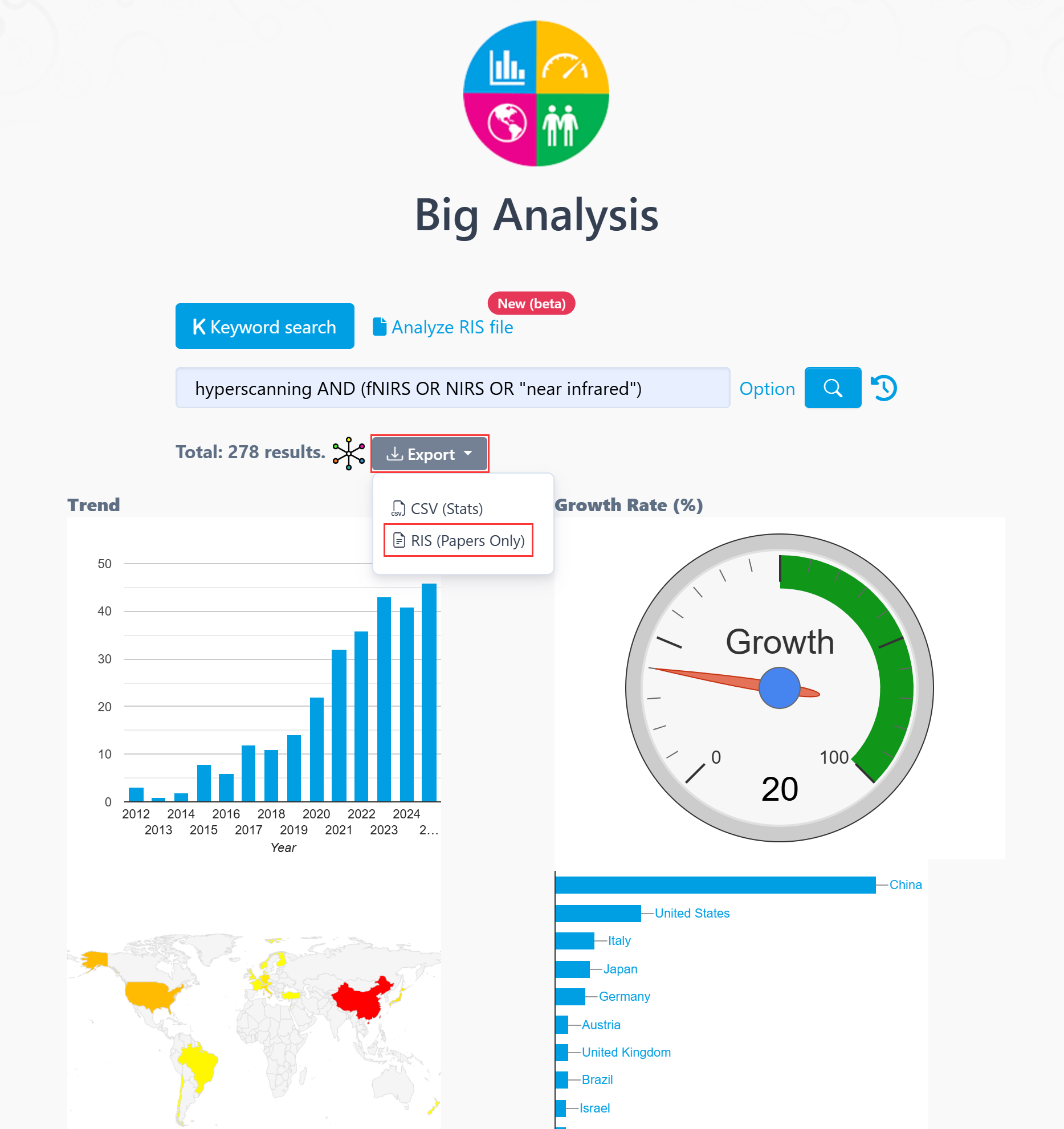
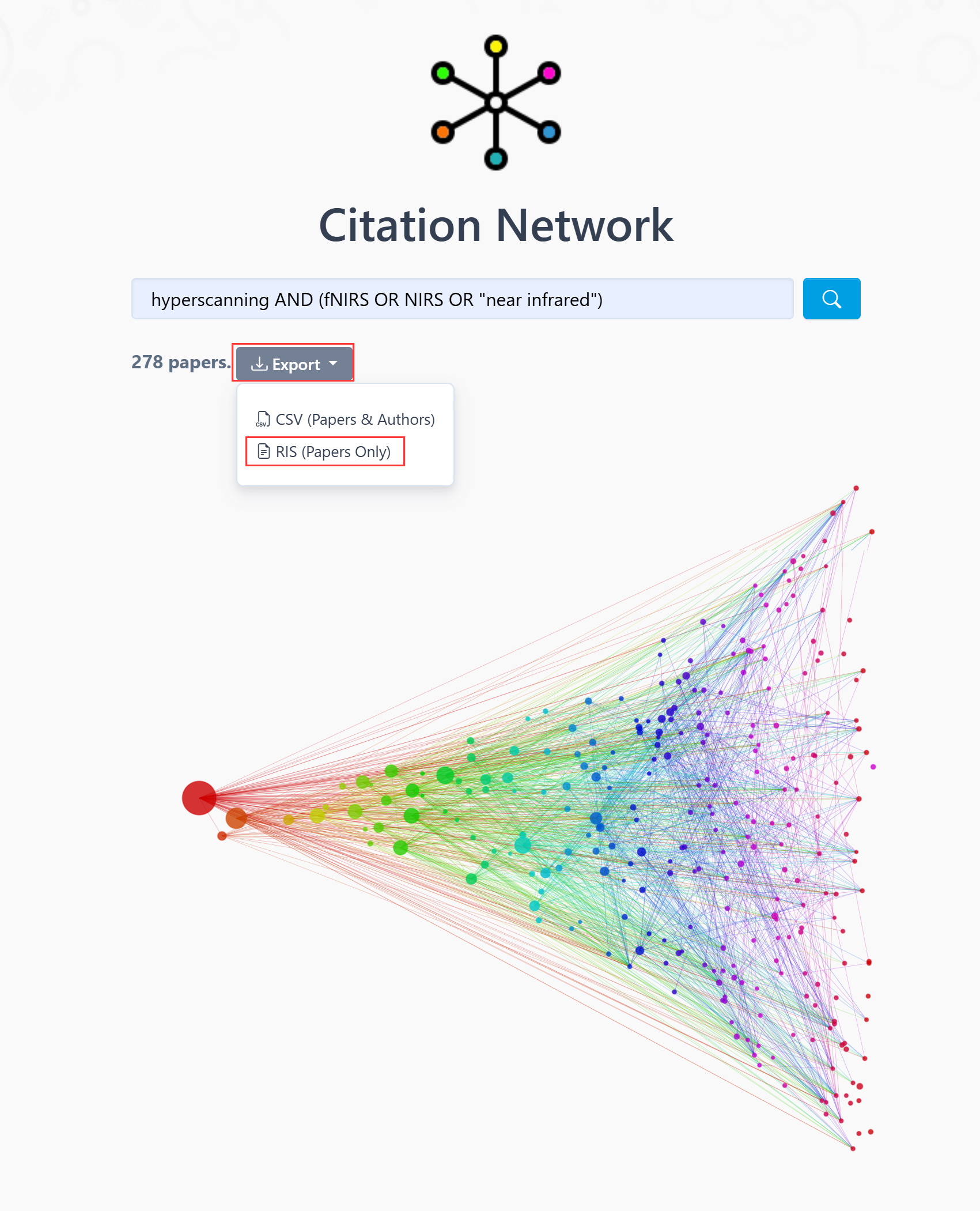
    On Stork, you can export references in RIS format from multiple places — including email alerts, keyword history, AI Paper, TrueCite, PubMed Multi-language Search, Translate & Alert, Big Analysis, and Citation Network.


    While using Stork, you might often find papers you want to save or organize in your own reference manager. Whether you use EndNote, Zotero, or NoteExpress, exporting papers in RIS format is the most reliable way to do it.

    The RIS format is a universal standard for reference data and compatible with almost every reference manager worldwide.

    Now, you can export RIS files with just one click across Stork's many tools.


    1

    Email Alerts


    If you subscribe to Stork's free email alerts, the papers delivered to you can be directly exported as RIS files.

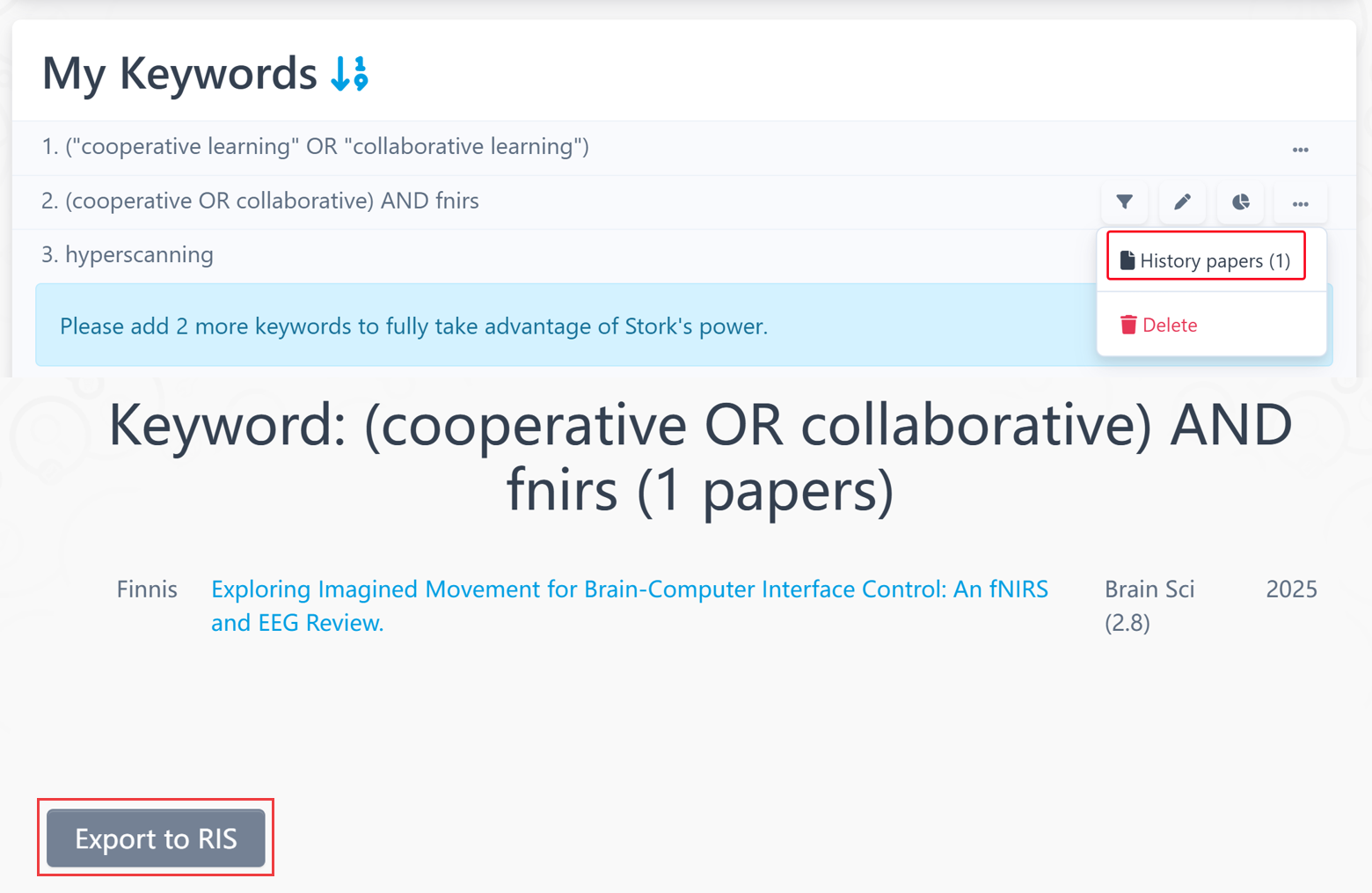
    To export papers from your past emails, simply go to My – History Emails and click "Export RIS".


    You can also export past papers under My Keywords.

    2

    AI paper


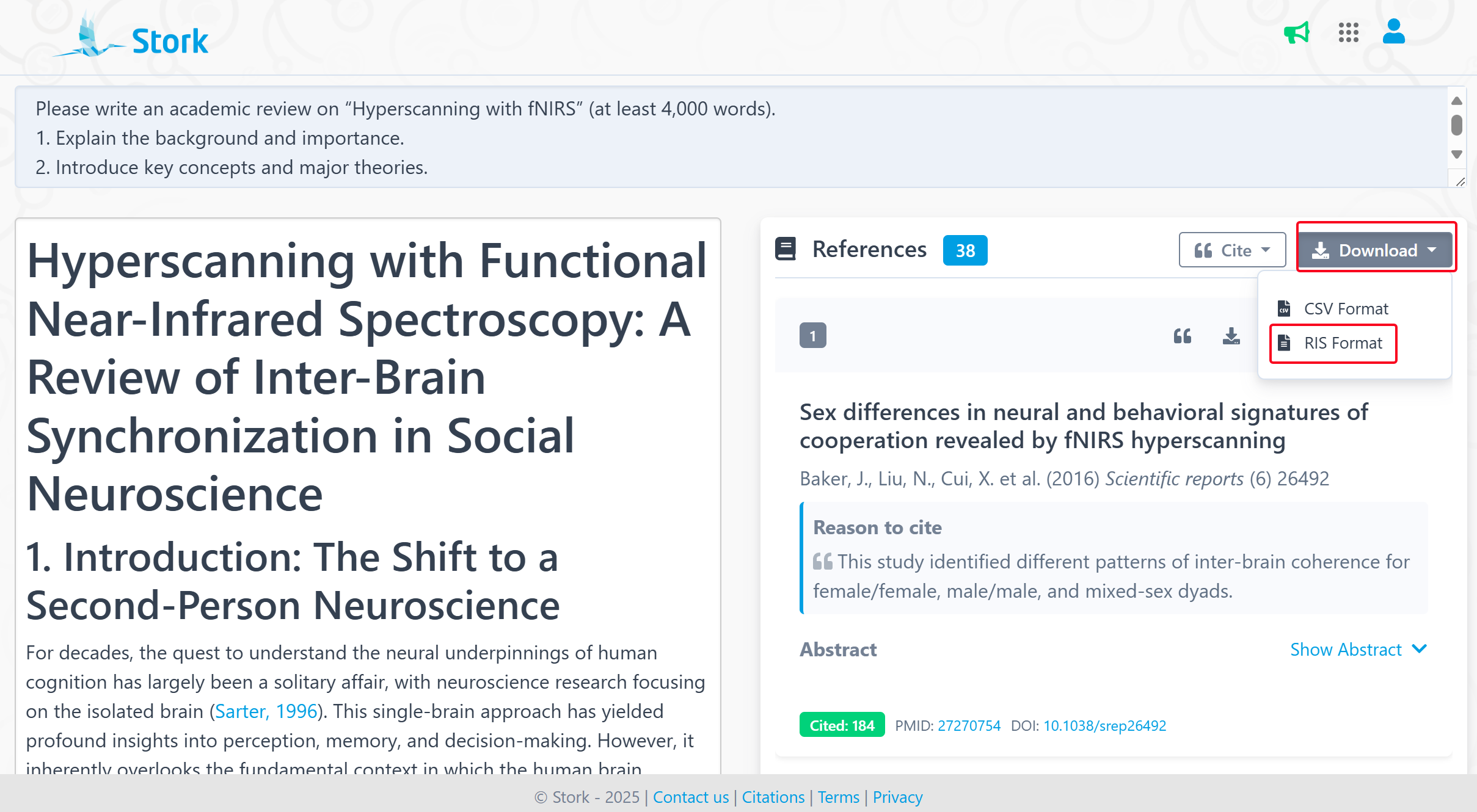
    AI Paper generates academic writing based on your input by searching, reading, and citing authentic scientific literature. All these references can be exported as RIS files.
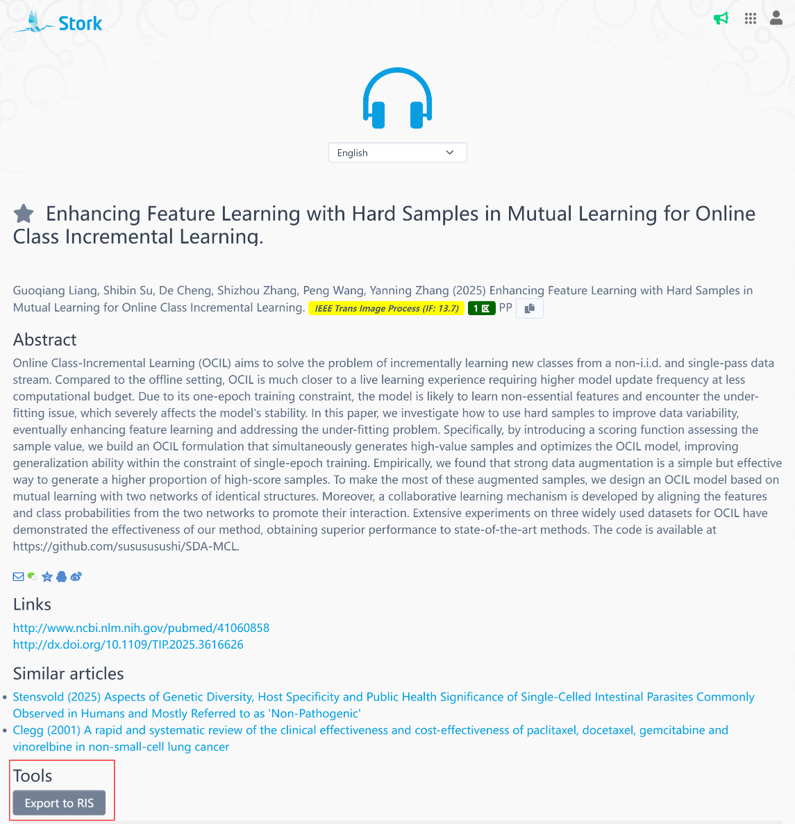

    3

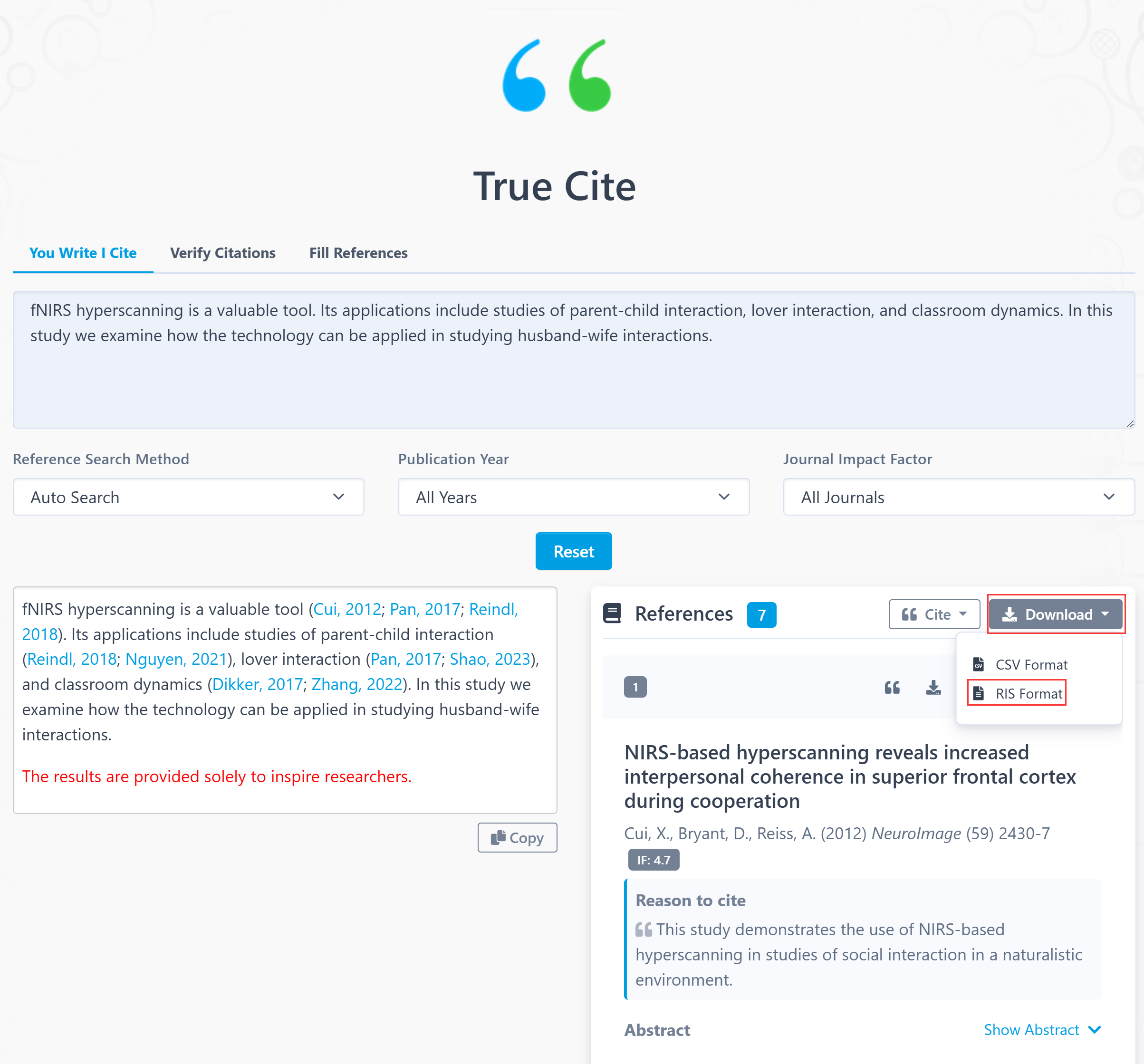
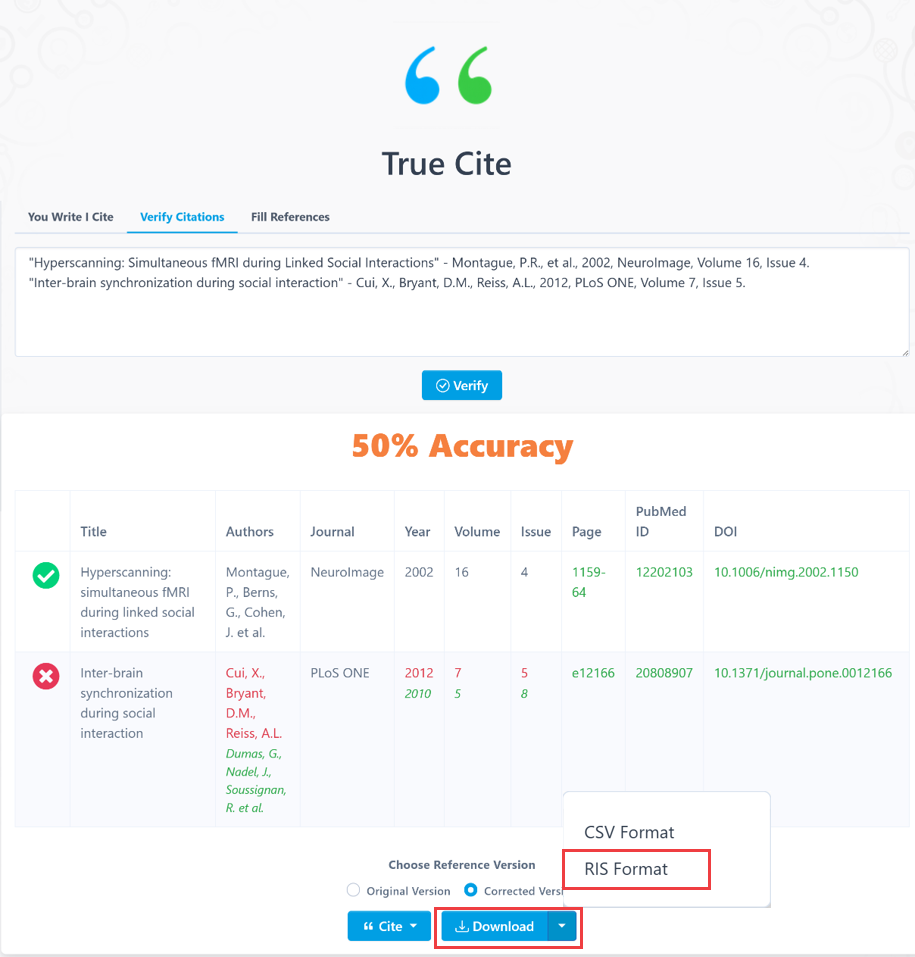
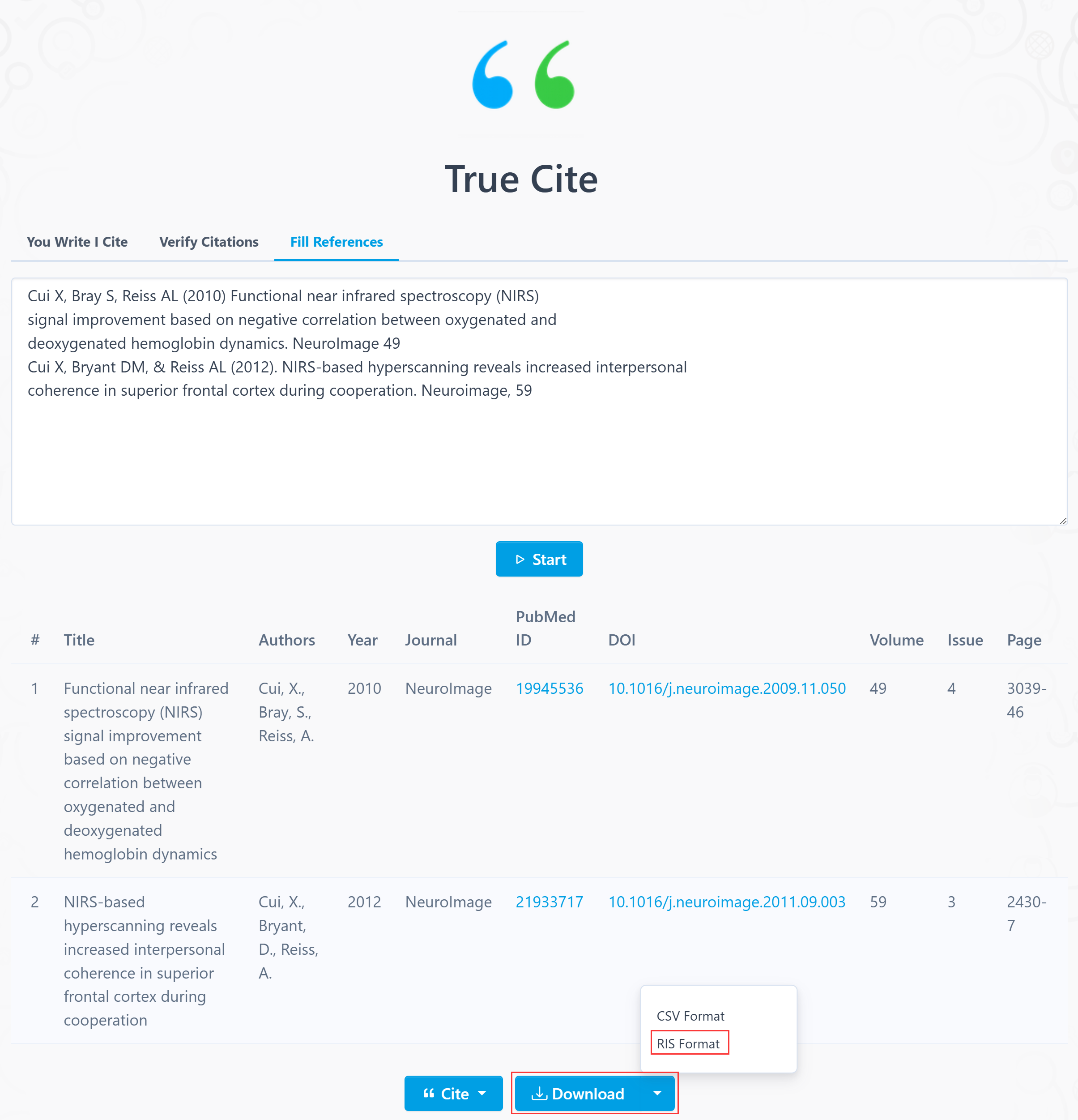
    True Cite


    True Cite includes three features:

    ① You Write I Cite: find references matching your text

    ② Citation Verification: verify references accuracy

    ③ Fill References: parse reference lists in various formats and fill in missing information

    All support RIS export.


    4

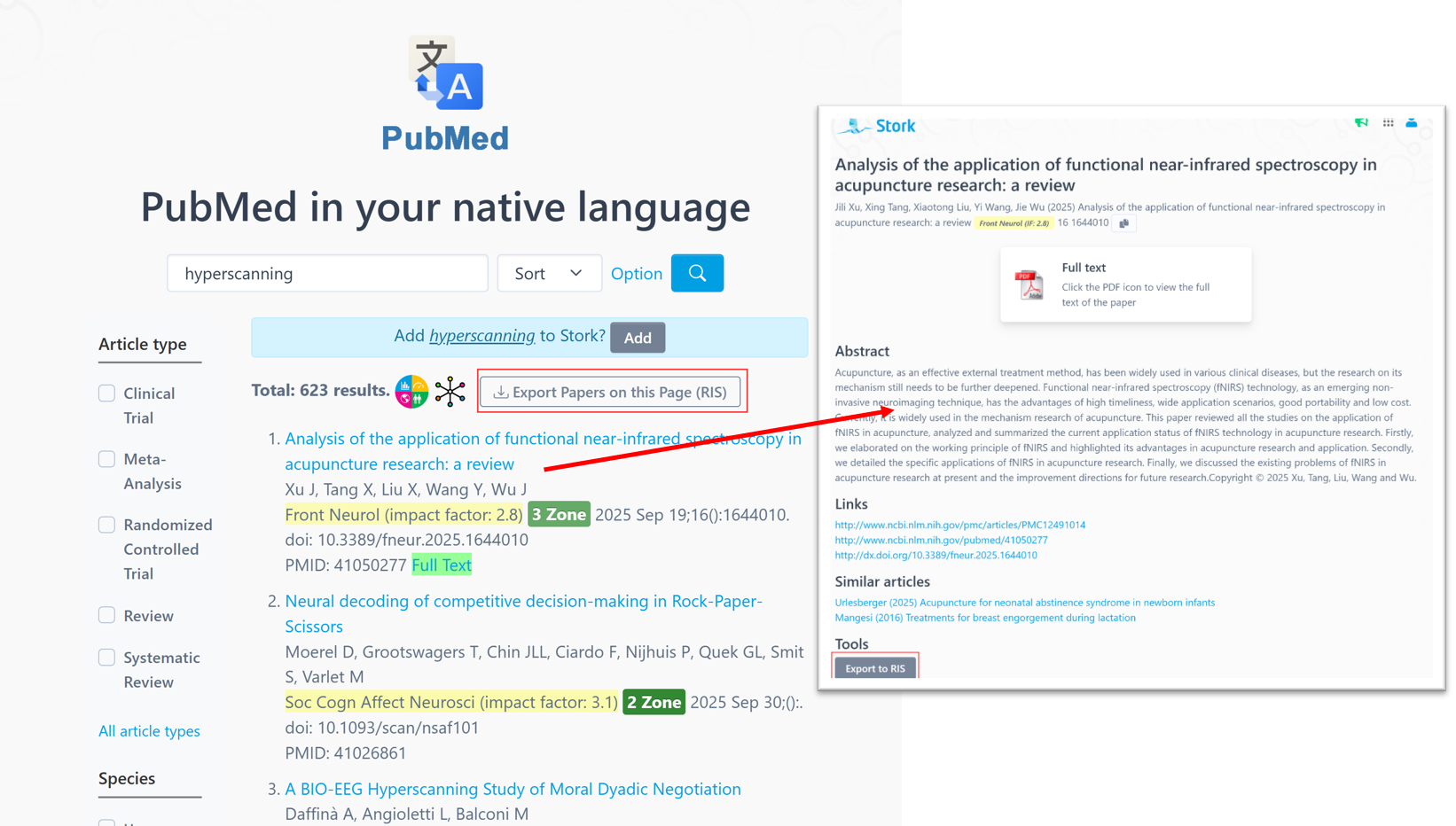
    PubMed Multi-language Search, Translate & Alert


    In PubMed Multi-language Search, Translate & Alert, you can export a paper's RIS file from its detail page —or export all papers on the current search page at once.


    5

    Big Analysis


    Big Analysis collects and analyzes papers based on your keywords, showing growth trends, geographic distribution, experts (and their contact information), genes, diseases, brain regions, etc. 

    All related papers can be exported as RIS files for easy reference management.


    6

    Citation Network


    Citation Network visualizes how papers cite and are cited by one another — helping you trace classic studies and follow research connections.
    All papers in the network can be exported as RIS files as well.


    END

    RIS export may seem like a small feature, but it’s thoughtful details like this that make Stork truly helpful.
    Try it out today: https://www.storkapp.me


  • AI Paper update: a new way to start any kind of academic writing


    TL; DR

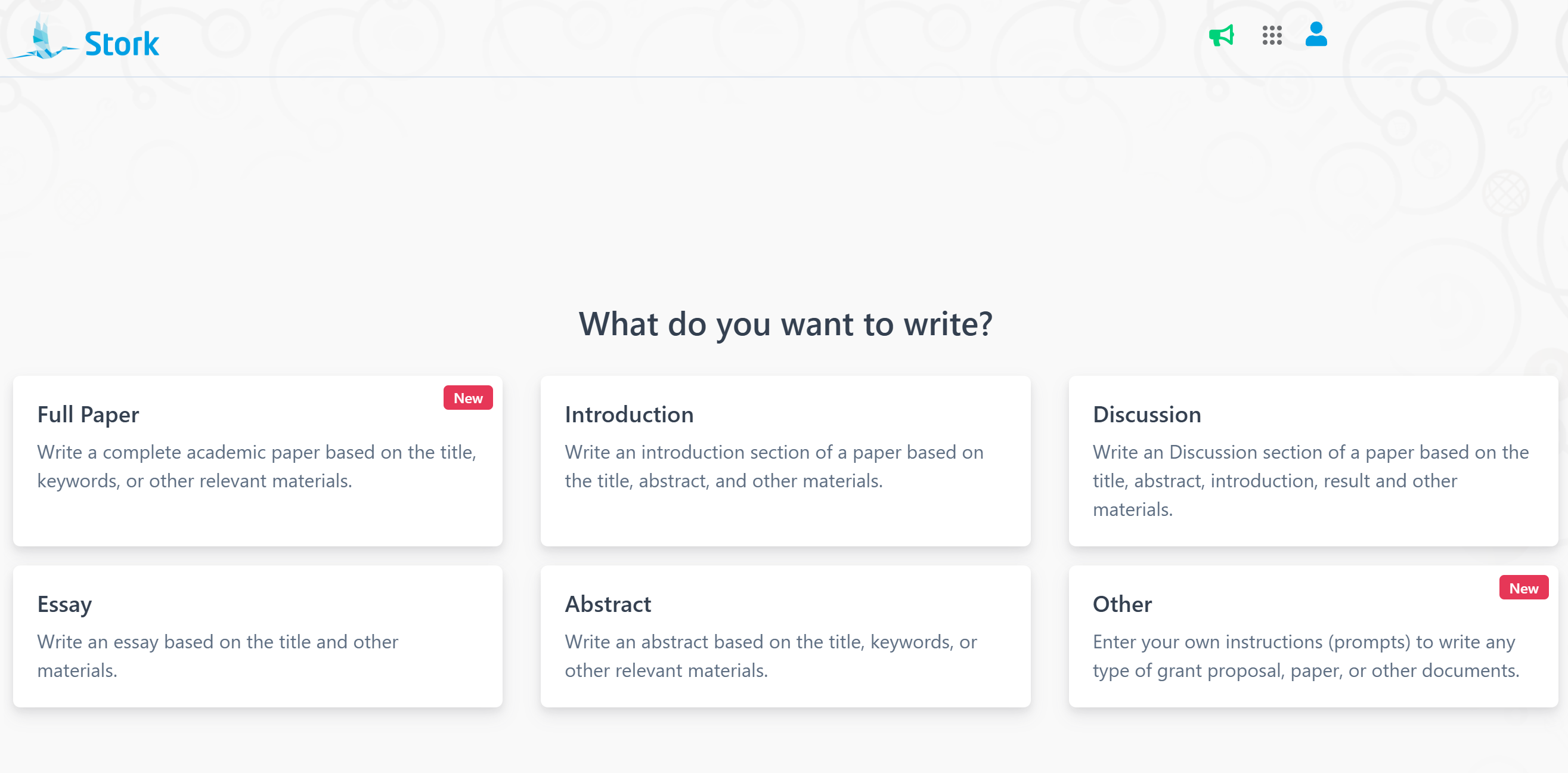
    AI Paper just got an upgrade — there’s now an “Other” option, a flexible space where you can write anything: reviews, research plans, or even funding proposals.


    Academic writing often feels like a quiet battle: There’s always something to write — an introduction, a discussion, an abstract, a short paper, or that never-ending proposal — but somehow, the first step is always the hardest.


    That’s why AI Paper exists.
    It’s already helped many of us get started: giving structure to introductions, offering outlines for discussions, and even helping design a clear framework for full paper.


    But real research writing is rarely that neat.
    Sometimes you just need a rough draft of a research plan.

    Sometimes you want to write a review or a meta-analysis.
    Sometimes you’re working on a grant proposal that doesn’t fit any existing template.

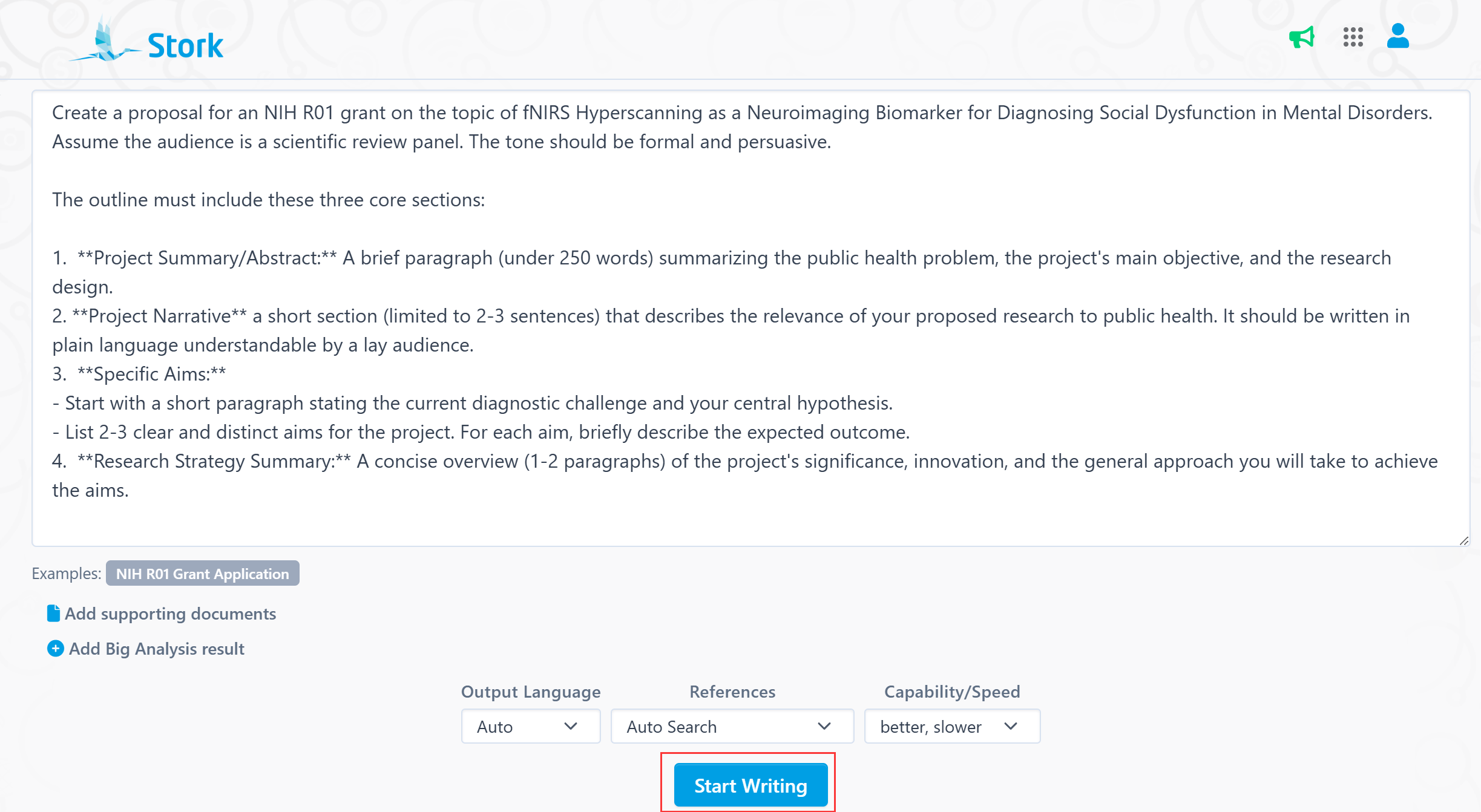
    Now, you finally have a place for all of that — “Other”

    Just tell AI Paper what you need to write, and let it do the heavy lifting.

    No more clicking through fixed categories like Introduction or Methods — you decide where to begin.


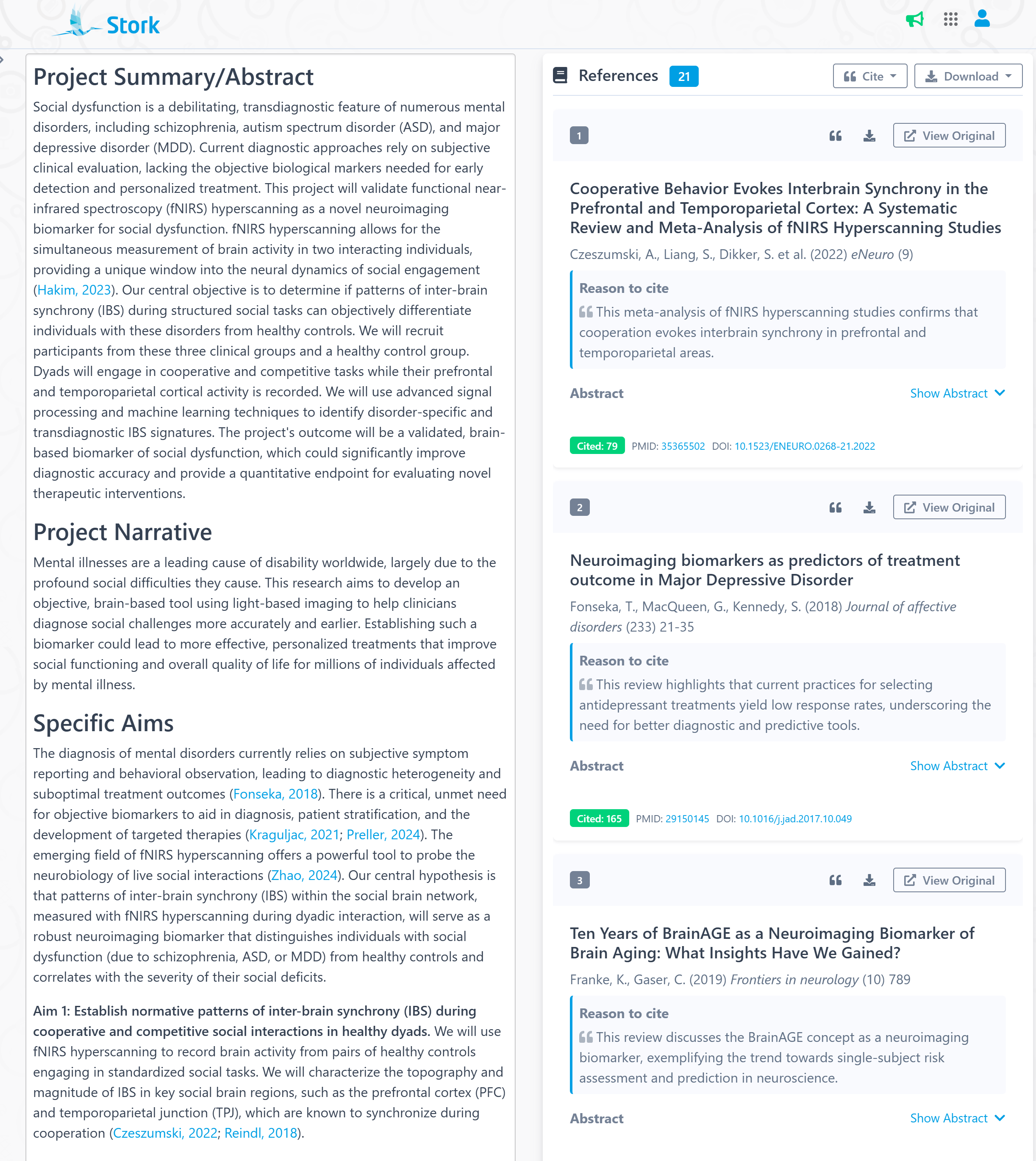
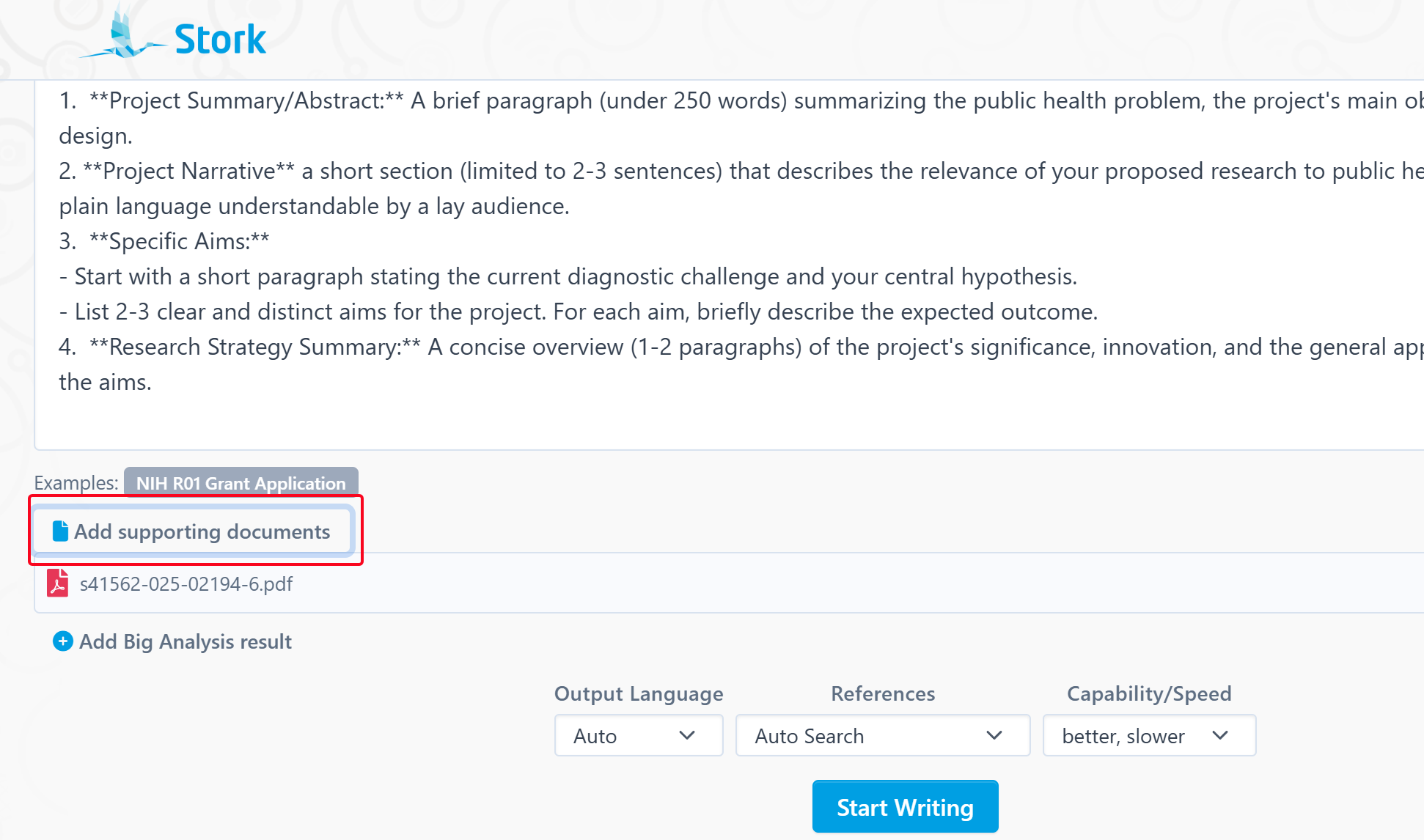
    For example, if you’re writing an NIH R01 proposal, you can paste the title and requirements directly, hit Start Writing, and watch AI Paper draft a well-organized, citation-rich text.


    And if you want to bring in your own research background, you can upload supporting materials through Add supporting documents, so that the writing fits your project more closely.


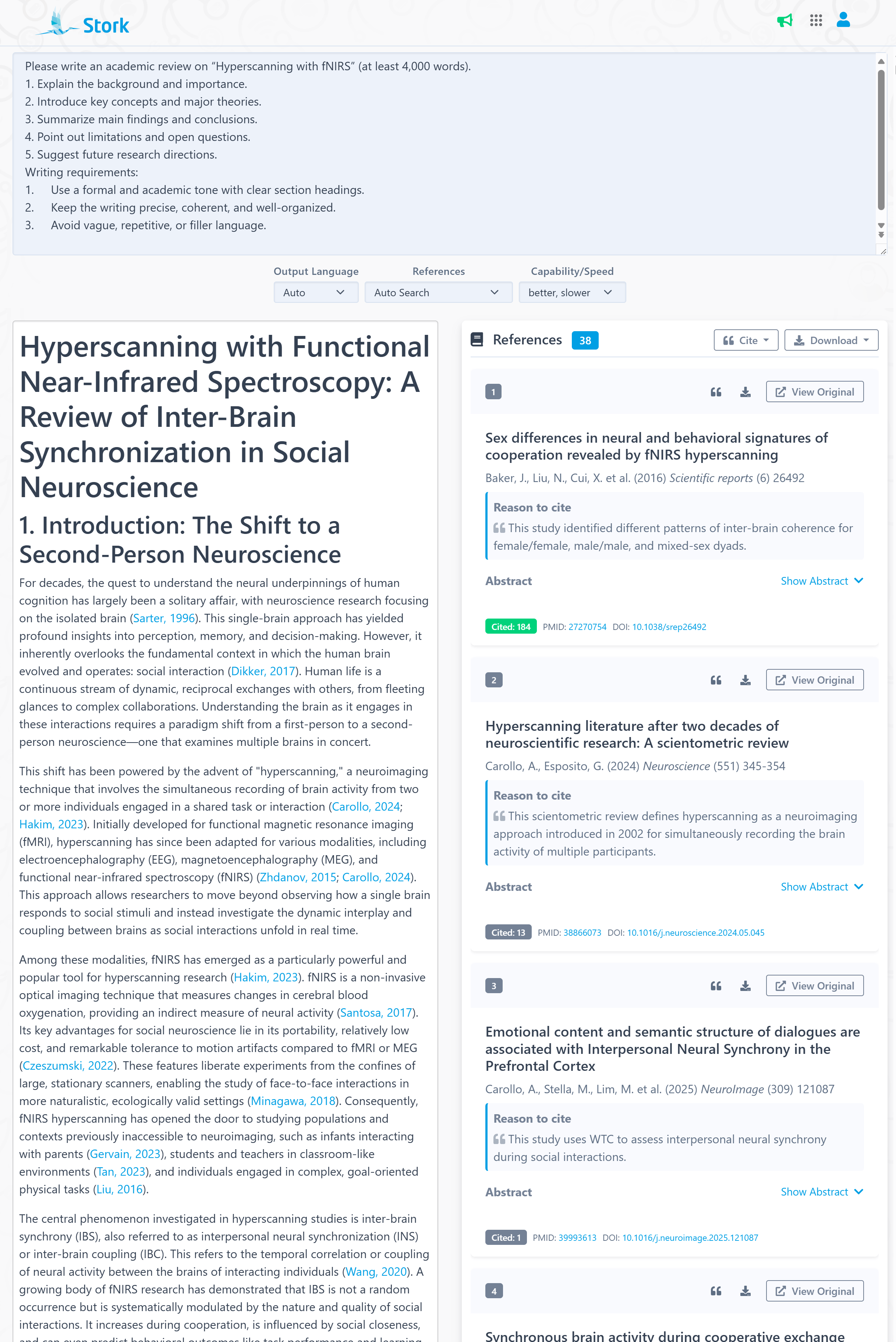
    When writing a review, you can be as specific as this:

    Please write an academic review on “Hyperscanning with fNIRS” (at least 4,000 words). 

    1. Explain the background and importance. 

    2. Introduce key concepts and major theories. 

    3. Summarize main findings and conclusions. 

    4. Point out limitations and open questions. 

    5. Suggest future research directions. 


    Writing requirements:

    1. Use a formal and academic tone with clear section headings.

    2. Keep the writing precise, coherent, and well-organized.

    3. Avoid vague, repetitive, or filler language.


    Research writing doesn’t always start with a perfect outline — sometimes it just starts with an idea. Now you can turn that idea into words, directly.

    Open AI Paper, click on “Other,”
    and see what it can write with you, not for you.


    【How to Use】

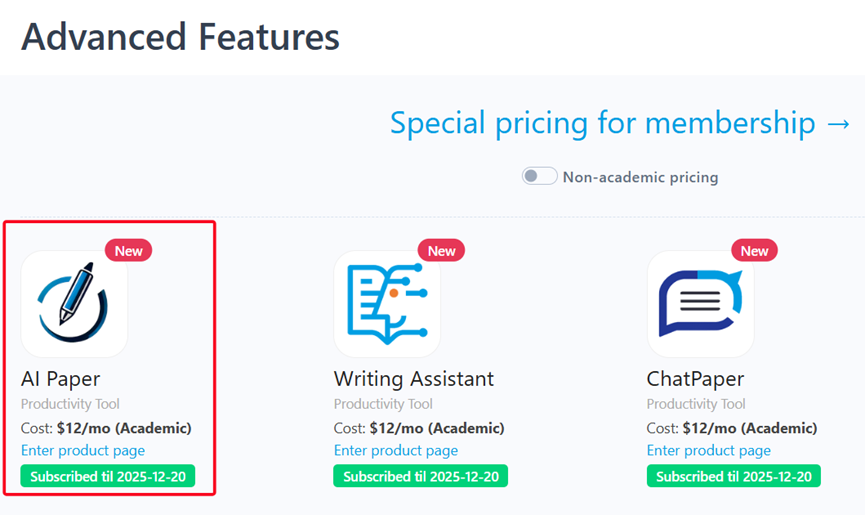
    AI Paper is an advanced feature offered by Stork, which requires subscription (registered users can try 10 articles for free). After registering/logging in to Stork (https://www.storkapp.me), you can find AI Paper under the advanced features section. Then you can try it out or subscribe. Alternatively, you can visit the official AI Paper website directly at https://www.storkapp.me/aipaper/


  • [Resource] Free Subscription: fNIRS Frontiers Weekly Newsletter


    TL; DR

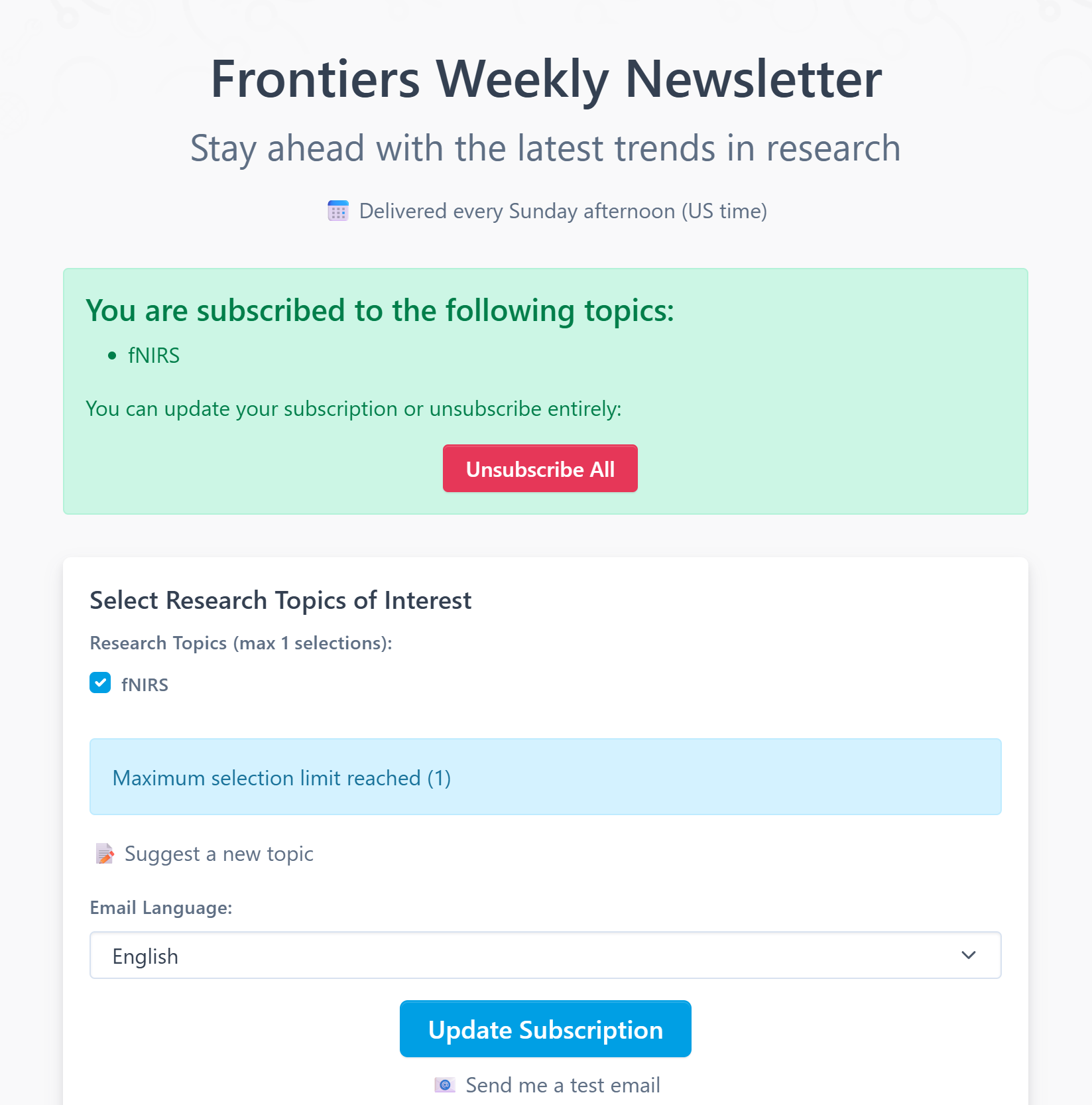
    Stork now offers a free fNIRS Frontiers Weekly Newsletter: Synthesize all fNIRS papers published in the past week into coherent summaries. Delivered every Sunday afternoon (US time).
    Subscribe here: https://www.storkapp.me/readingguide/ 


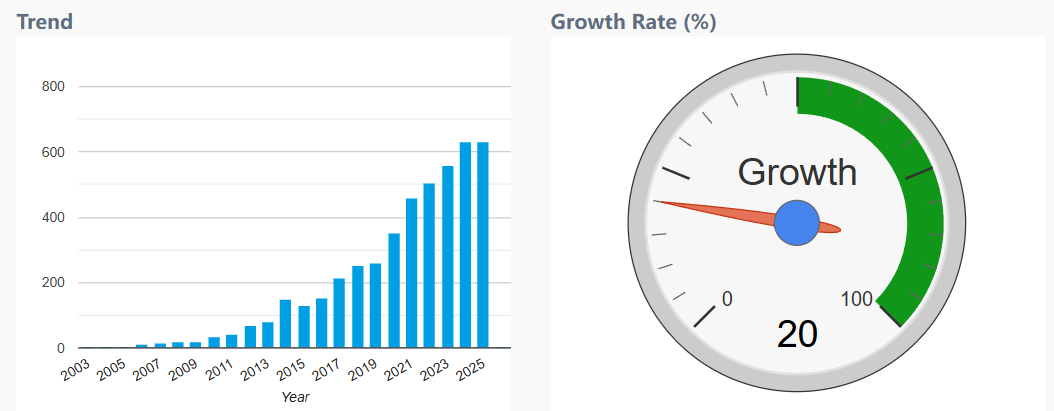
    Over the past two decades, functional near-infrared spectroscopy (fNIRS) has evolved from a lab novelty into a widely used tool in cognitive neuroscience and clinical research. As fNIRS finds uses in everything from methodological advances to clinical diagnosis, from social neuroscience to child development, the number of publications has expanded at an exponential pace.

    (Source: https://www.storkapp.me/meta/


    With that vitality comes information overload:

    • The literature keeps expanding, but the number of papers one can read thoroughly is limited.

    • Updates arrive in fragments, making it hard to see the bigger picture.

    • A small oversight can mean missing findings directly relevant to your work.

    To help researchers stay ahead with the latest trends in research, Stork offers a free fNIRS Frontiers Weekly Newsletter. Each issue is a concise, structured summarizes of all fNIRS-related papers published in the past week—sent straight to your inbox every Sunday afternoon (US time).


    Key benefits:

    1. Skip manual searches – Save hours each week; no need to comb through multiple databases.

    2. Stay current – Keep up with the latest discoveries, methodological advances, and applications worldwide.

    3. Never miss breakthroughs – Catch important results in your subfield or adjacent areas.

    4. Thematic integration – Not just a list: studies are grouped by topic (e.g., similar methods or questions) for a clearer overview.

    5. One-click details – Authors’ names are hyperlinked; click to jump straight to the paper’s page (abstract/full text) without extra searching.

    6. Language flexibility – Receive the newsletter      in English or Chinese—your choice.


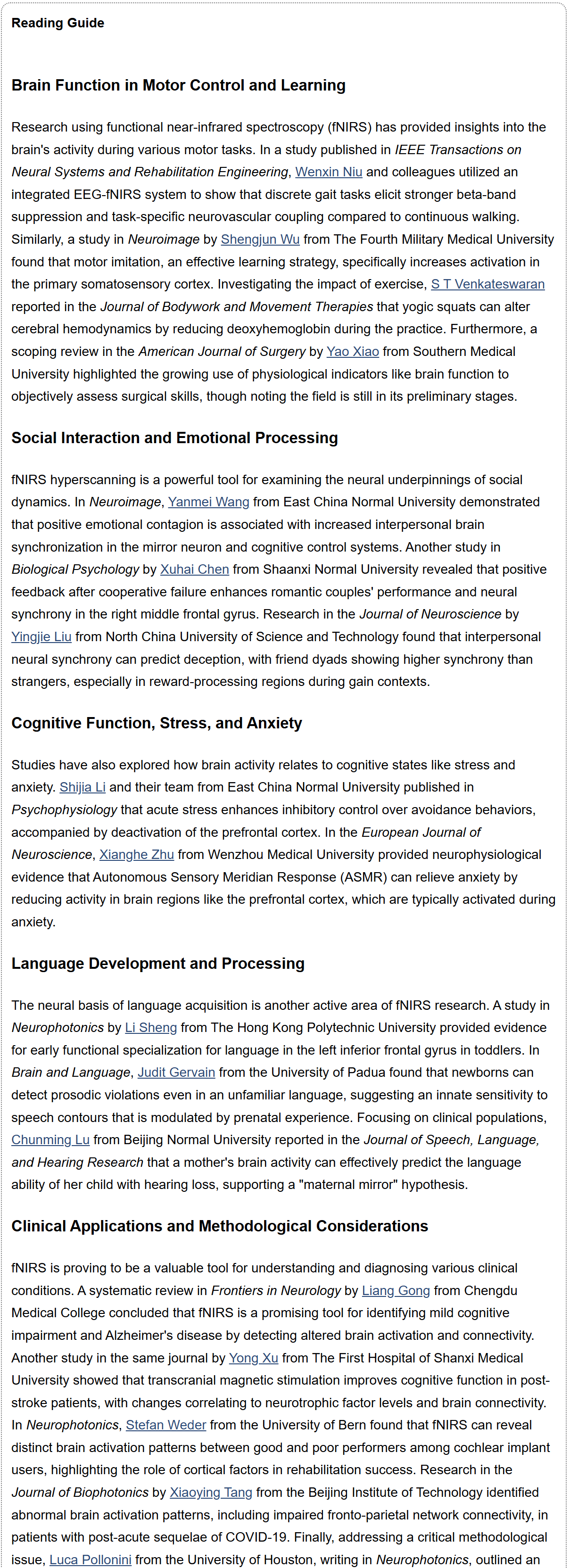
    Here is an example email: 

    Brain Function in Motor Control and Learning


    Research using functional near-infrared spectroscopy (fNIRS) has provided insights into the brain's activity during various motor tasks. In a study published in IEEE Transactions on Neural Systems and Rehabilitation Engineering, Wenxin Niu and colleagues utilized an integrated EEG-fNIRS system to show that discrete gait tasks elicit stronger beta-band suppression and task-specific neurovascular coupling compared to continuous walking. Similarly, a study in Neuroimage by Shengjun Wu from The Fourth Military Medical University found that motor imitation, an effective learning strategy, specifically increases activation in the primary somatosensory cortex. Investigating the impact of exercise, S T Venkateswaran reported in the Journal of Bodywork and Movement Therapies that yogic squats can alter cerebral hemodynamics by reducing deoxyhemoglobin during the practice. Furthermore, a scoping review in the American Journal of Surgery by Yao Xiao from Southern Medical University highlighted the growing use of physiological indicators like brain function to objectively assess surgical skills, though noting the field is still in its preliminary stages.


    Social Interaction and Emotional Processing


    fNIRS hyperscanning is a powerful tool for examining the neural underpinnings of social dynamics. In Neuroimage, Yanmei Wang from East China Normal University demonstrated that positive emotional contagion is associated with increased interpersonal brain synchronization in the mirror neuron and cognitive control systems. Another study in Biological Psychology by Xuhai Chen from Shaanxi Normal University revealed that positive feedback after cooperative failure enhances romantic couples' performance and neural synchrony in the right middle frontal gyrus. Research in the Journal of Neuroscience by Yingjie Liu from North China University of Science and Technology found that interpersonal neural synchrony can predict deception, with friend dyads showing higher synchrony than strangers, especially in reward-processing regions during gain contexts.


    Cognitive Function, Stress, and Anxiety


    Studies have also explored how brain activity relates to cognitive states like stress and anxiety. Shijia Li and their team from East China Normal University published in Psychophysiology that acute stress enhances inhibitory control over avoidance behaviors, accompanied by deactivation of the prefrontal cortex. In the European Journal of Neuroscience, Xianghe Zhu from Wenzhou Medical University provided neurophysiological evidence that Autonomous Sensory Meridian Response (ASMR) can relieve anxiety by reducing activity in brain regions like the prefrontal cortex, which are typically activated during anxiety.


    Language Development and Processing


    The neural basis of language acquisition is another active area of fNIRS research. A study in Neurophotonics by Li Sheng from The Hong Kong Polytechnic University provided evidence for early functional specialization for language in the left inferior frontal gyrus in toddlers. In Brain and Language, Judit Gervain from the University of Padua found that newborns can detect prosodic violations even in an unfamiliar language, suggesting an innate sensitivity to speech contours that is modulated by prenatal experience. Focusing on clinical populations, Chunming Lu from Beijing Normal University reported in the Journal of Speech, Language, and Hearing Research that a mother's brain activity can effectively predict the language ability of her child with hearing loss, supporting a "maternal mirror" hypothesis.


    Clinical Applications and Methodological Considerations


    fNIRS is proving to be a valuable tool for understanding and diagnosing various clinical conditions. A systematic review in Frontiers in Neurology by Liang Gong from Chengdu Medical College concluded that fNIRS is a promising tool for identifying mild cognitive impairment and Alzheimer's disease by detecting altered brain activation and connectivity. Another study in the same journal by Yong Xu from The First Hospital of Shanxi Medical University showed that transcranial magnetic stimulation improves cognitive function in post-stroke patients, with changes correlating to neurotrophic factor levels and brain connectivity. In Neurophotonics, Stefan Weder from the University of Bern found that fNIRS can reveal distinct brain activation patterns between good and poor performers among cochlear implant users, highlighting the role of cortical factors in rehabilitation success. Research in the Journal of Biophotonics by Xiaoying Tang from the Beijing Institute of Technology identified abnormal brain activation patterns, including impaired fronto-parietal network connectivity, in patients with post-acute sequelae of COVID-19. Finally, addressing a critical methodological issue, Luca Pollonini from the University of Houston, writing in Neurophotonics, outlined an inclusive approach to improve the recruitment and retention of women of color in fNIRS research, helping to reduce systemic exclusion.


    This makes it easy to catch up quickly. You can look across themes to get a sense of the whole field. Or, if you only care about one corner of fNIRS, you can just follow that small theme. Either way, it saves you time and helps you spot the updates that matter most, right when you need them.

    Subscribe: https://www.storkapp.me/readingguide/


  • Reading Guide upgrade: Your personal research assistant in action


    TL; DR

    Stork's Reading Guide got smarter! No longer just a list of papers—it now synthesizes papers in coherent summaries, highlights key findings, and adds clear subheadings. Reading papers is faster and easier than ever.


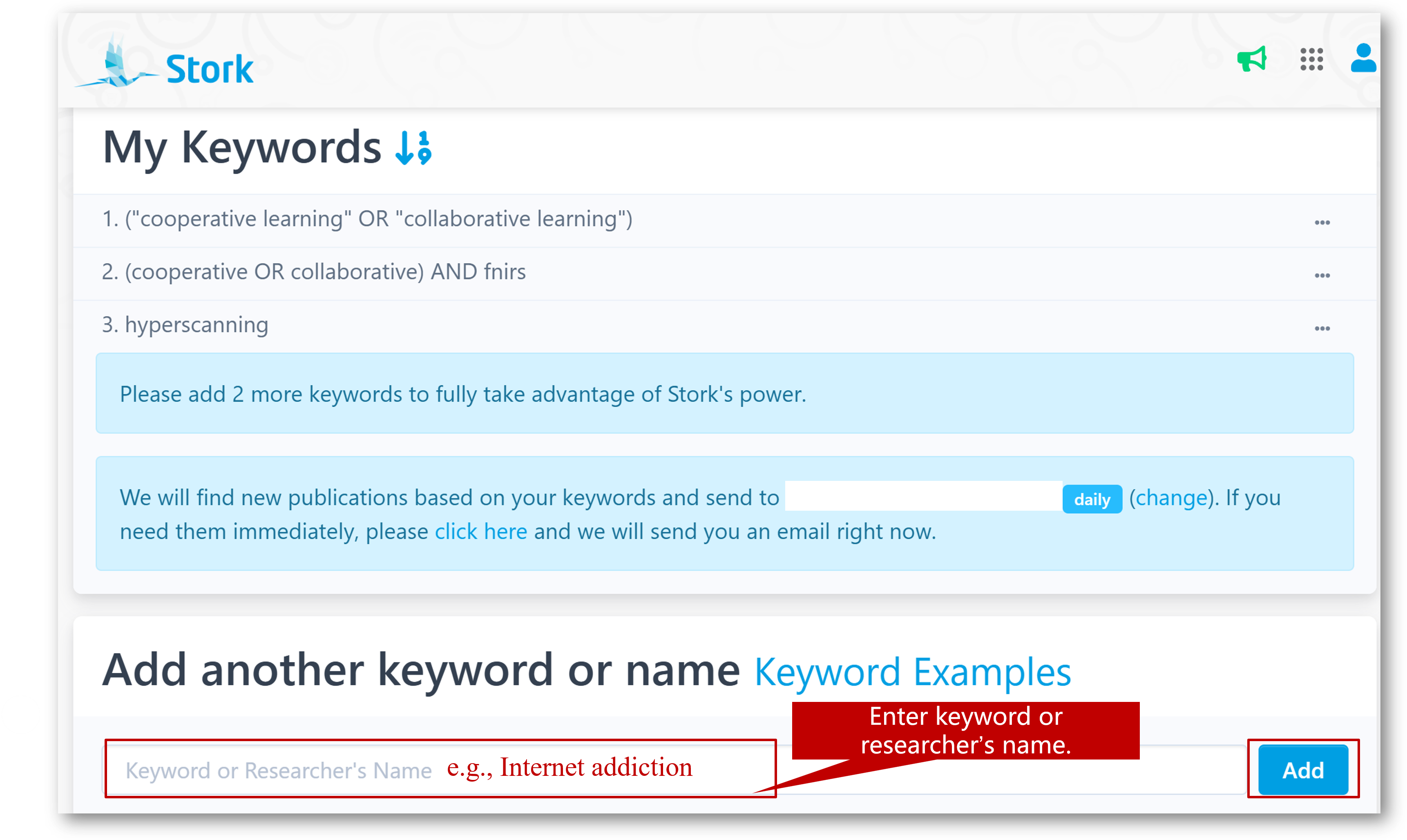
    Stork's free feature sends you the latest papers based on your own keywords. To make it easier for you to keep up the latest research, Stork has added:


    • Translations of titles and abstracts into your language

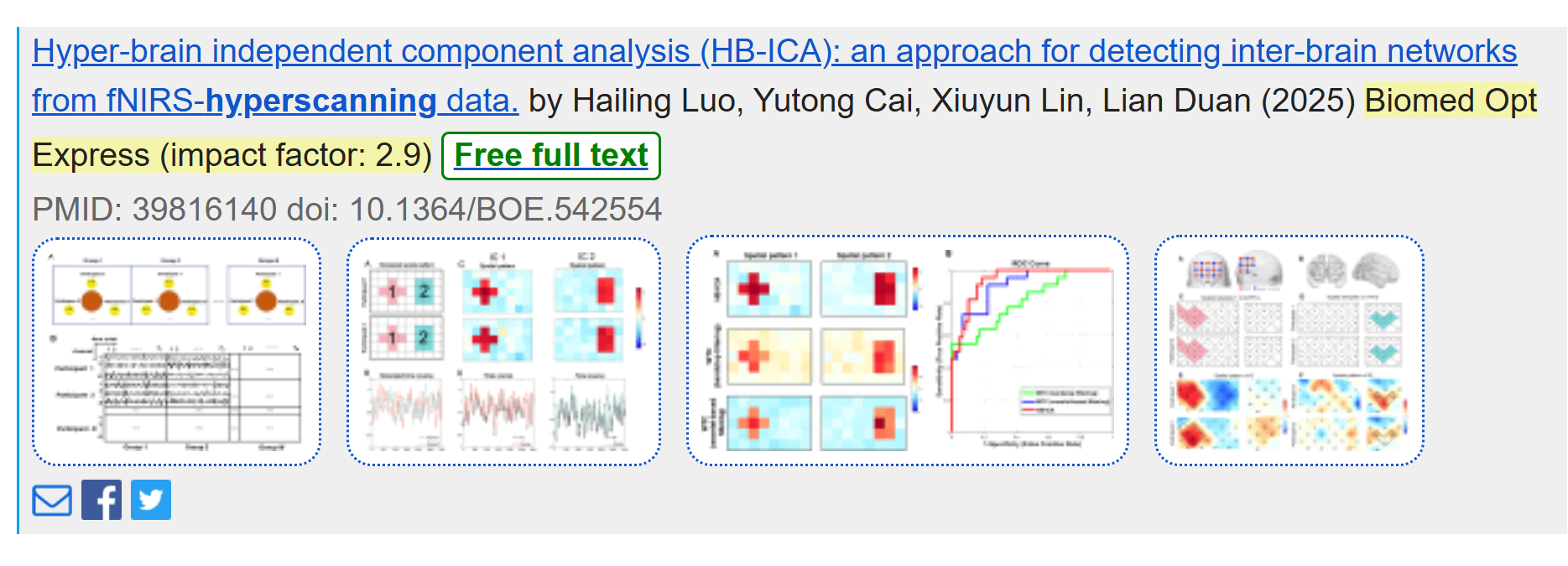
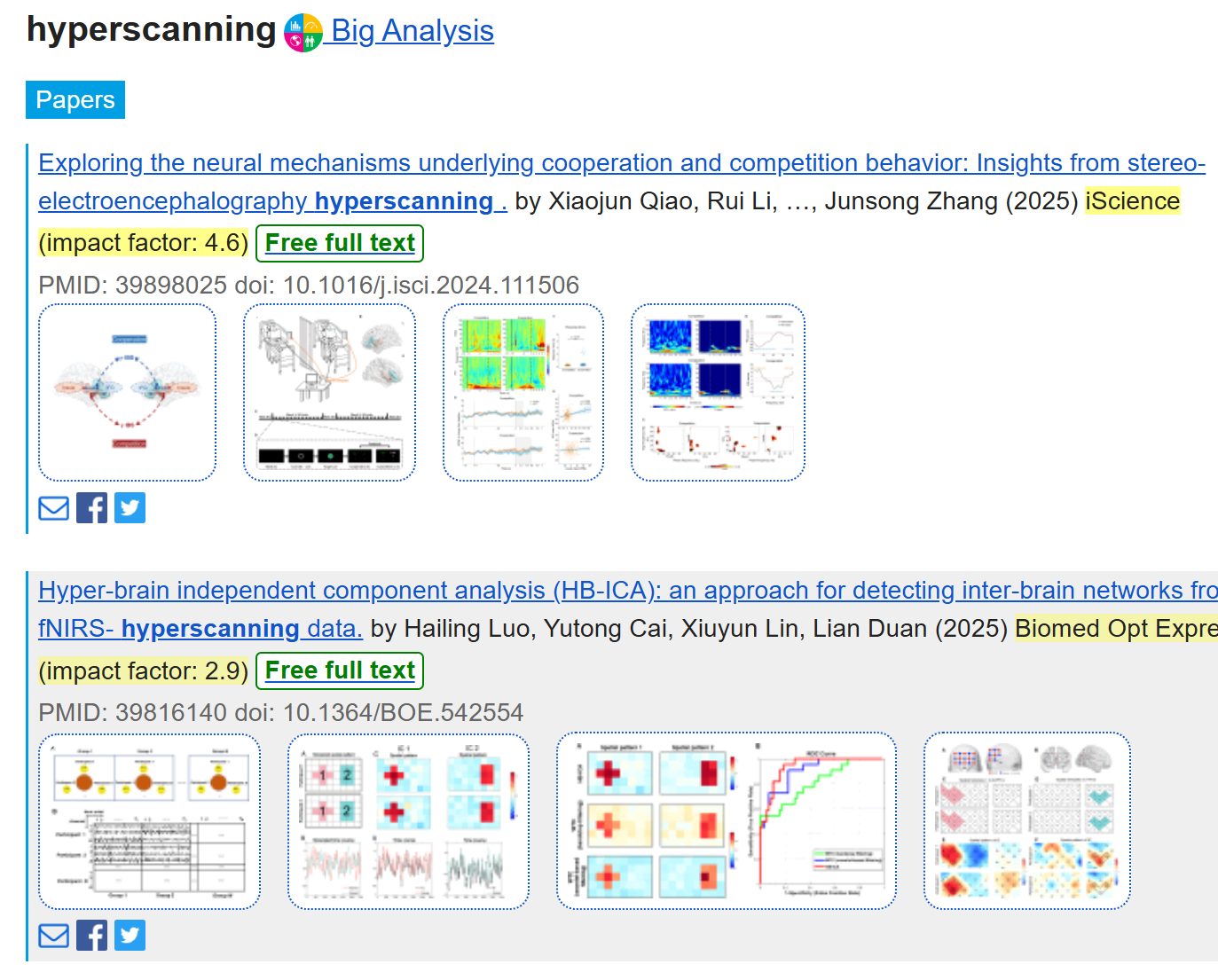
    • Figures for some open access papers showed in the alert emails

    • Reading Guide to help you quickly grasp the content


    What's new in the upgraded Reading Guide?


    ① More complete introduction
    Each summary now mentions the research team and the journal. Example: “A study in Neurophotonics by Li Sheng from The Hong Kong Polytechnic University provided evidence…” You can also click the author's name to go directly to the article page.


    ②From “abstract summary” to “insightful commentary”
    Reading Guide doesn't just restate methods and results—it points out the why it matters and how it was done, highlighting innovation, theoretical value, or practical implications.


    ③ New subheadings for clarity
    Each topic begins with a short headline (e.g., “Brain Function in Motor Control and Learning”, “Social Interaction and Emotional Processing”), so you can quickly scan and focus on what interests you.


    With denser information and a friendlier structure, the upgraded Reading Guide helps you cut through the noise and spot the most valuable studies in less time.


    【How to use】

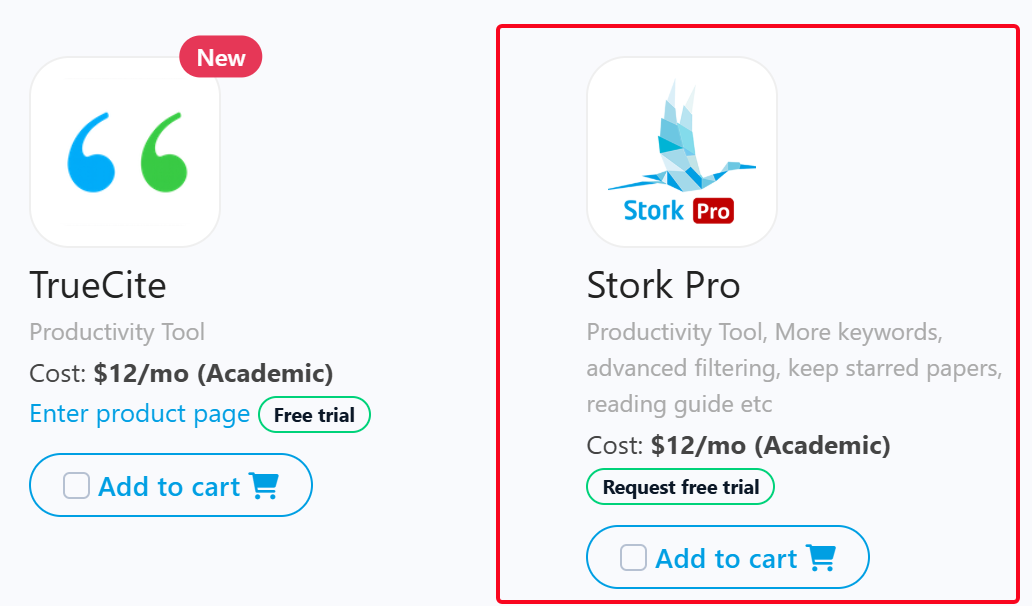
    Reading Guide is part of Stork Pro, an advanced feature offered by Stork (free trial is available). After registering/logging into Stork (https://www.storkapp.me), you can find Stork Pro under the "Advanced Feature" section. Then you can try it out or subscribe. You can also subscribe to Reading Guide separately.


  • NIH Mentions Stork as a Go-To Tool for ME/CFS Research


    TL; DR

    The National Institute of Neurological Disorders and Stroke (NINDS) at NIH recommends using Stork (www.storkapp.me) to freely track the latest research publications.


    The National Institute of Neurological Disorders and Stroke (NINDS), part of the National Institutes of Health (NIH), once issued a Request for Information (RFI) to gather ideas on how to advance research on ME/CFS (Myalgic Encephalomyelitis/Chronic Fatigue Syndrome).


    They invited researchers, clinicians, patients, and advocates worldwide to share their thoughts. The collected feedback was compiled into a public document full of practical suggestions — from creating national patient registries and improving biobanks, to fostering cross-disciplinary collaborations and developing wearable data collection tools.


    You can read the full document here: https://www.ninds.nih.gov/sites/default/files/migrate-documents/mecfs_2019_rfi_q3_resources_tools_to_enable_research_508c_1.pdf


    And here's the exciting part: Among the feedback about research resources, tools, and materials, someone specifically recommended:

    "Sign up for daily published journal articles using Stork (support@storkapp.me) – using all our various names, fully spelled out and using acronyms so you'll see them as soon as they're published…"


    Yes — Stork was highlighted as a go-to tool for staying on top of the latest academic publications. For researchers in fast-moving fields like ME/CFS, timely access to new findings is critical.


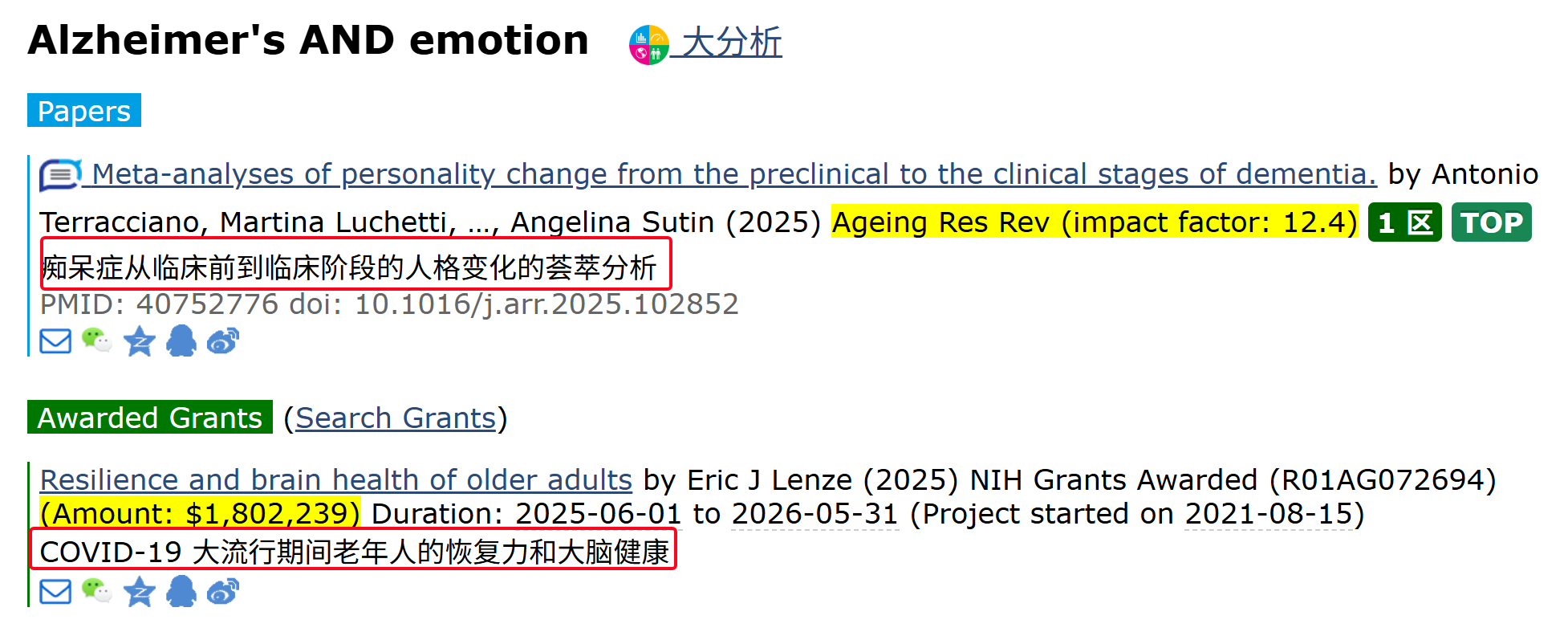
    Stork's alerts aren't limited to ME/CFS: once you set your keywords, it delivers matching research paper straight to your inbox—including key figures from papers — so you can quickly decide which ones are worth a closer look.


    ⭐ Research is moving faster than ever — keeping up with new publications shouldn't feel like a burden. Try Stork and supercharge your research productivity!


  • Writing Assistant helped Chen publish in Small


     Info

    "The texts in this paper are polished and significantly improved by Stork's Writing Assistant (https://www.storkapp.me/writeassistant/)."


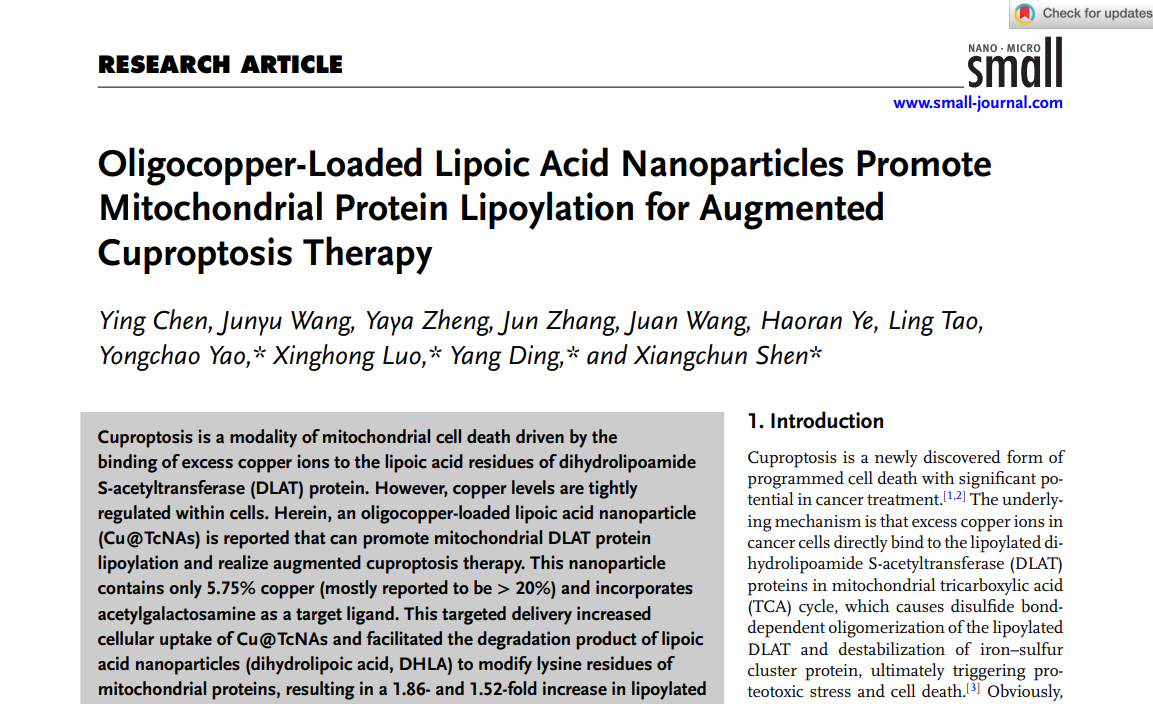
    Recently, Ying Chen from The High Efficacy Application of Natural Medicinal Resources Engineering Center of Guizhou Province & School of Pharmaceutical Sciences at Guizhou Medical University in China published a paper titled "Oligocopper-Loaded Lipoic Acid Nanoparticles Promote Mitochondrial Protein Lipoylation for Augmented Cuproptosis Therapy" in the journal Small (IF = 12.1). The paper cited Writing Assistant of Stork. You can access the paper here:https://doi.org/10.1002/smll.202501259


    This article cited Stork in the Declaration section:


    "The texts in this paper are polished and significantly improved by Stork's Writing Assistant (https://www.storkapp.me/writeassistant/)."


    Stork's Writing Assistant can help you with text polishing, grammar correction, and paragraph expansion, while also offering a Word Add-in for a smoother writing experience.


     【User Reviews】

    Eric Li, Ph.D

    Stanford University

    "Writing Assistant is an excellent tool for scientists and researchers to improve the quality of their publication writing. I highly recommend Writing Assistant for those whose native language is not English or who lack writing skills and ideas."

    Juanjuan Du, Professor

    Tsinghua University

    "In the past, the task of writing was often time-consuming. Fortunately, Writing Assistants have made this process much simpler by providing multiple sentences with the same meaning. This has made writing much more efficient and enjoyable."

    Xiaoyan Zheng, Processor

    GWU

    "Writing Assistant is an exceptional platform for verifying spelling and grammar. It also provides users with a variety of suggestions to alter their tones or enhance their writing's clarity. Highly recommended!"

    Xiaomeng Pei, Associate Research Fellow

    Hong Kong Polytechnic University

    "When I first started writing papers, in order to make the sentences more accurate, I would revise a sentence back and forth many times but still not be completely satisfied. If you are also facing the same problem, try Writing Assistant. It will undoubtedly assist you in effortlessly and efficiently writing the most genuine and seamlessly fluent English papers!"


     【How to use】

    Writing Assistant is an advanced feature offered by Stork (free trial is available). After registering/logging into Stork (https://www.storkapp.me), you can find Writing Assistant under the "Advanced Feature" section. Then you can try it out or subscribe. Alternatively, you can visit Writing Assistant website directly at https://www.storkapp.me/writeassistant/


     Tips

    To date, more than 50 scientific papers have cited Stork. If you cite Stork in your paper, please let us know at support@storkapp.me, and we'll offer you a discount based on the journal's impact factor when you subscribe to Writing Assistant or other advanced features.