
Author: Wanling Zhu

  • Research 101: How to write a paper


    TL; DR

    Scientific writing is about telling a clear, logical story. Start by reviewing the literature, defining your research question, and picking a target journal. Follow the IMRAD structure: Introduction, Methods, Results, and Discussion. Use clear, vivid language and avoid "zombie nouns".


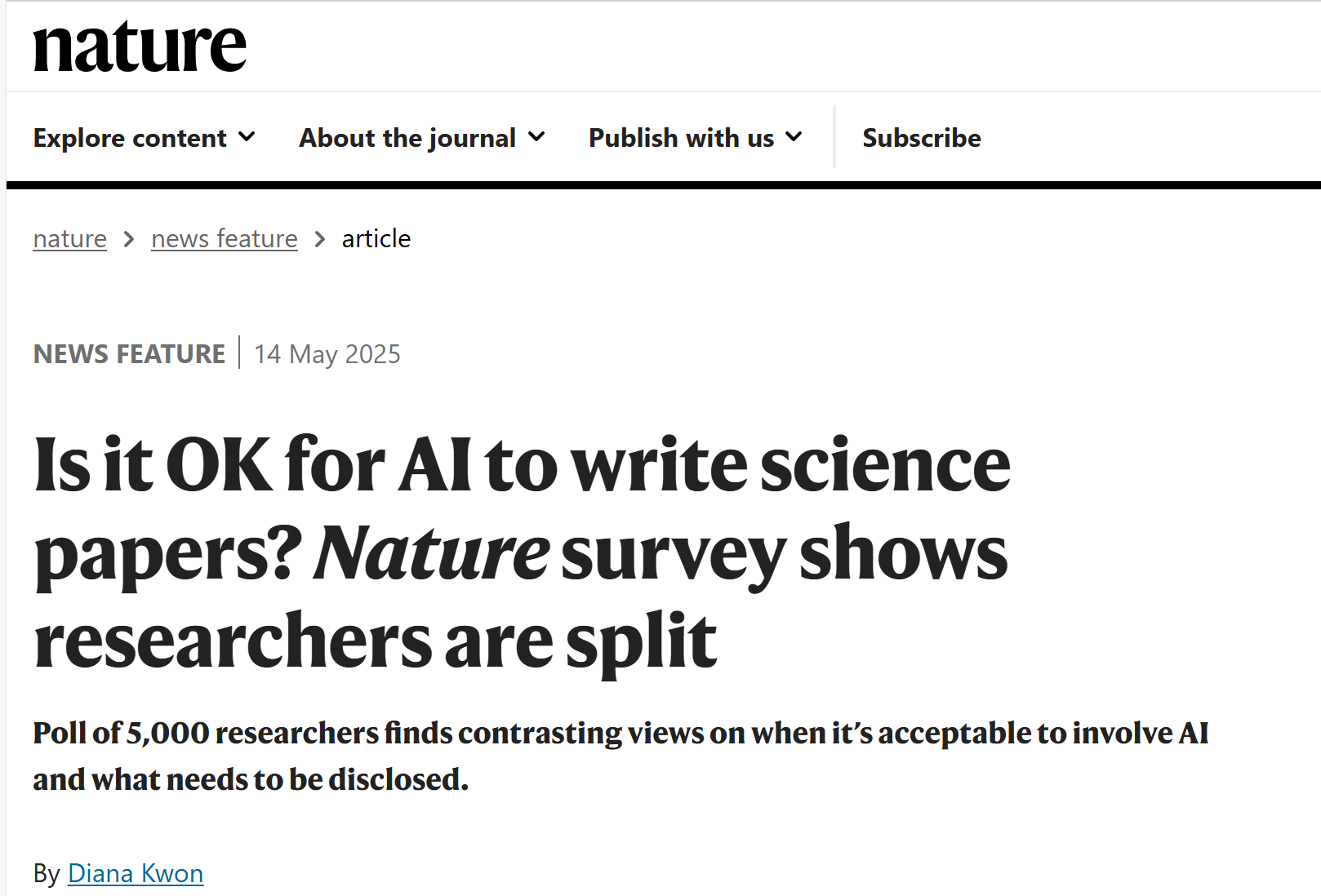
    Every researcher has been faced a blank page at some stage of their career, wondering where to start and what to write first. Describing research work in a format that is comprehensible to others, and acceptable for publication is no easy task.


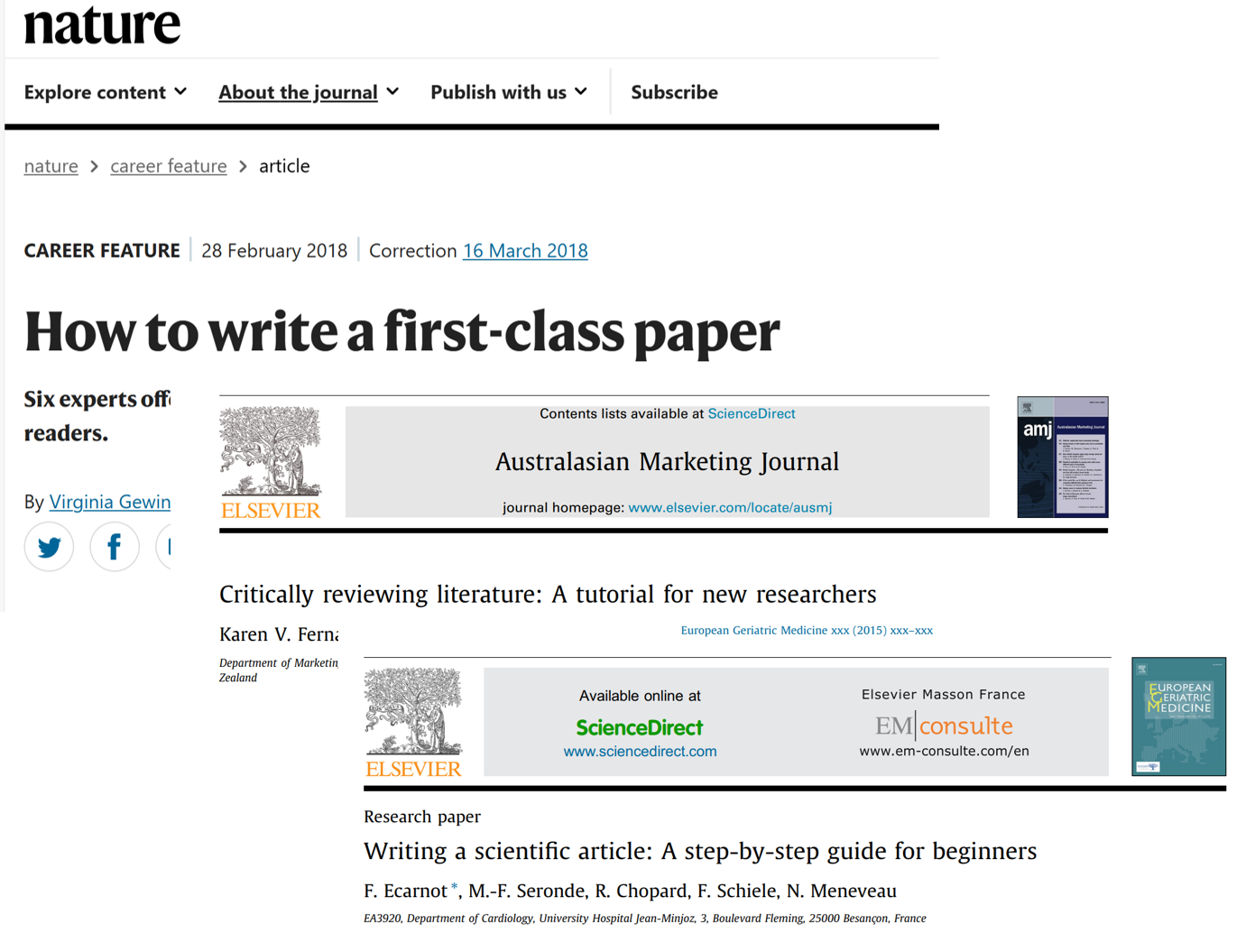
    The good news is that writing a strong scientific paper follows a clear roadmap.  Here, we combine wisdom from Nature and other top publications to  explain the most important parts of a paper and how to write them.

    1 Getting started: things to do before you write a word


    Before you start writing your article, it is important to do some preparatory work. Firstly, when designing your research, you should read and review the literature in that field. A literature review should involve critical analysis to help you accomplish the following tasks:

    • Demonstrating knowledge of prior work

    • Identifying research gaps

    • Forming specific research questions

    • Positing the new research

    • Contributing to theory development

    It is helpful to take notes of important points or phrases that you intend to include in your article, with the relevant references.


    Additionally, you should identify the target journal in which you intend to submit your research. This decision will impact the formatting and the direction of your writing style.


    2 Paper structure: the golden format of 'IMRAD'


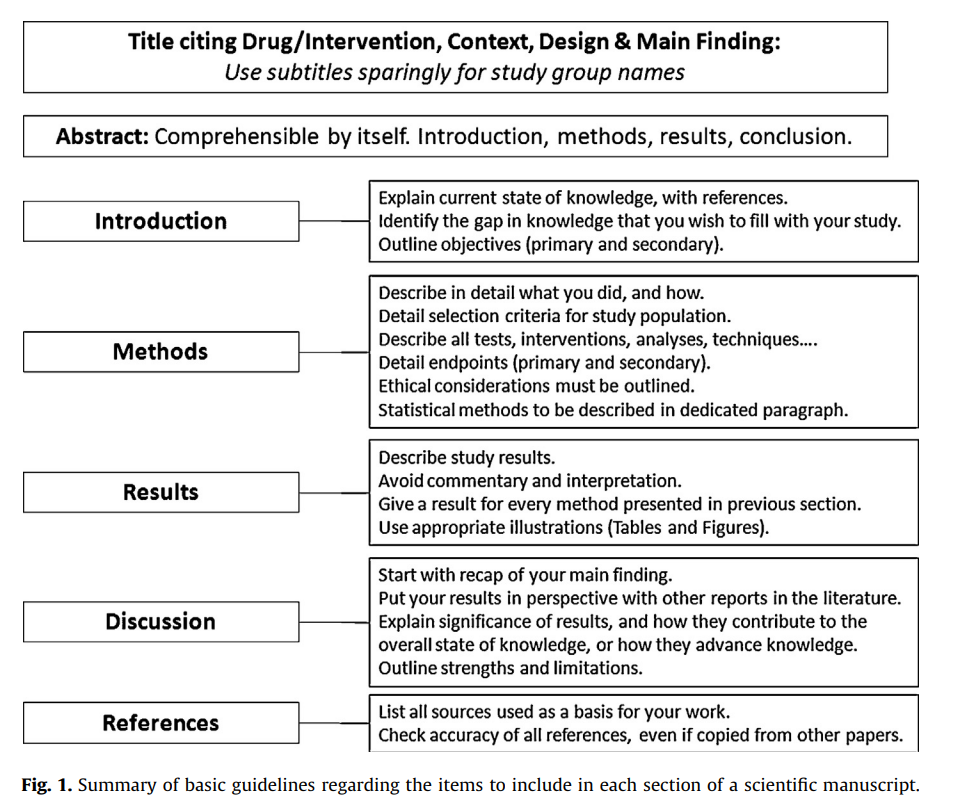
    The vast majority of scientific journals follow the so-called 'IMRAD' format, i.e. introduction, methods, results and discussion.  Added to this will be the abstract and the title. At the end, there must be a list of bibliographic references, the tables, and the legends to any figures. Finally, there may also be some other optional sections, such as acknowledgements, conflicts of interest or authors' contributions.


    (1)  Introduction


    In this section, you will explain why you undertook your study, what you aimed to achieve with it, and how this constitutes a useful addition to the existing body of evidence on this topic. It is helpful to choose one formulation for your objective, and use the same one throughout the whole paper.
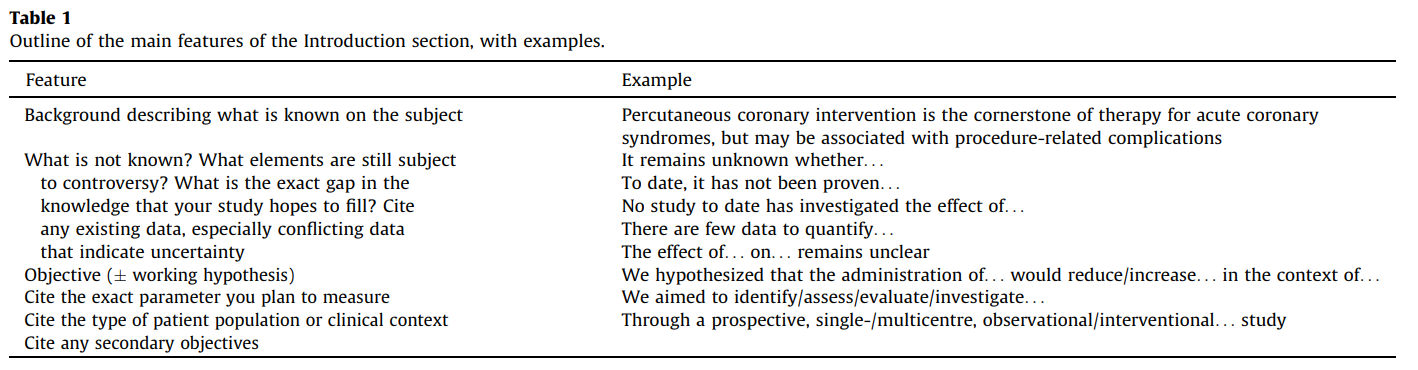

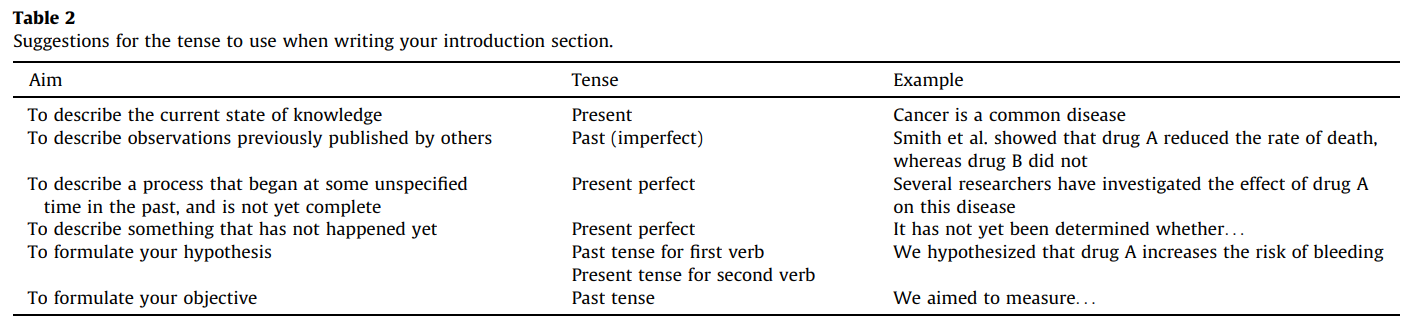
    In the absence of any explicit recommendations, it is considered that the introduction should be around one to one and a half pages. Pointers for the tense to use in the introduction are given below:

    (2)  Methods


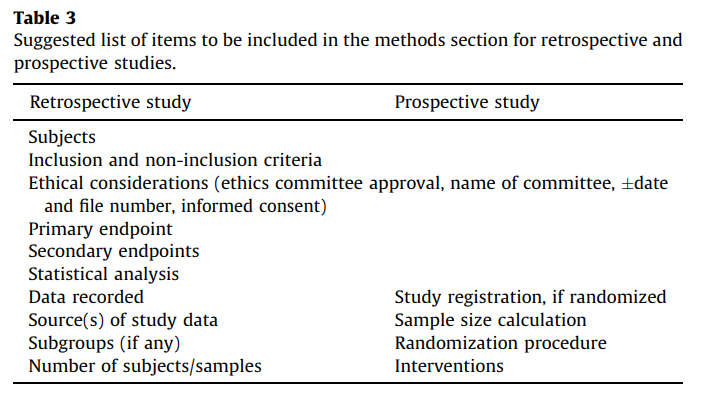
    The objective of the methods section is to describe exactly what you did, and how, in sufficient detail such that any average reader with the same resources at their disposal would be able to reproduce your study.


    Concretely, you must specify the study design, subjects, and the methods for data collection and analysis. A statement regarding ethical approval and informed consent is mandatory. The statistical analysis must be described in detail, including the software used, the level of significance, and the specific analytical methods employed.

    (3)  Results


    The aim of the results section is to describe what you observed, without commentary or discussion. It is best practice to present the results in the same order as the analyses were introduced in the Methods section. For each analysis, report the corresponding test statistic (e.g., tF, χ²), degrees of freedom (if applicable), p-value, and effect size (e.g., Cohen's d, η², Cramér's V).


    If certain results are already clearly presented in a table or figure, they should not be redundantly described in the text.


    (4)  Discussion


    The discussion should start with a brief recap of the main findings of your study, preferably using the same formulation as that used for the primary objective. Building upon this, the results must be interpreted within the context of existing literature, proposing plausible mechanisms or theoretical explanations for the observations.


    Simultaneously, the discussion should frankly acknowledge the study's limitations and use them as a basis to suggest promising avenues for future research.


    Finally, it is crucial to emphasize the novel contributions of the present findings, underscoring their significance for theoretical development.


    (5)  Title and Abstract

    The title and abstract are placed first but should be written last. They must precisely encapsulate the essence of the complete paper.


    Articles with clear, succinct, declarative titles are more likely to get picked up by social media or the popular press.
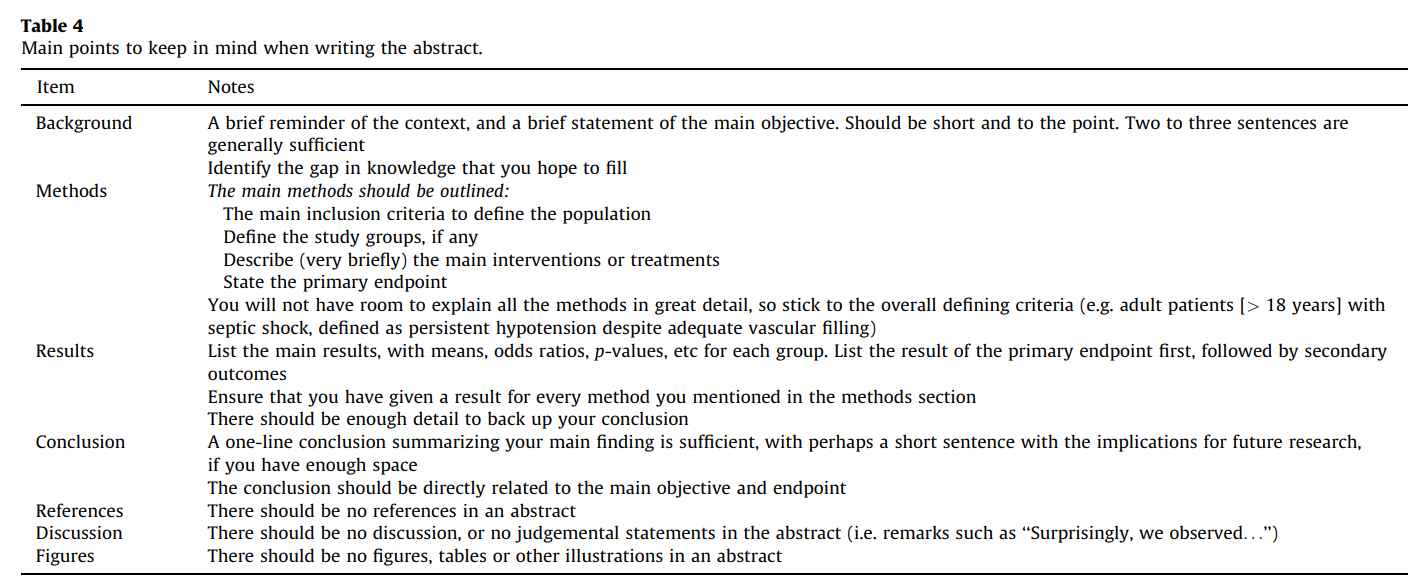
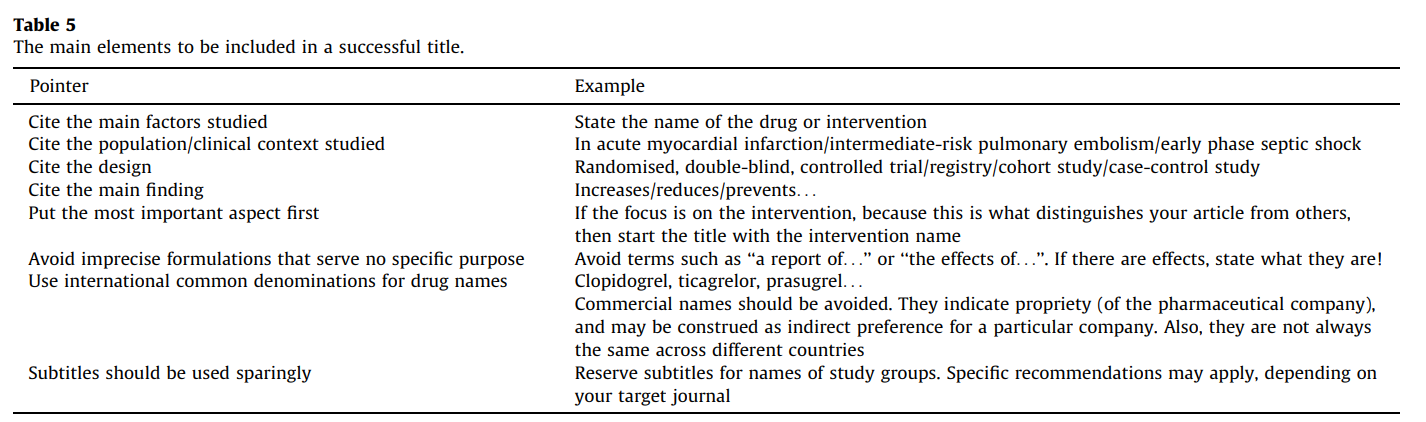
    Here is a basic guidelines of the article structure:

    3 Engaging contents: turning your paper into a compelling story


    Scientific writing requires both clear structure and a compelling narrative. Even the best discovery may be overlooked if reviewers and readers cannot engage with the story.


    (1)  State your case with confidence


    Clarity is the sole obligation of the science writer. There is a German concept known as the 'red thread', which is the straight line that the audience follows from the introduction to the conclusion. Writing that sounds defensive, with too many caveats and long lists will obscure your 'red thread'.


    (2)   Keep your message clear


    A clear message in scientific writing is essential to avoid misinterpretations; this becomes even more important when the work comes from a multidisciplinary group of authors.


    Key information belongs in the main text, while supplementary data should be separated to avoid distraction. 


    (3) Beware the curse of  'zombie nouns'


    We should engage readers' emotions and avoid formal, impersonal 'zombie nouns' like 'implementation' and 'application'.


    'Zombie nouns': The implementation of the method was carried out in our lab.

    Vivid language: We implemented the method in our lab.


    Summary

    Scientific writing should be factual, concise and evidence-based, but that doesn't mean it can't also be creative. The next time you're faced with a blank page, take a moment to ask yourself: What is the central question I want to answer? What are my key findings? And am I ready to tell a clear, coherent, and compelling story?

    If you've thought through these points, then even if your first paragraph feels clumsy, you've already taken the most important step toward writing a strong scientific paper.

  • Stork’s “Citations” Page Now Supports AI Q&A!


    TL; DR

    An AI Q&A box on the "Citations" page for quick answers about citations of Stork.


    If you've been with Stork for a while, you probably know our tradition:

    Cite Stork in your paper (and list our website address) and we will offer you discounts when you purchase. 


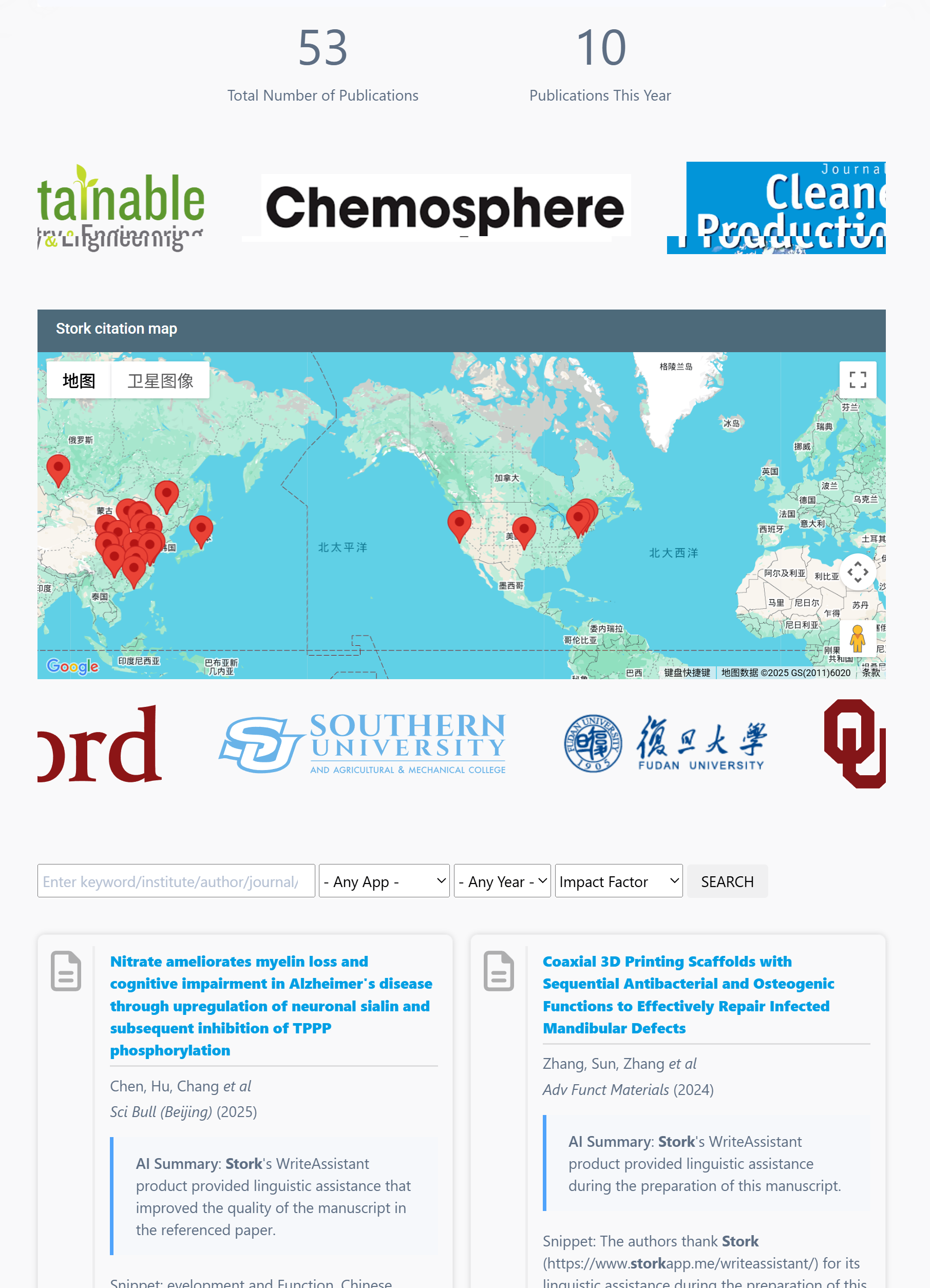
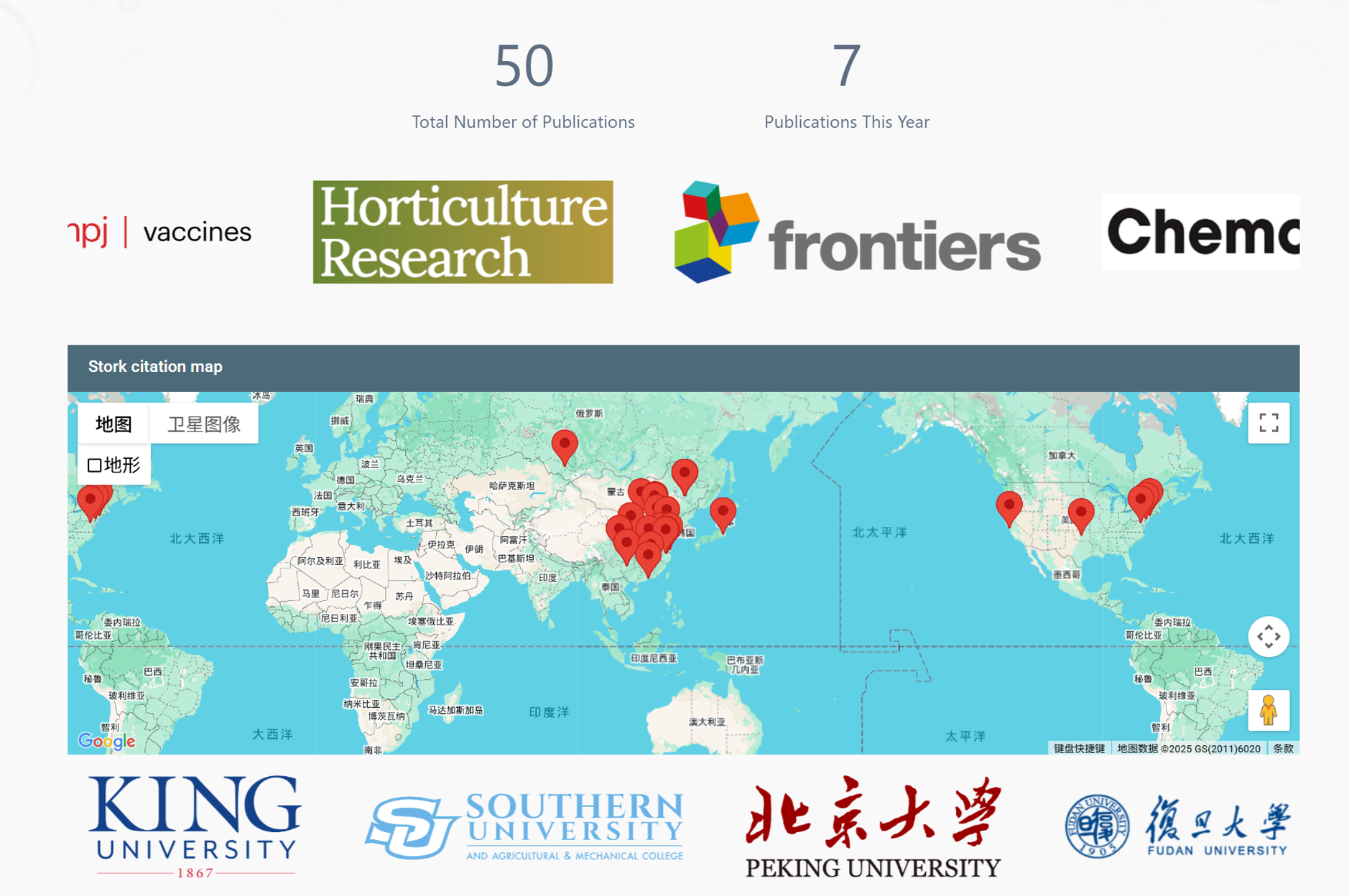
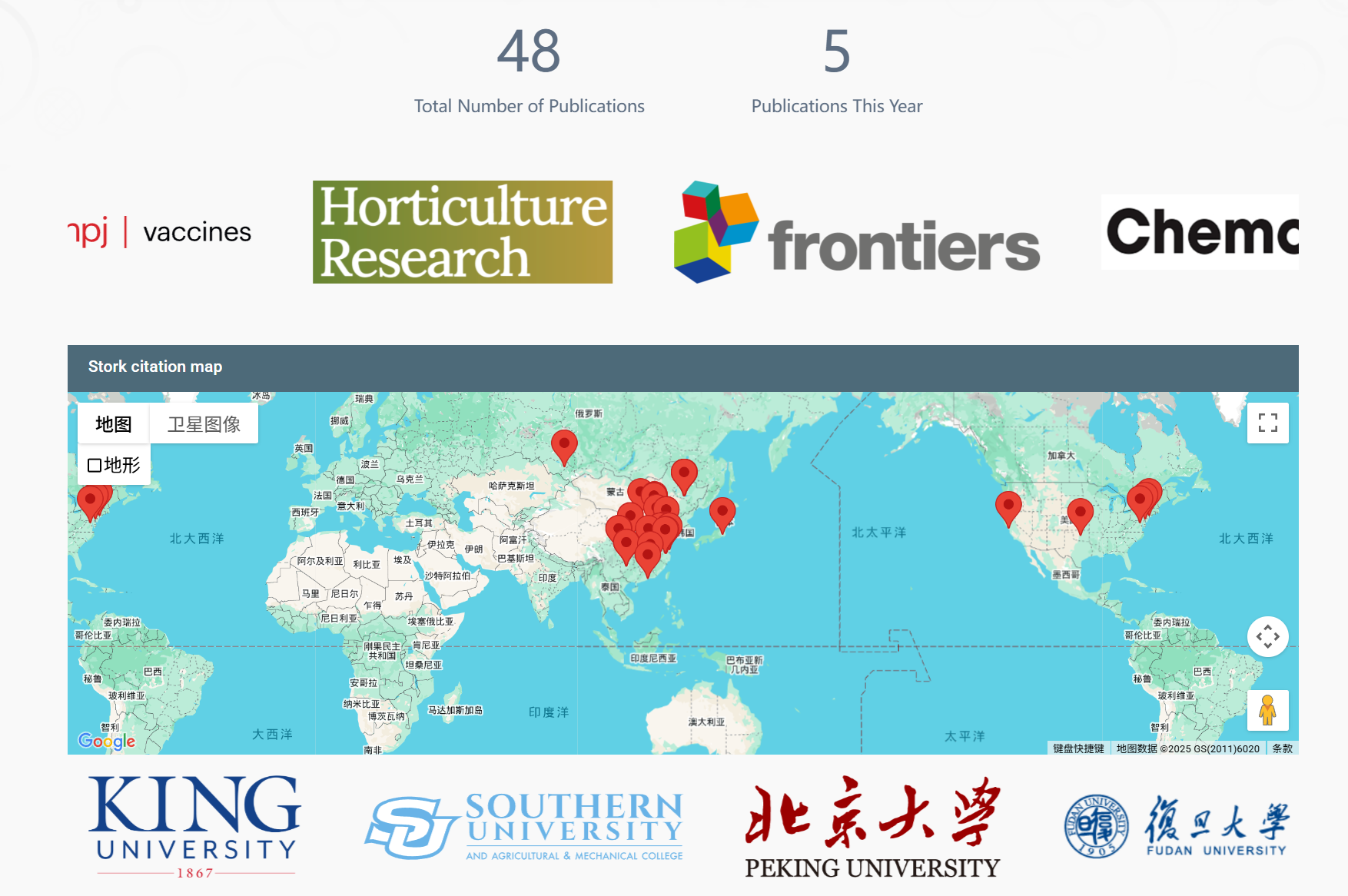
    To make things easier, we built a public page showcasing papers that have cited Stork (https://www.storkapp.me/citations.php). It’s a handy place to:

    • Check how others format their citations

    • See which studies and topics Stork has been      used in


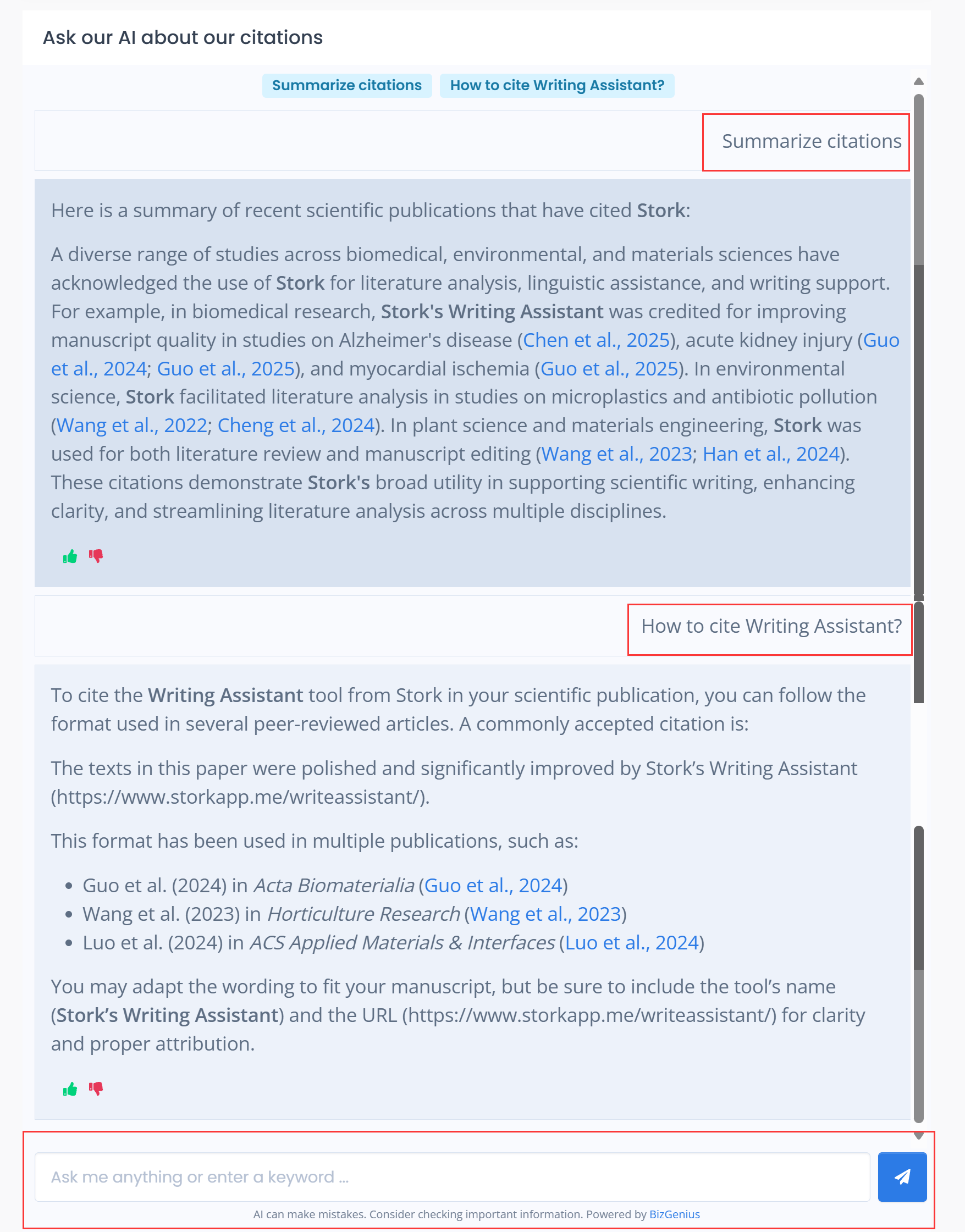
    Now we’ve made it even better. The page includes a Q&A box where you can:

    • Ask for a summary of Stork’s citation info

    • Get the exact citation format for your paper

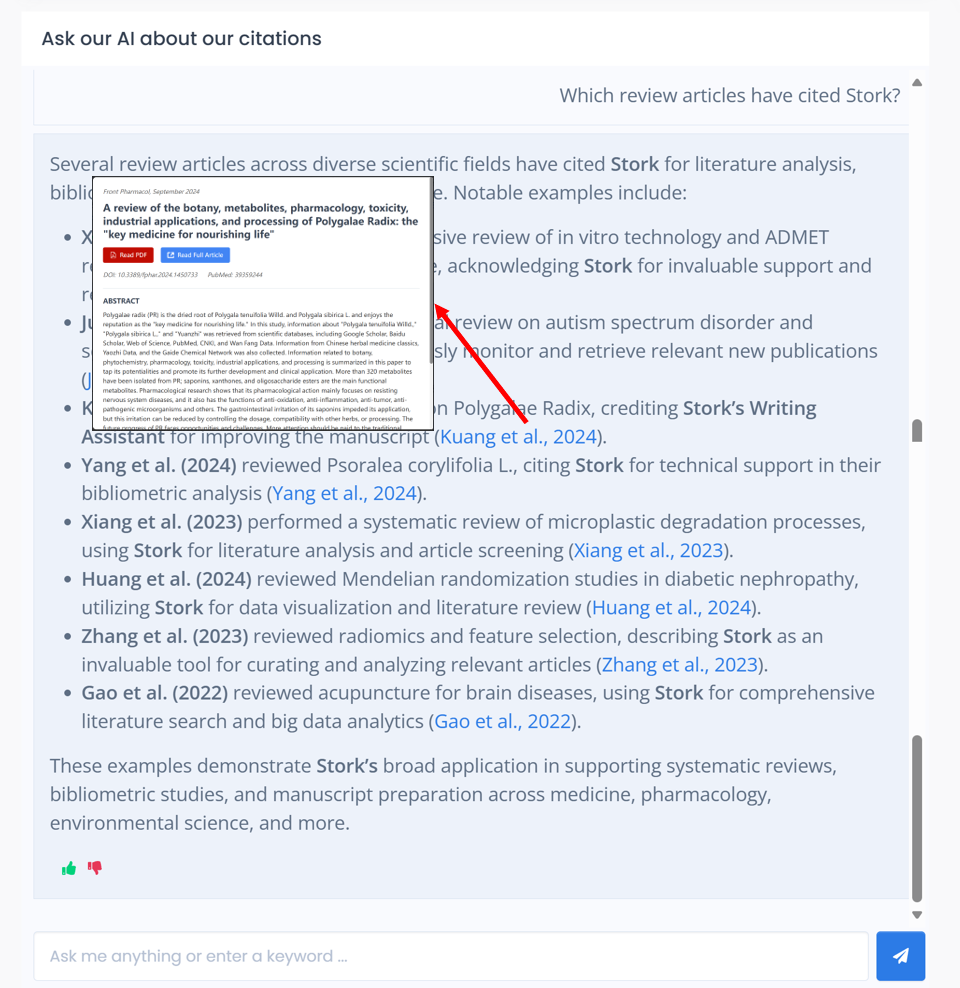
    • Search for specific cases (e.g., “Which review      articles have cited Stork?”)


    No more scrolling through lists to find the answer—you ask, it answers. If an article is mentioned, you can click the author/year to see full details.


    You can open the cited articles page from My → Citations to try it now.


  • Can You Publish Without an Institutional Affiliation?


    TL; DR

    You can publish papers even without being affiliated with a university or research institute. In the affiliation section, you may write: Independent Researcher/ Freelance Consultant / Freelance Scientist/ Registered company name/ Unaffiliated (if allowed by the journal system). Just be sure to provide a valid email address for correspondence.


    If you're currently unaffiliated with any institution and you may ask these common questions:

    • I'm on a gap year / freelancing / between jobs — can I still submit a paper?

    • What should I fill in the "Affiliation" field if I'm not employed by a university?

    • Will reviewers or editors reject my paper because I have "no institution"?


    Don’t worry. The answer is — Yes, you absolutely can publish. And in fact, many journals explicitly welcome independent contributors.


     1. Can I Submit a Paper Without an Affiliation?


    Yes.


    Major publishers like Elsevier, Springer, IEEE, and Wiley do not require authors to be institutionally affiliated. As long as your work meets academic standards and peer review expectations, it will be evaluated on its merit — not on your title or affiliation.

    Many publishers include disclaimers like:

    "Remaining neutral with regard to jurisdictional claims in published maps and institutional affiliations. "


    2. How Should I Fill the "Affiliation" Field?


    Here are four accepted ways to identify yourself in journal submission systems:


    (1) Independent Researcher / Scholar

    This is the most common and widely accepted format.


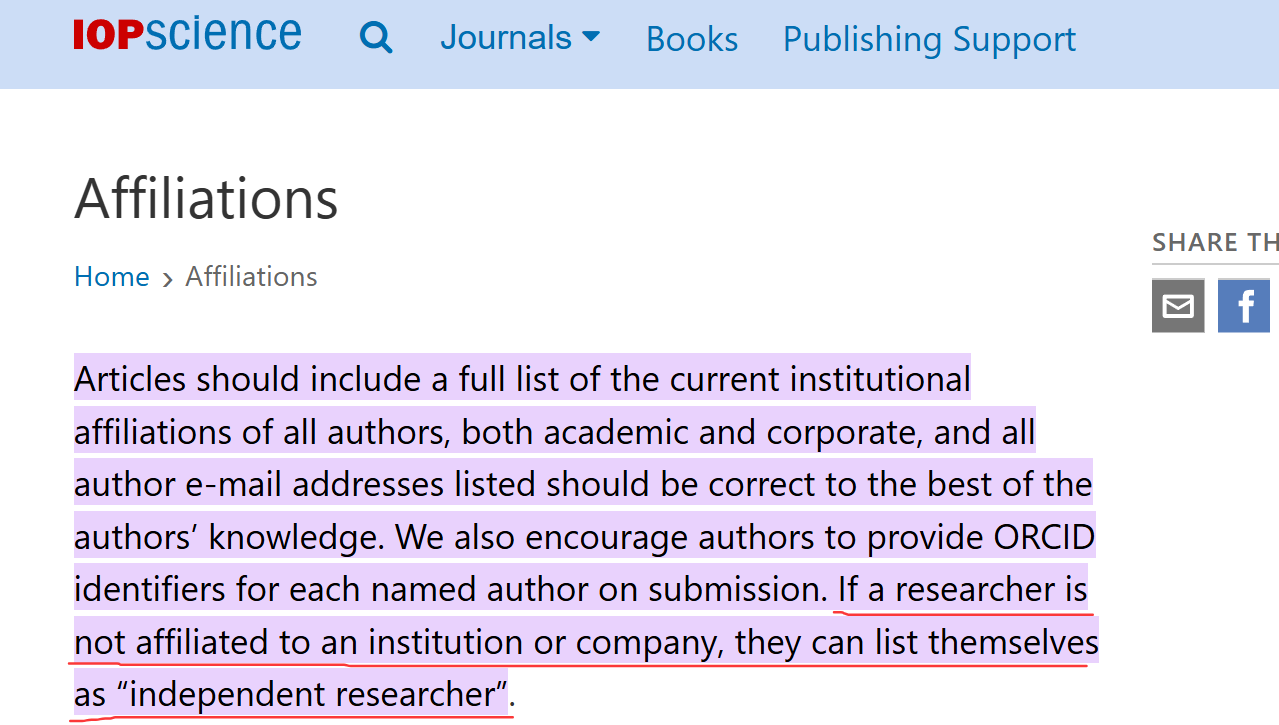
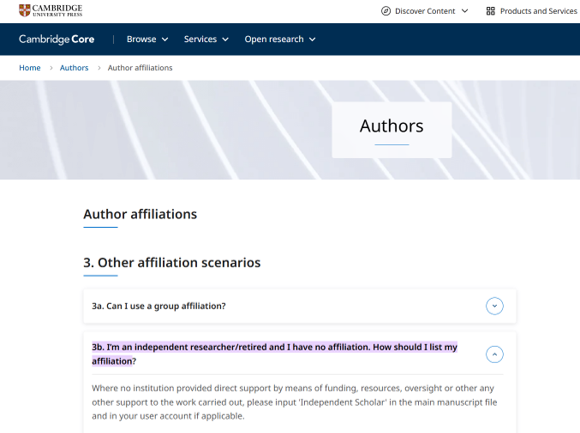
    For example, IOP Publishing and Cambridge University Press both explicitly accept "Independent Researcher" or "Independent Scholar" as valid affiliations.


    Example

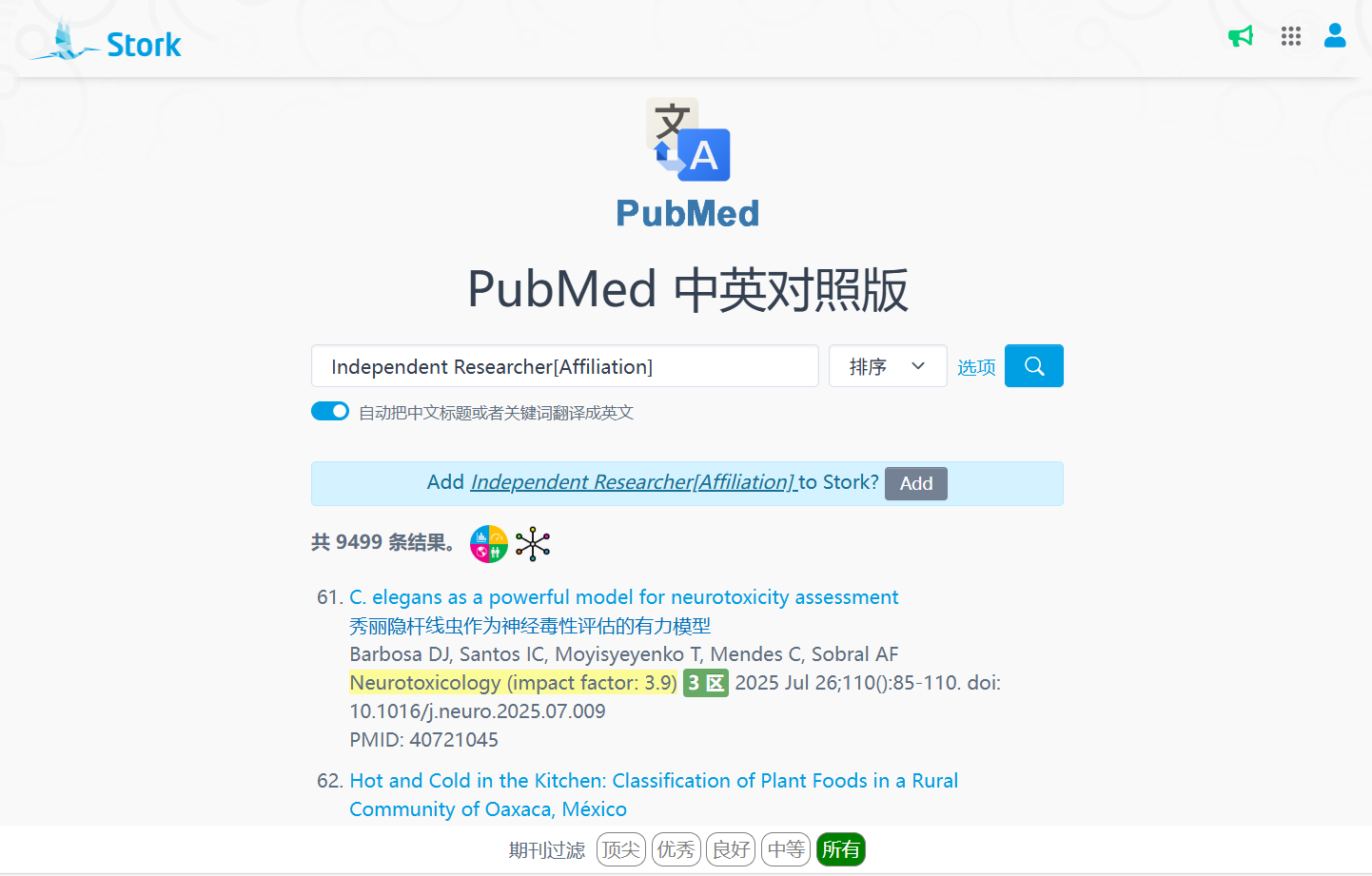
    You can find real examples of published papers using this affiliation by searching "Independent Researcher[Affiliation]" in Stork's PubMed Multi-language Search, Translate & Alert. Set your native language, and the results will appear in both English and your chosen language side by side.


    (2) Freelance Scientist / Consultant

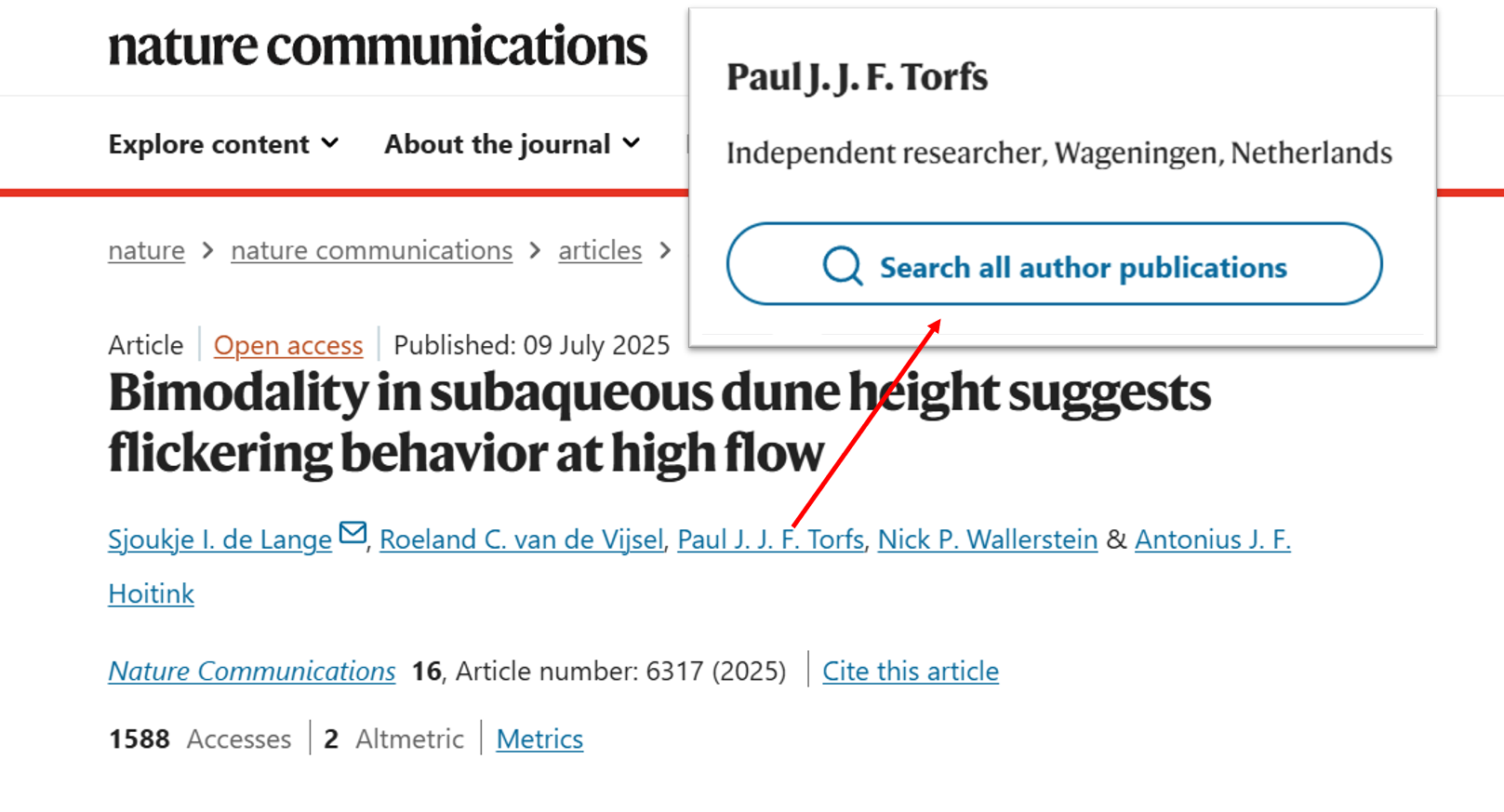
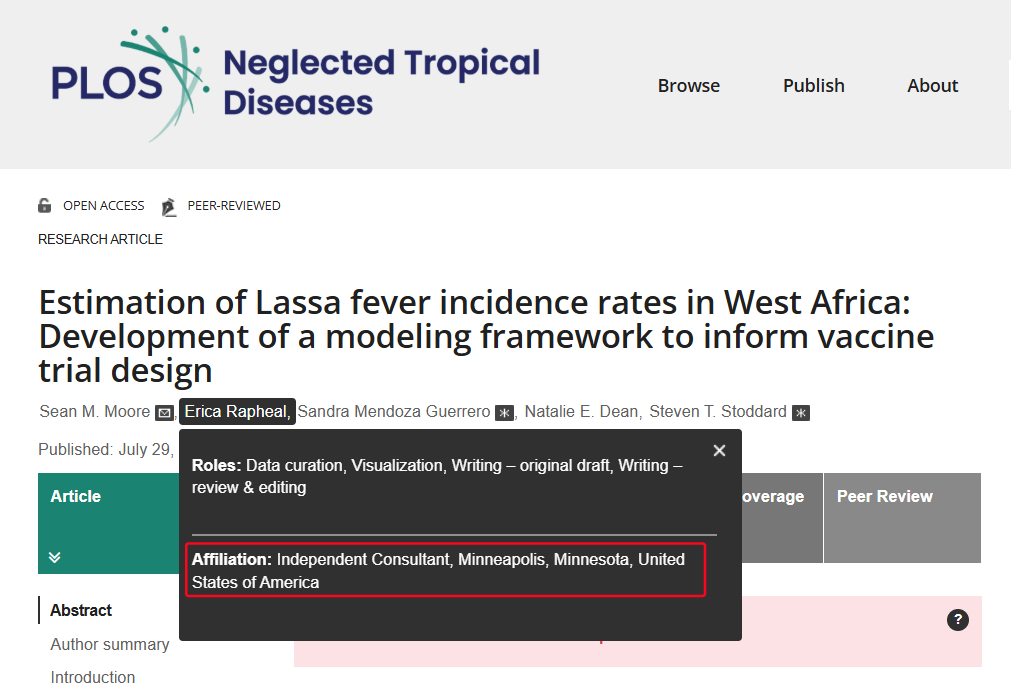
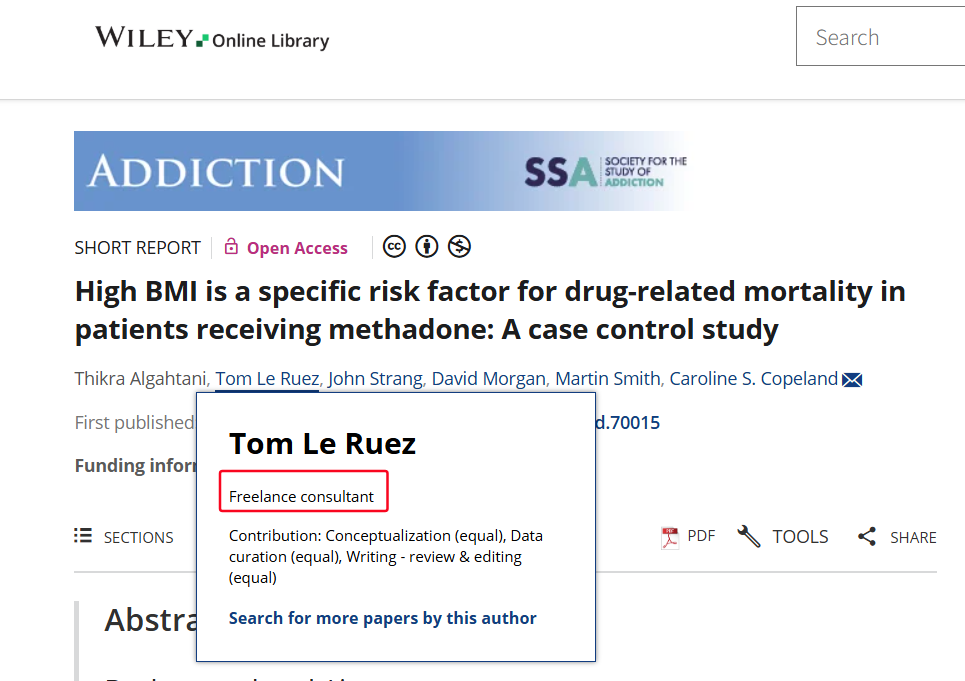
    While not officially listed in many author guidelines, terms like "Freelance Researcher," "Independent Consultant," or "Freelance Scientist" are used successfully by many independent academics.


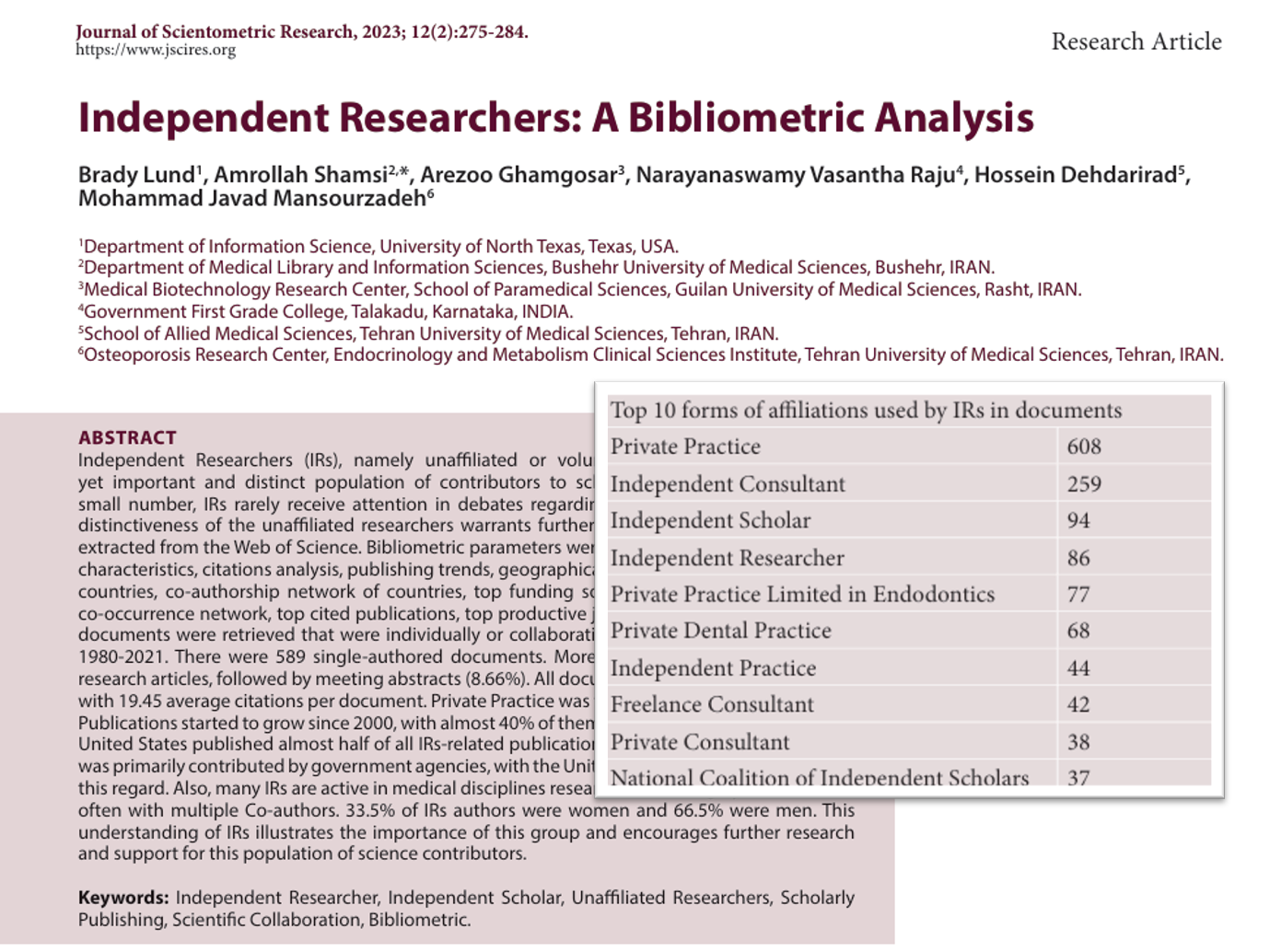
    A bibliometric analysis has shown these labels are among the top alternative affiliations found in published articles.


    Example


    (3) Personal Company or Sole Proprietorship

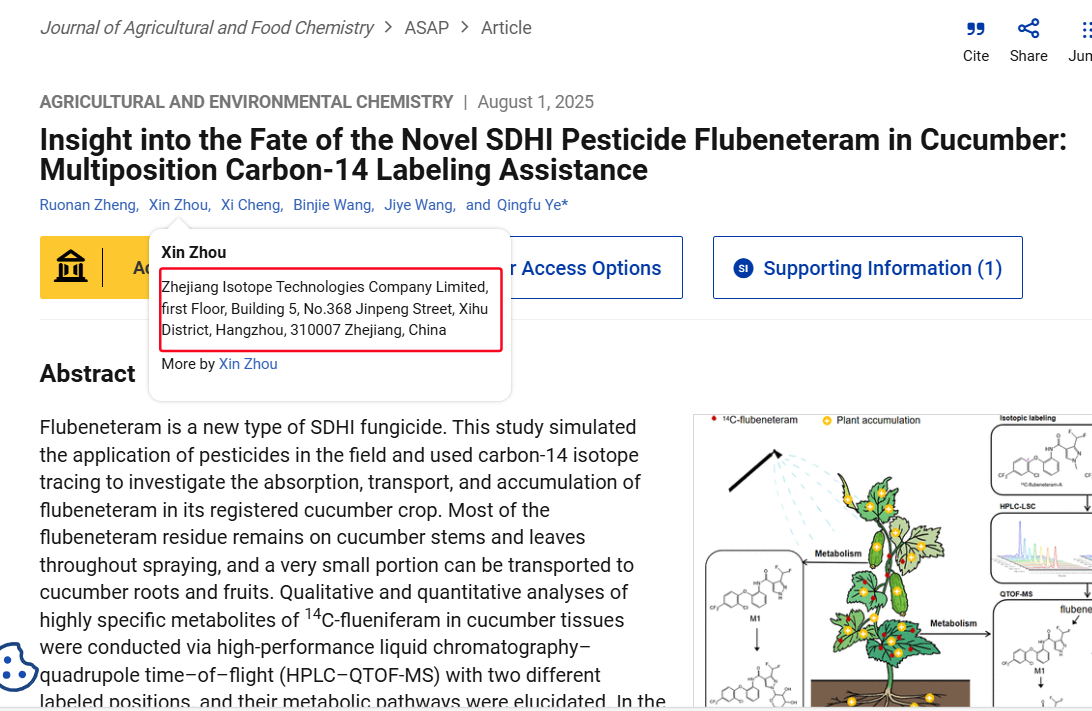
    If you've registered your own research business (LLC, consultancy, or nonprofit), you can list it as your affiliation. This is especially helpful when collaborating with clients, offering research services, or applying for grants.


    Example


    (4) No Affiliation / Unaffiliated

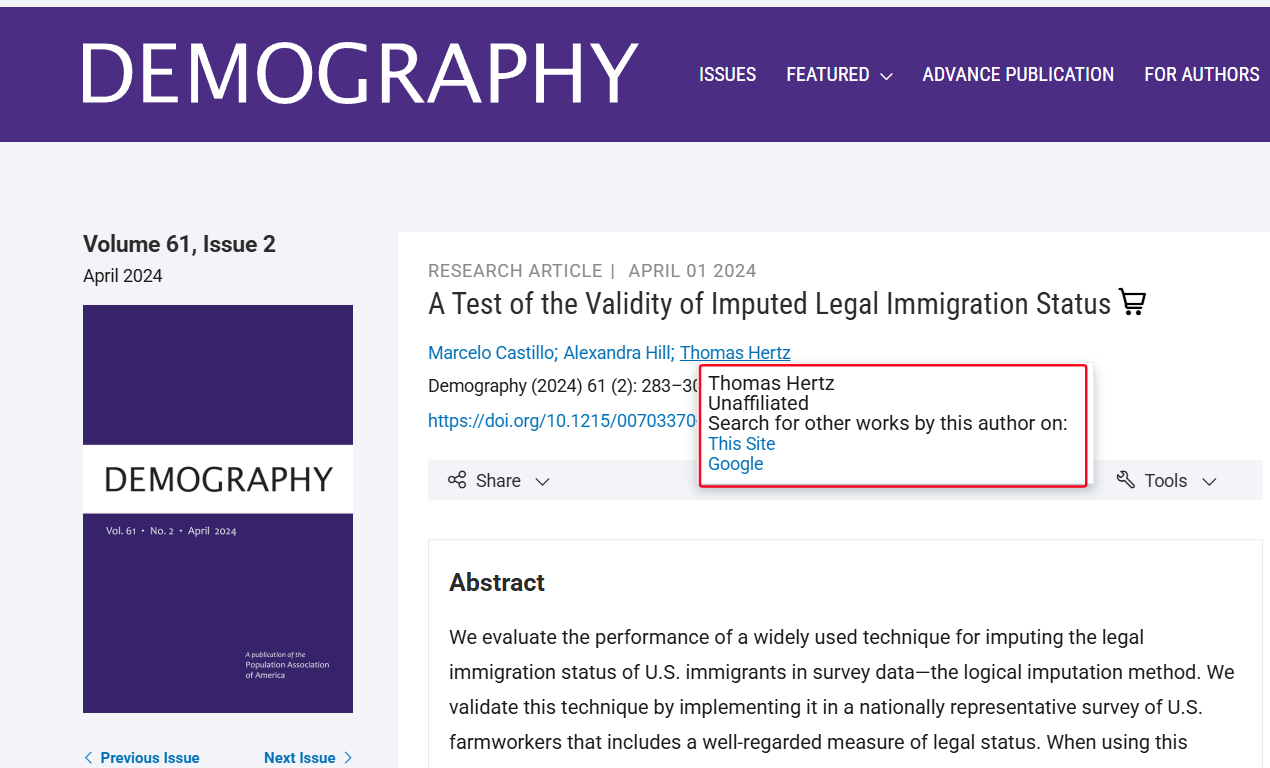
    If the submission portal offers a "No Affiliation" or "Unaffiliated" option, you may choose it.


    Example

    However, most journal editors advise not leaving the field blank. It's important to remain identifiable and contactable.


     3. Will I Be Disadvantaged in Peer Review


    No, not officially.


    Most journals use double-blind peer review, meaning reviewers don't see author names or affiliations at all.


    Even in single-blind systems (where reviewers see your identity), editors are bound by ethical guidelines that prohibit discrimination based on race, nationality, gender, or institutional affiliation.


    In short, your paper will be judged by its quality — not your badge.


     4. What Else Should Independent Researchers Keep in Mind?


    ⭐  Paper Quality Matters More Than Ever

    Without institutional prestige, your work needs to speak for itself. Be rigorous in methodology, clarity, and originality.


    ⭐  Provide a Professional Email

    A working email is essential for correspondence. Some journals may ask for a mailing address too.


    ⭐  Be Prepared for Publication Fees

    If you submit to open access journals, article processing charges (APCs) may apply — and you’ll likely need to cover them yourself unless you have external funding.


    5. Final Thoughts


    Having no formal affiliation ≠ no right to publish
    Being an independent researcher ≠ being less valuable


    All you need is:
    ✔ A well-written, meaningful manuscript
    ✔ Clear, honest author information
    ✔ Good communication with the journal

    And you can make your mark in the academic world.


    If you're an "atypical scholar" walking an unconventional path — know that you're not alone.

    Share your story below, or tag a friend who might find this helpful.


  • Stork helped Jiang’s team publish in Frontiers in Pharmacology


     Info

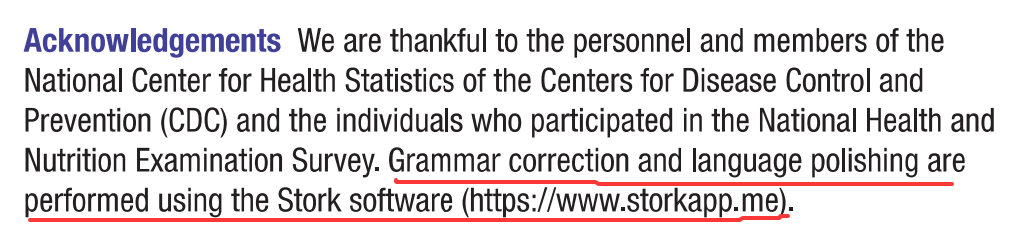
    "The authors would like to thank Stork (https://www.storkapp.me/) for their invaluable support and resources that greatly assisted the review."


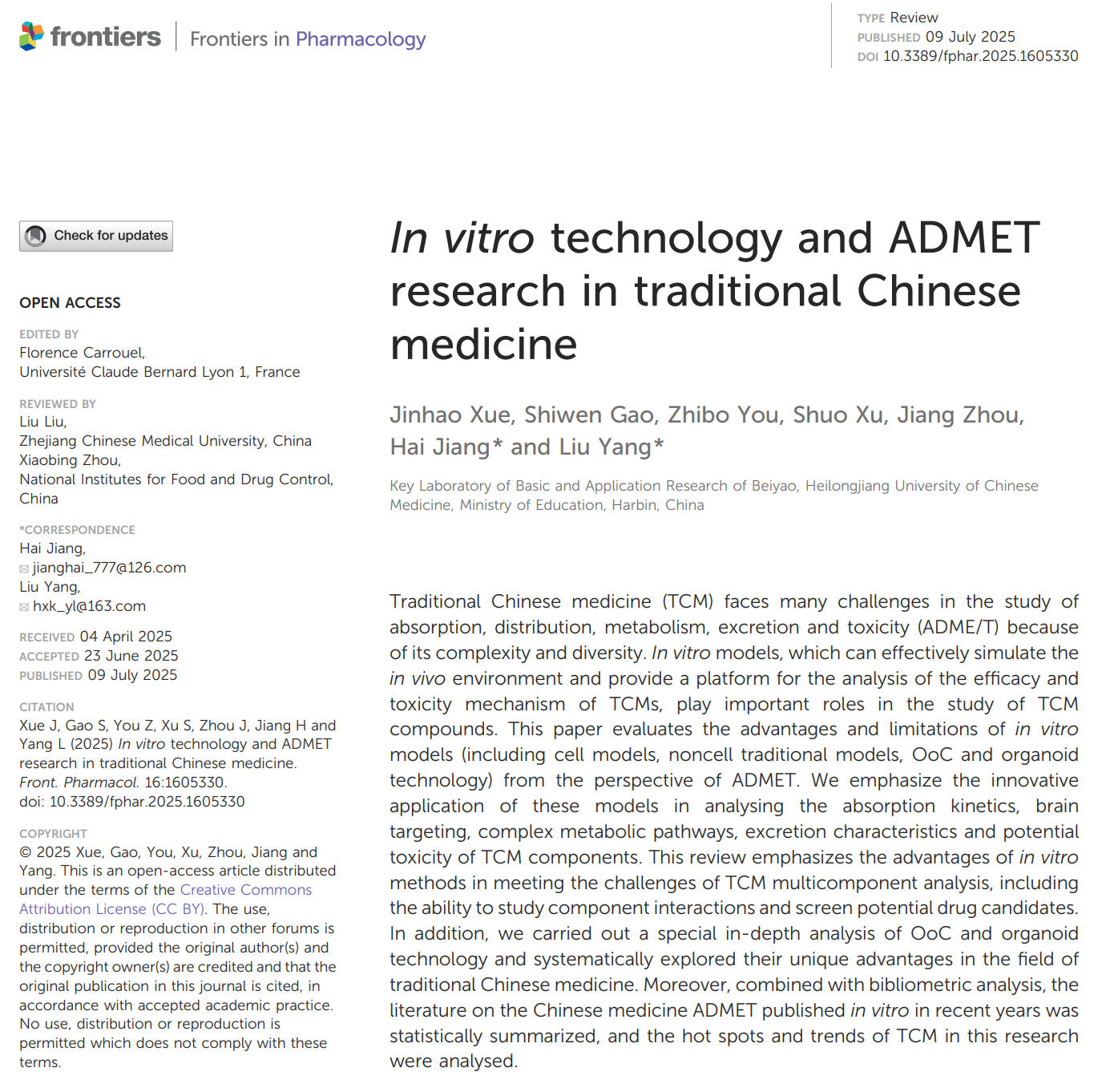
    Recently, Hai Jiang and his team from Key Laboratory of Basic and Application Research of Beiyao, Heilongjiang University of Chinese Medicine, Ministry of Education in China published a paper titled "In vitro technology and ADMET research in traditional Chinese medicine" in the journal Frontiers in Pharmacology (IF = 4.8). The paper acknowledged help from Stork. You can access the paper here: https://doi.org/10.3389/fphar.2025.1605330


    This article acknowledged Stork in the Acknowledgment section:


    "The authors would like to thank Stork (https://www.storkapp.me/) for their invaluable support and resources that greatly assisted the review."


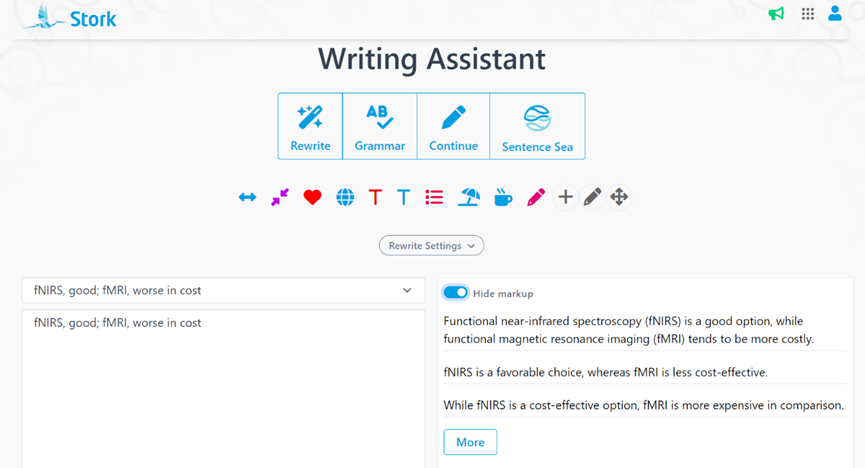
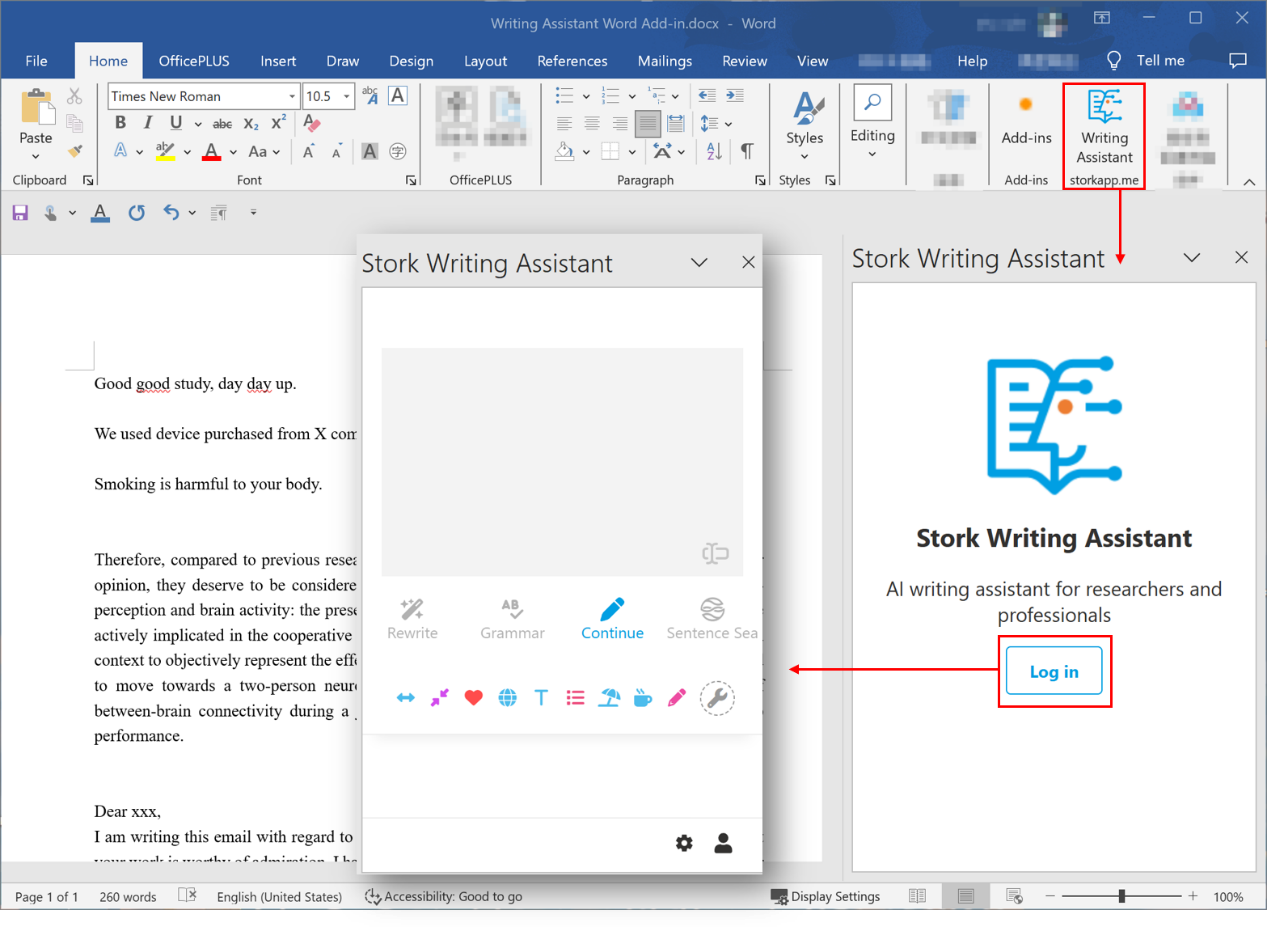
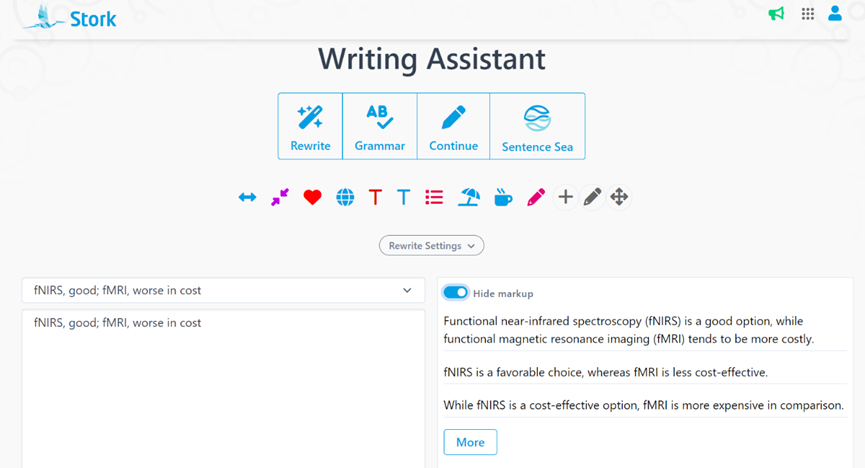
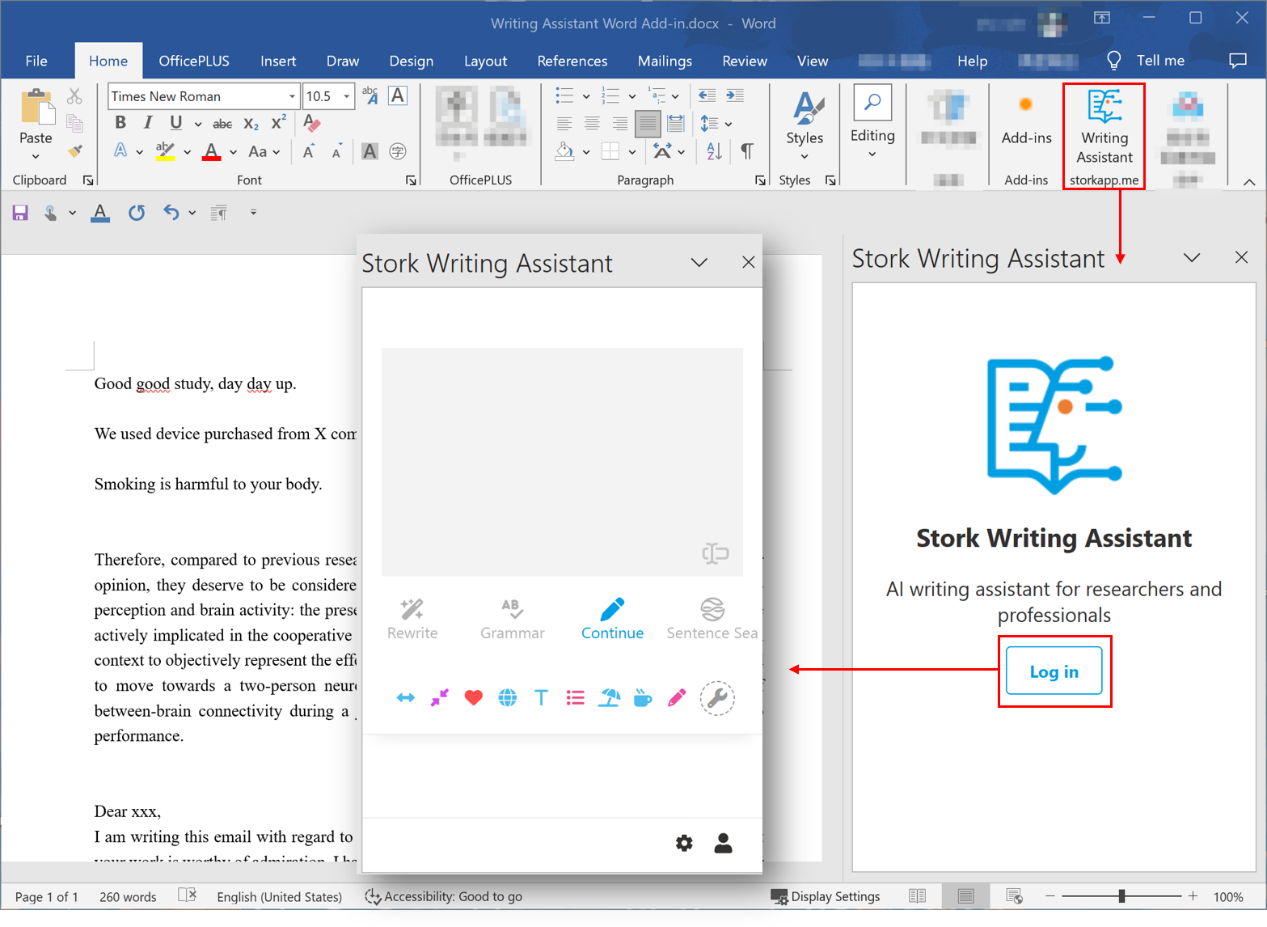
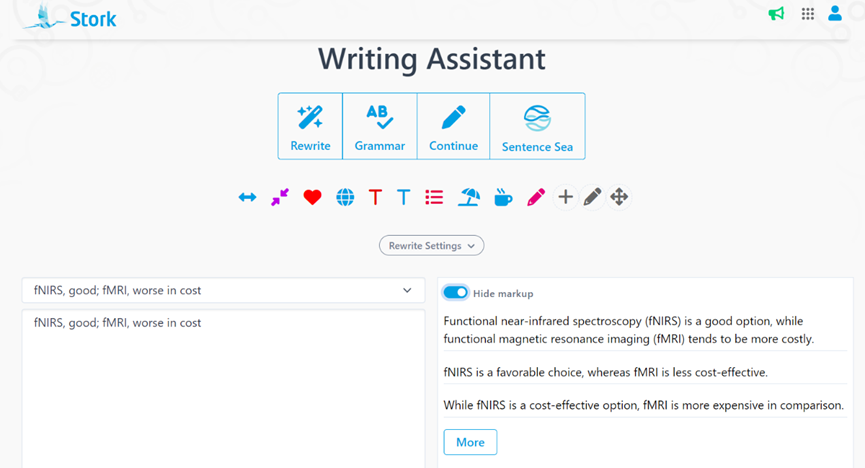
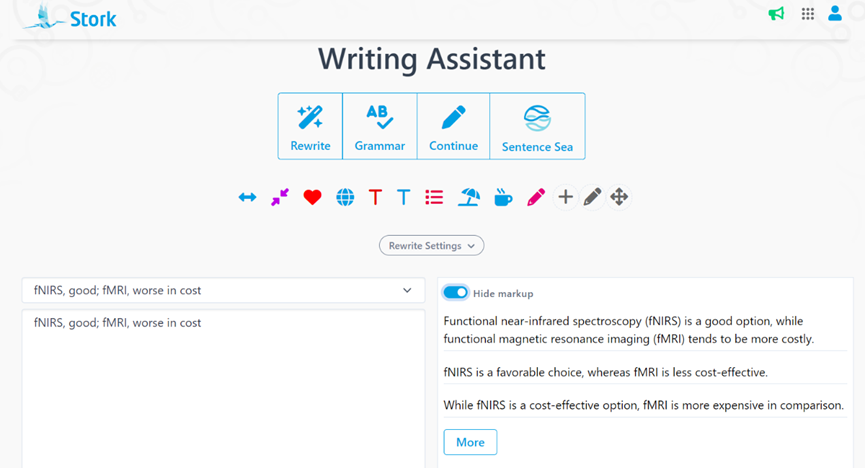
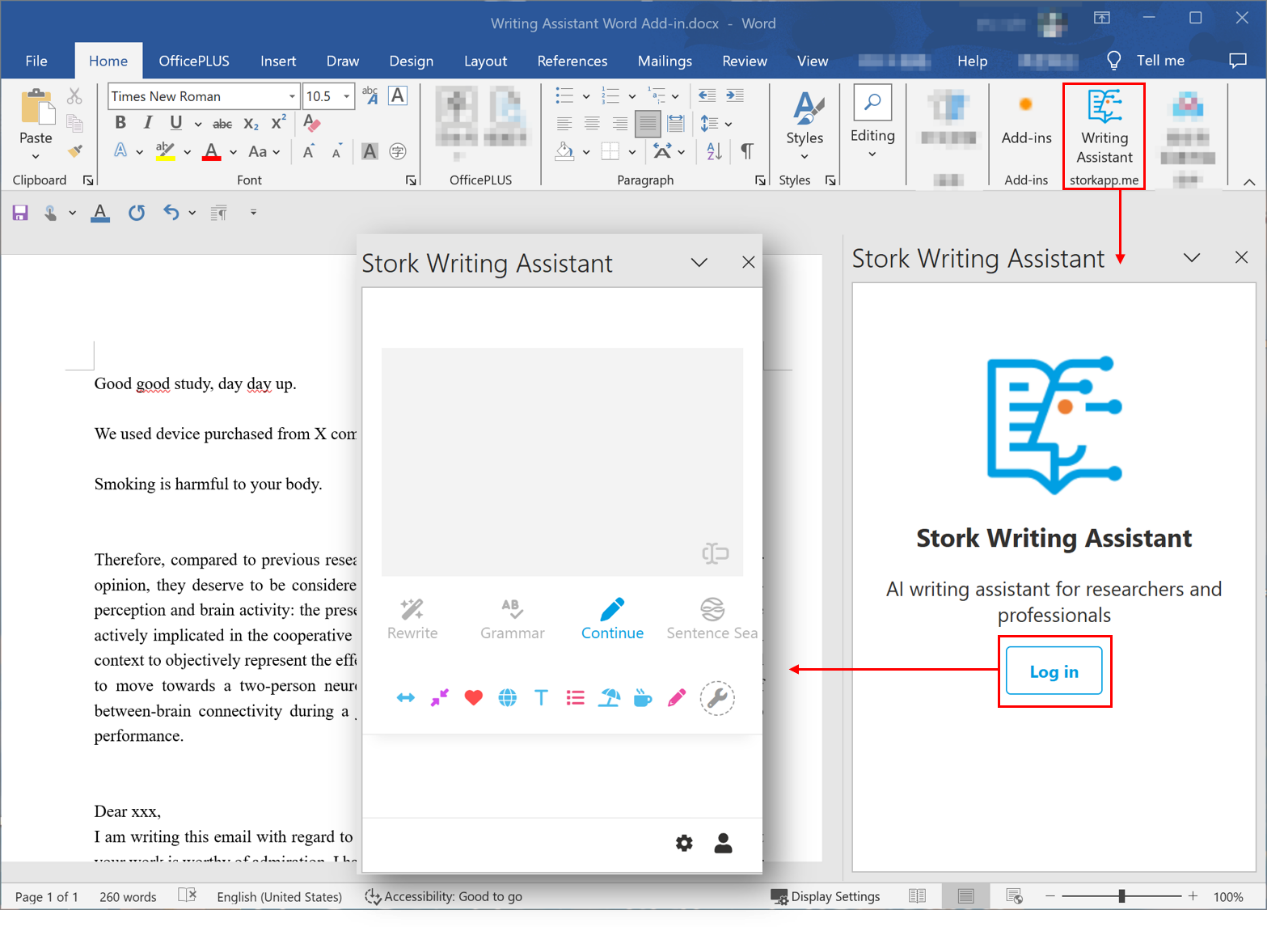
    Stork's Writing Assistant can help you with text polishing, grammar correction, and paragraph expansion, while also offering a Word Add-in for a smoother writing experience.


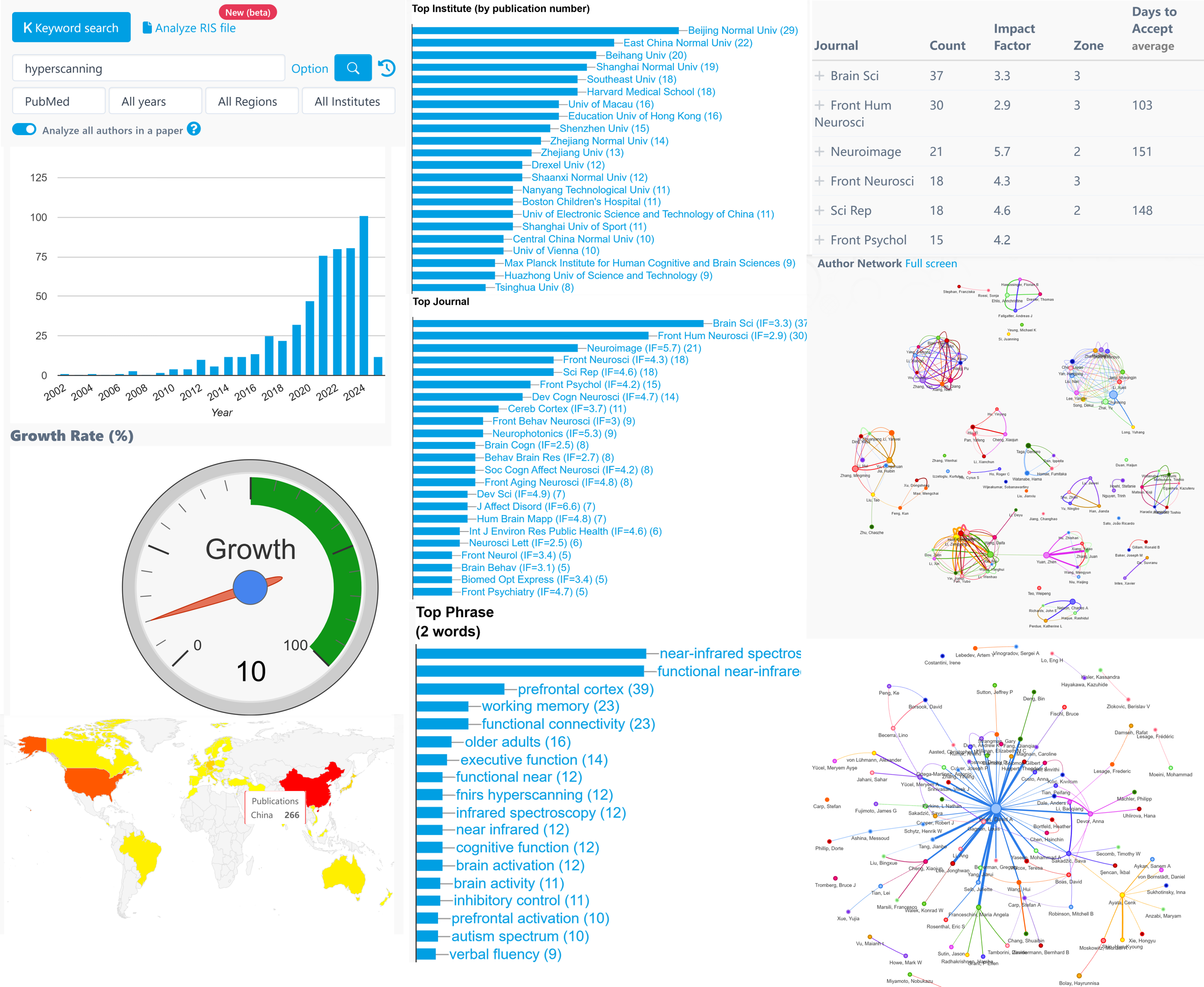
    Big Analysis and Citation Network can support literature analysis:

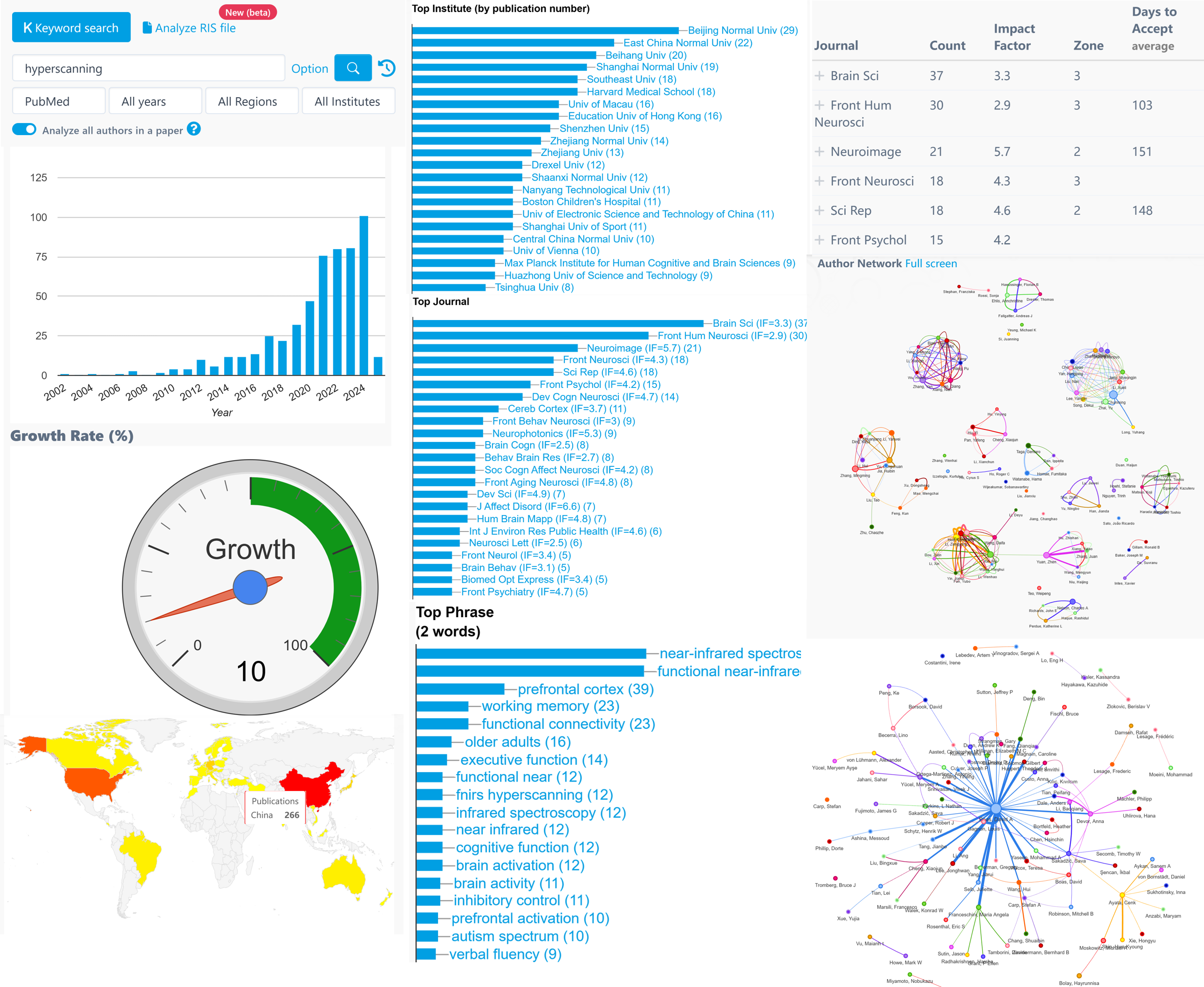
    • Big Analysis allows a researcher to quickly understand all aspects of a field's progress in a matter of minutes, including growth trends, geographic distribution, experts (and their contact information), genes, diseases, brain regions, etc.

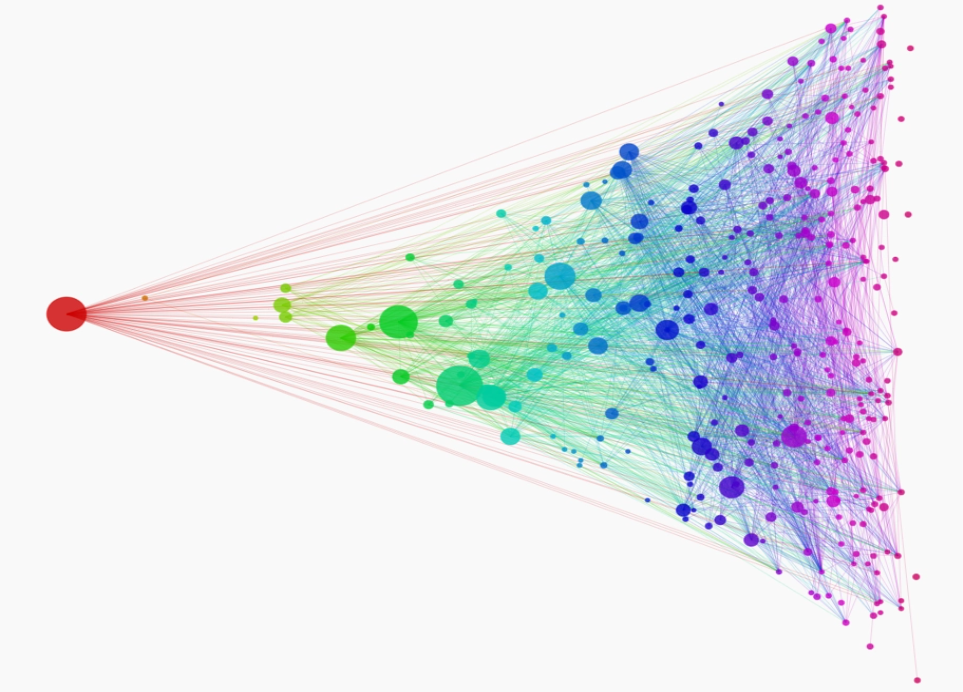
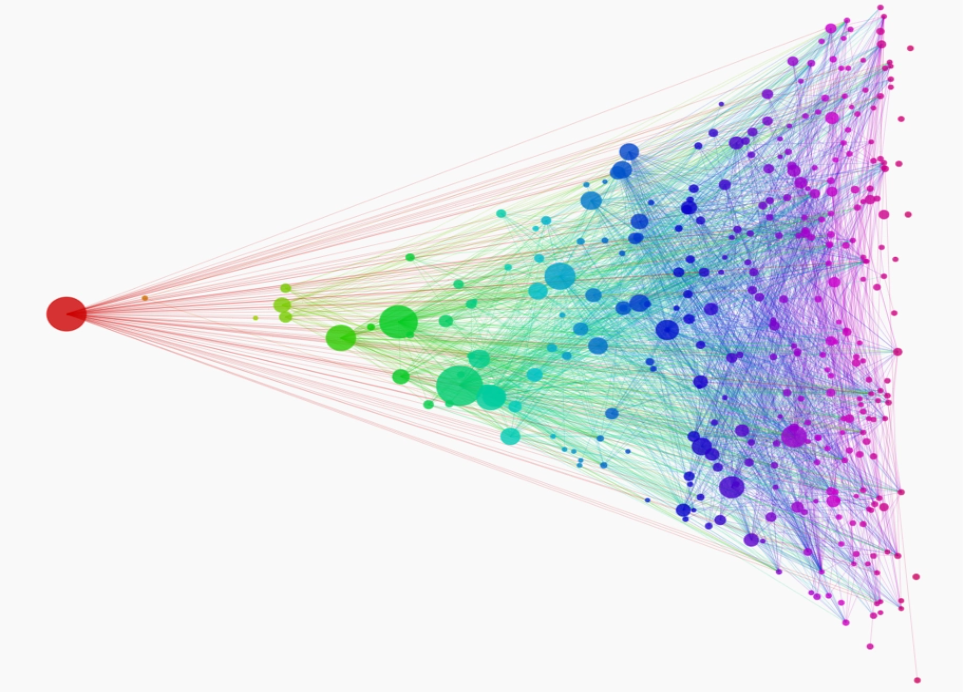
    • Citation Network allows researchers to quickly identify the classic/important papers in a field within a few minutes and do more research with less effort.


     【User Reviews】

    Eric Li, Ph.D

    Stanford University

    "Writing Assistant is an excellent tool for scientists and researchers to improve the quality of their publication writing. I highly recommend Writing Assistant for those whose native language is not English or who lack writing skills and ideas."

    Juanjuan Du, Professor

    Tsinghua University

    "In the past, the task of writing was often time-consuming. Fortunately, Writing Assistants have made this process much simpler by providing multiple sentences with the same meaning. This has made writing much more efficient and enjoyable."

    Joseph Baker
    Stanford University

    "Big Analysis is a fantastic tool for scientists in need of aggregating all aspects of research in their field. Personally, I've used Big Analysis to find papers to include in a systematic review for publication, to aggregate existing data for power analyses, and to finding the name and contact information for other researchers in my field. Together with Stork, Big Analysis is an indispensable tool for all research scientists."

    Xu Cui, Ph.D

    Stanford University

    "Citation Network allows me to quickly find classic literature in a field."


     【How to use】

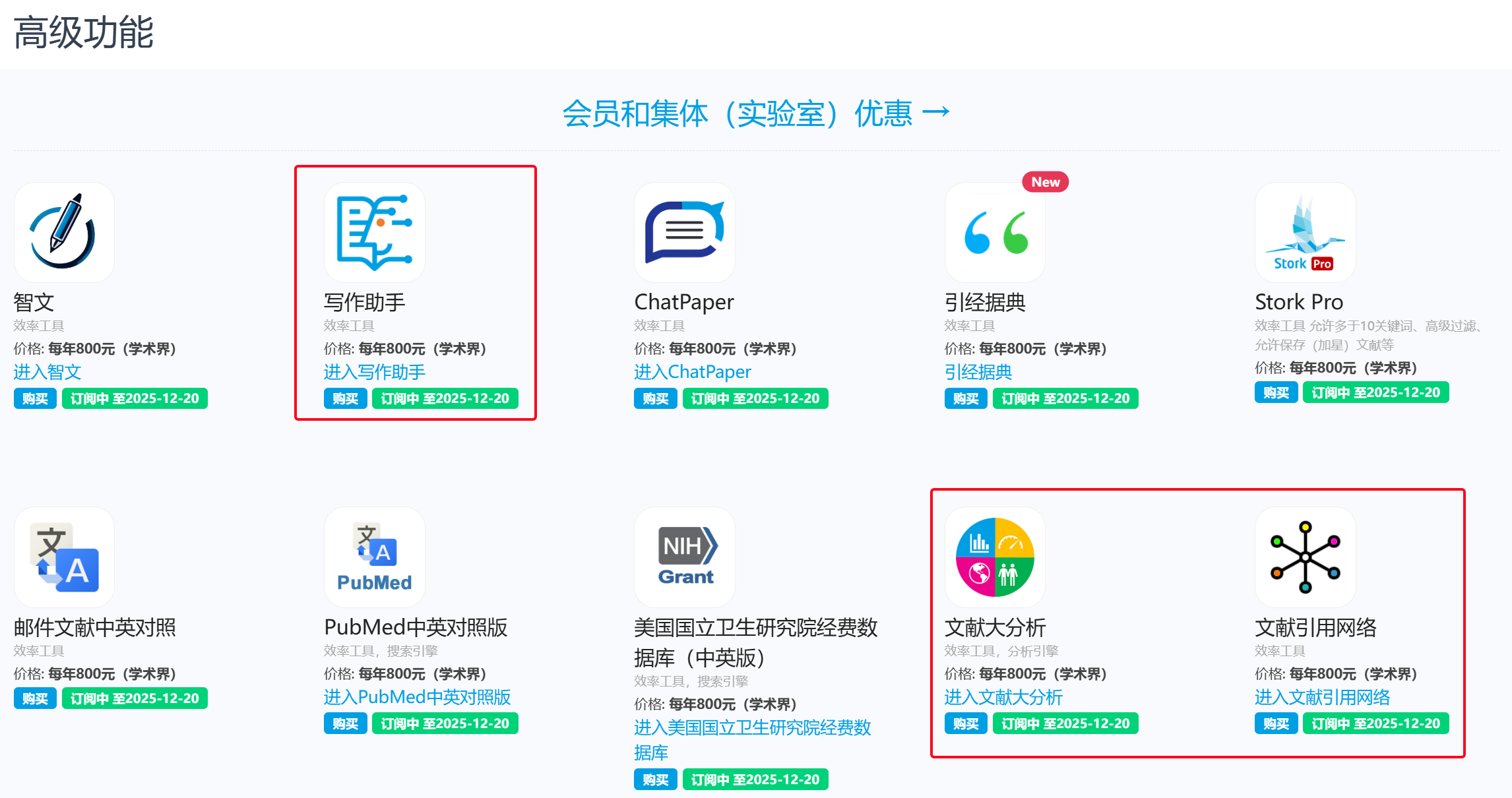
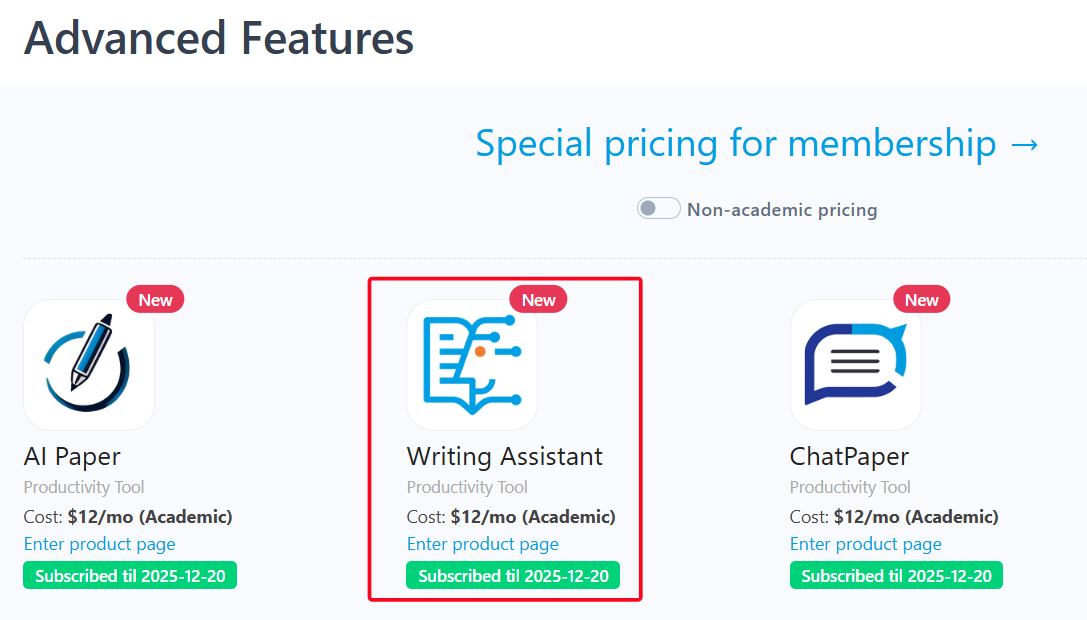
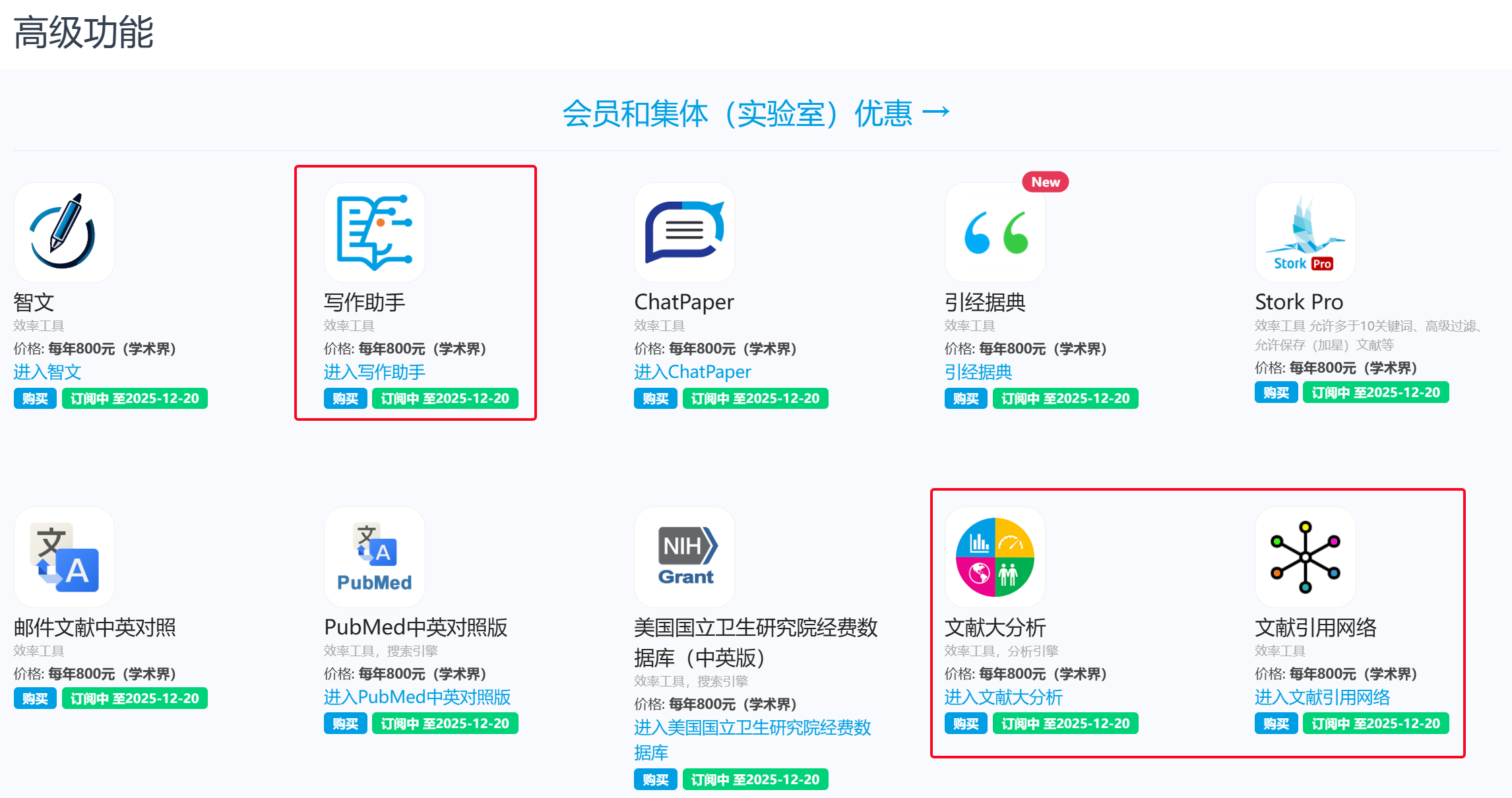
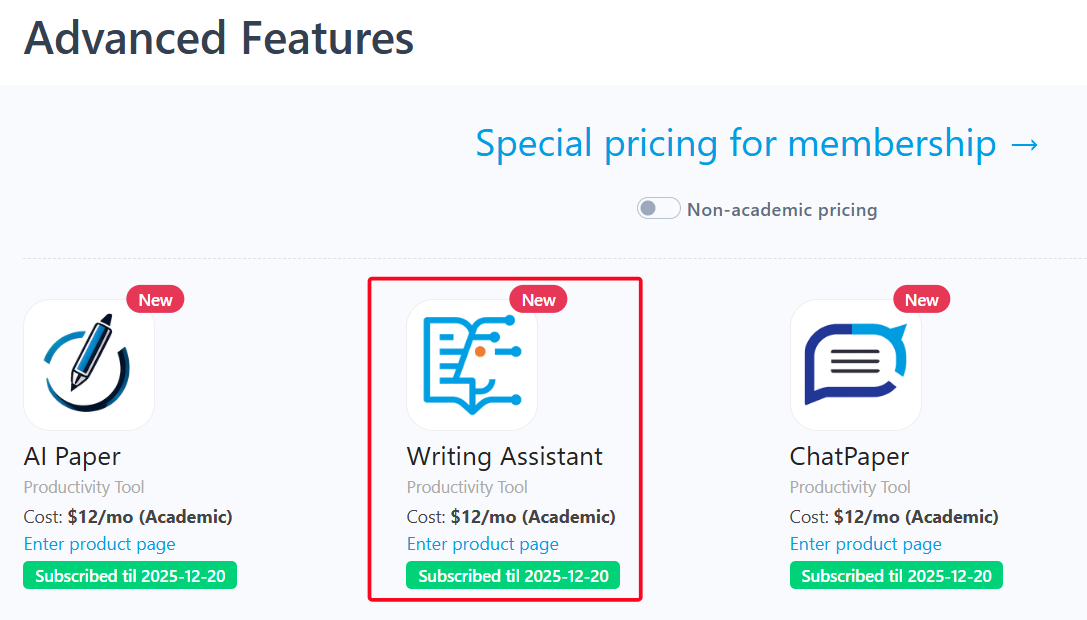
    Writing Assistant, Big Analysis, and Citation Network are advanced features offered by Stork (free trial is available). After registering/logging into Stork (https://www.storkapp.me), you can find them under the "Advanced Feature" section. Then you can try it out or subscribe. Alternatively, you can visit Writing Assistant website directly at https://www.storkapp.me/writeassistant/, Big Analysis at  https://www.storkapp.me/meta/, and Citation Network at https://www.storkapp.me/citenet/.


     Tips

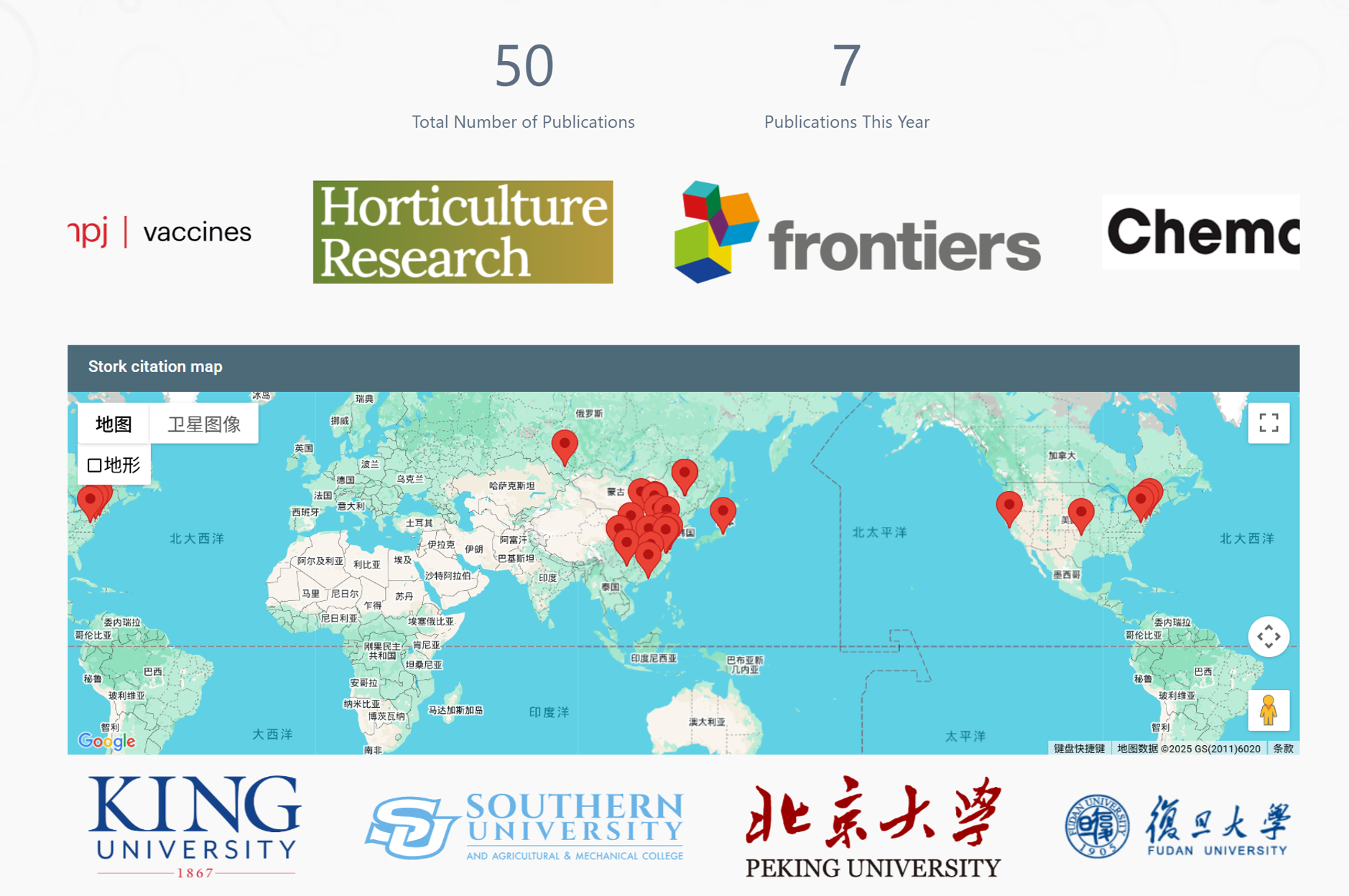
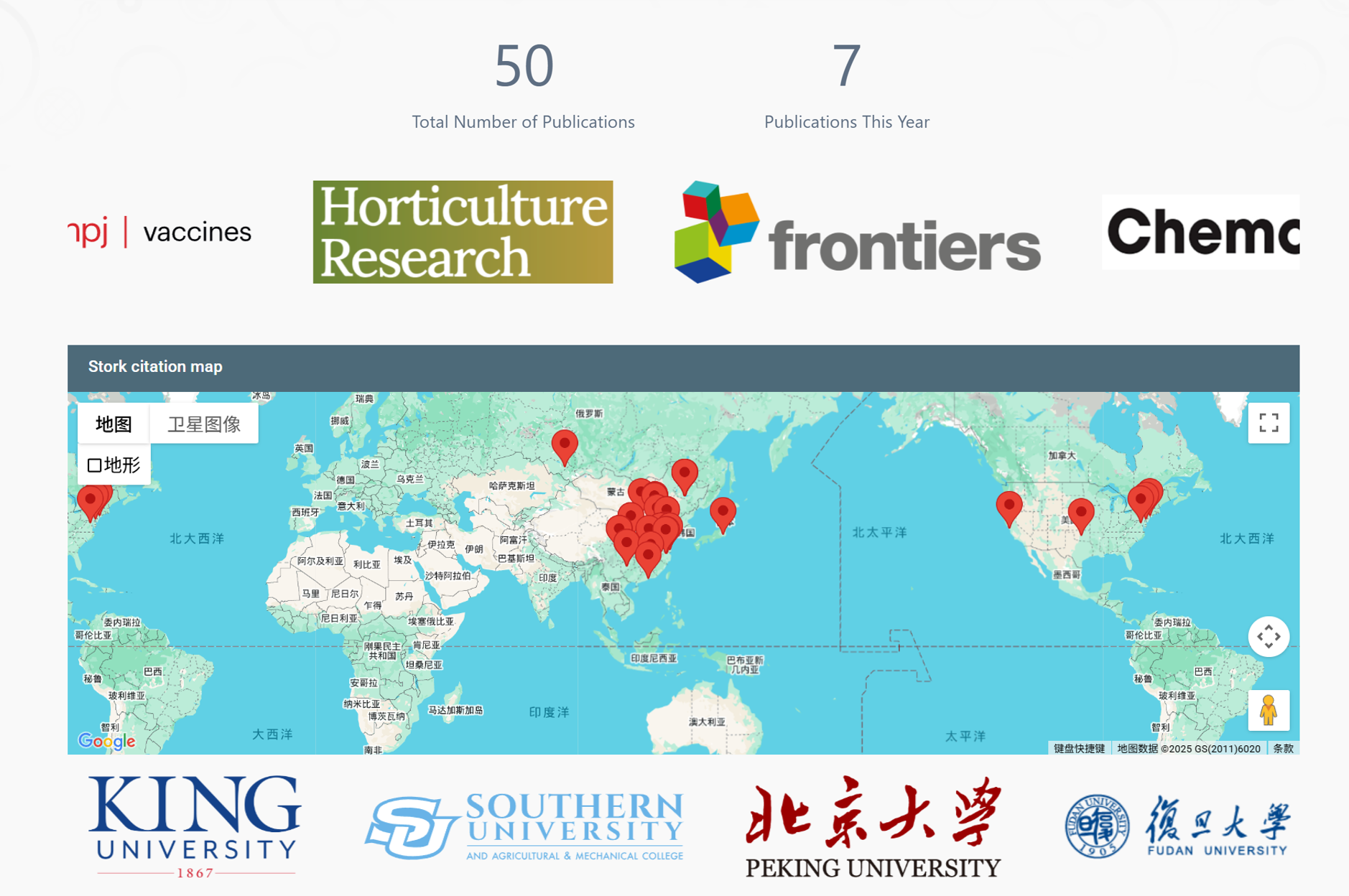
    To date,  50 scientific papers have cited Stork. If you cite Stork in your paper, please let us know at support@storkapp.me, and we'll offer you a discount based on the journal's impact factor when you subscribe to Writing Assistant or other advanced features.


  • Journal Finder: Find the Right Journal for Your Paper


    TL; DR

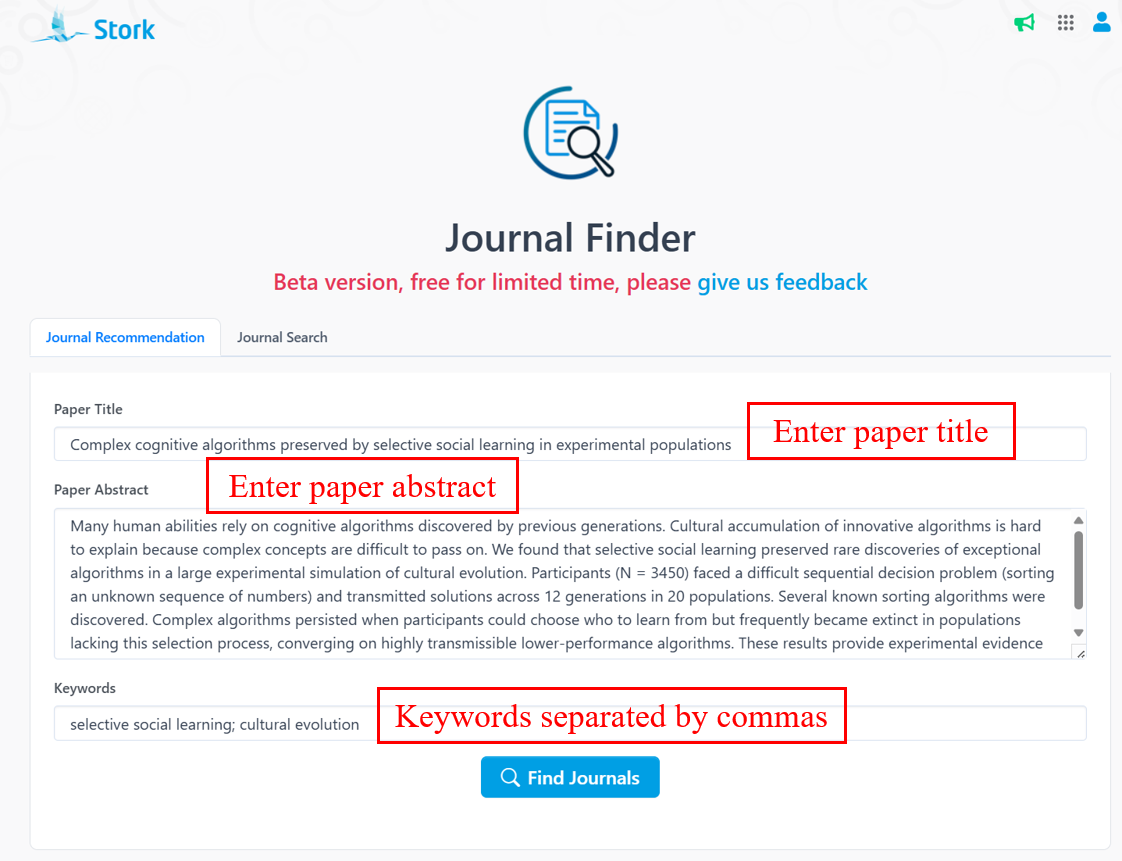
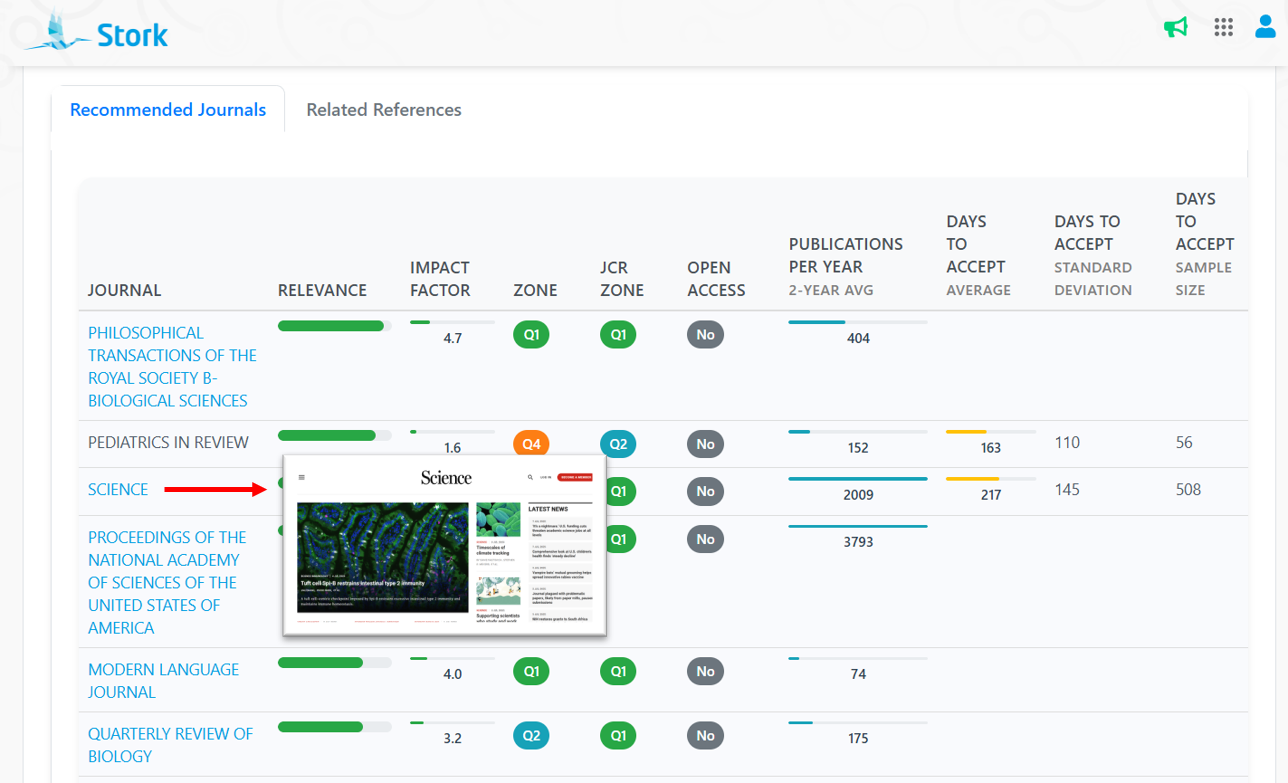
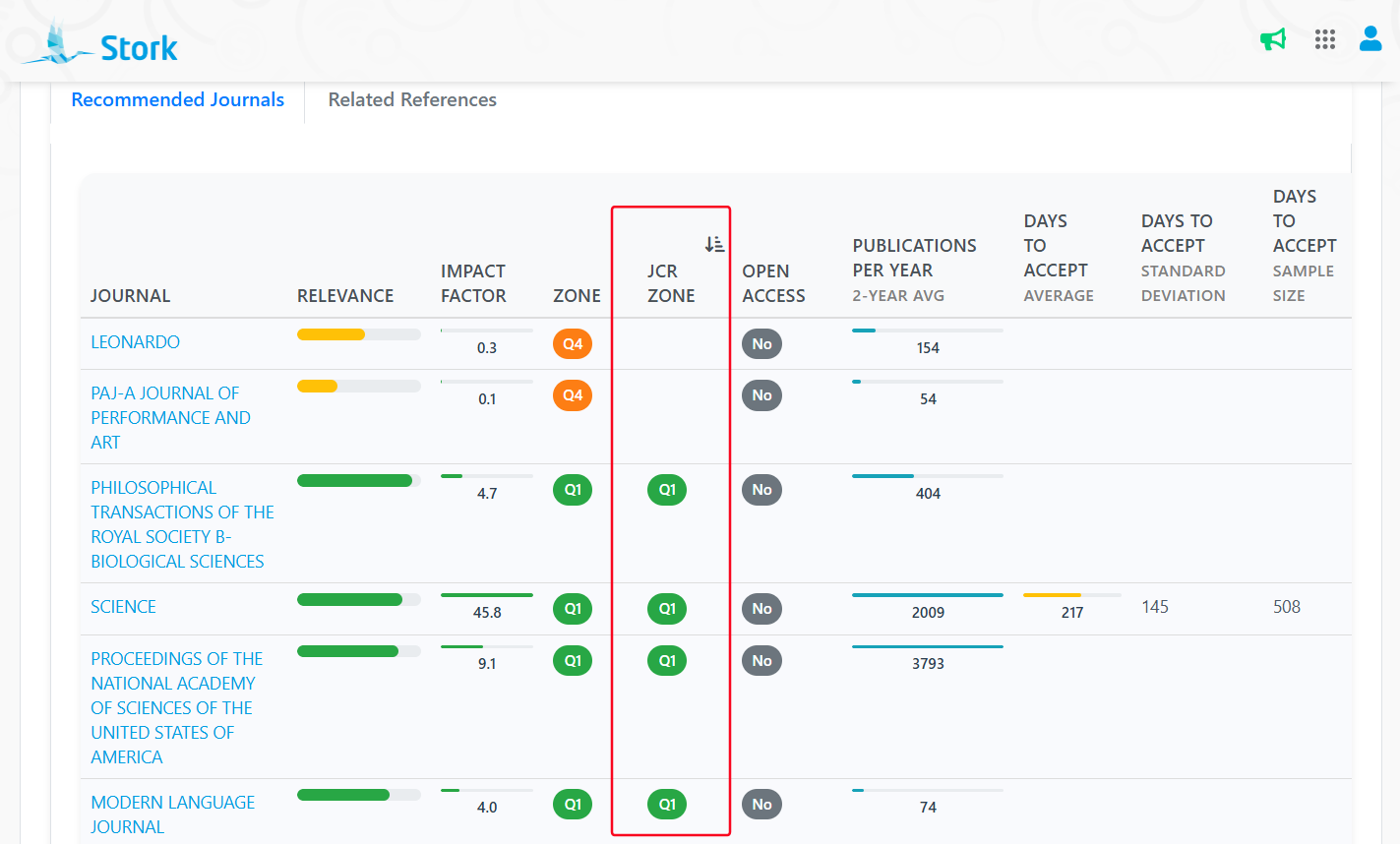
    Just enter your paper title, abstract, and keywords, and our Journal Finder will recommend suitable journals for your paper—along with detailed information like: Relevance score, JCR zone, OA status, Average publications per year and Average days to accept.


    The struggle is real:

    "I finished my paper—now where should I submit it? "
    "Got rejected again… what other journals might work?"


    Turns out, finishing the paper is only half the battle. Finding the right journal is always a challenge.

    To save you from endless second-guessing, we created Journal Finder—a tool that helps you quickly identify journals that fit your work.


    What can it do?


    Our tool has two modes:


    1. Journal Recommendation

    Enter your title, abstract, and keywords, and the Journal Finder will recommend a ranked list of relevant journals. You'll see Relevance score, JCR zone, OA status, Average publications per year and Average days to accept. Click on journal names to visit their official sites directly!


    The recommended journals are initially ranked by how closely your abstract aligns with each journal's aims and scope. You can also re-sort the list by JCR Zone or other metrics if needed.


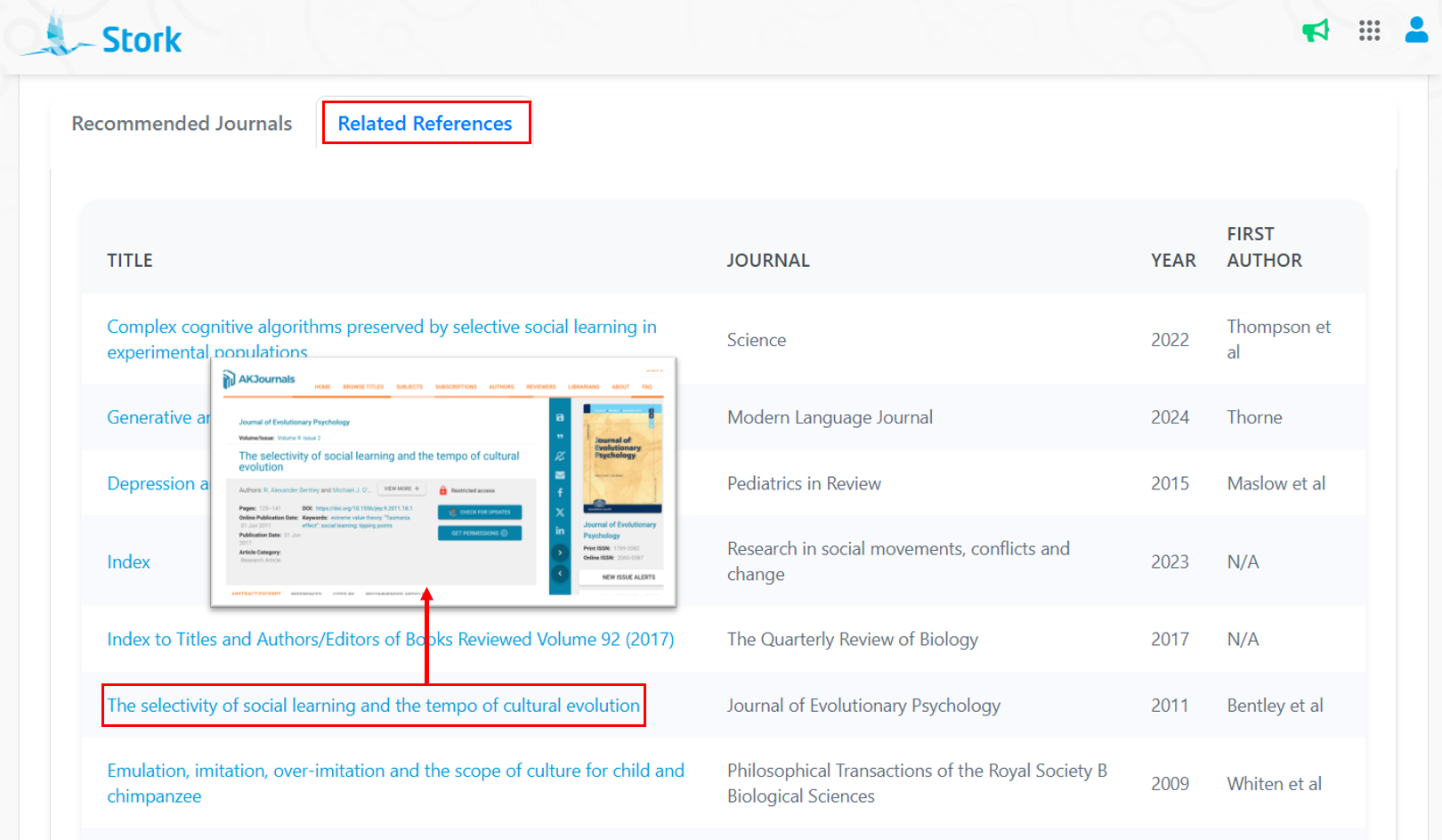
    Click "Related Reference" to see papers similar to yours.


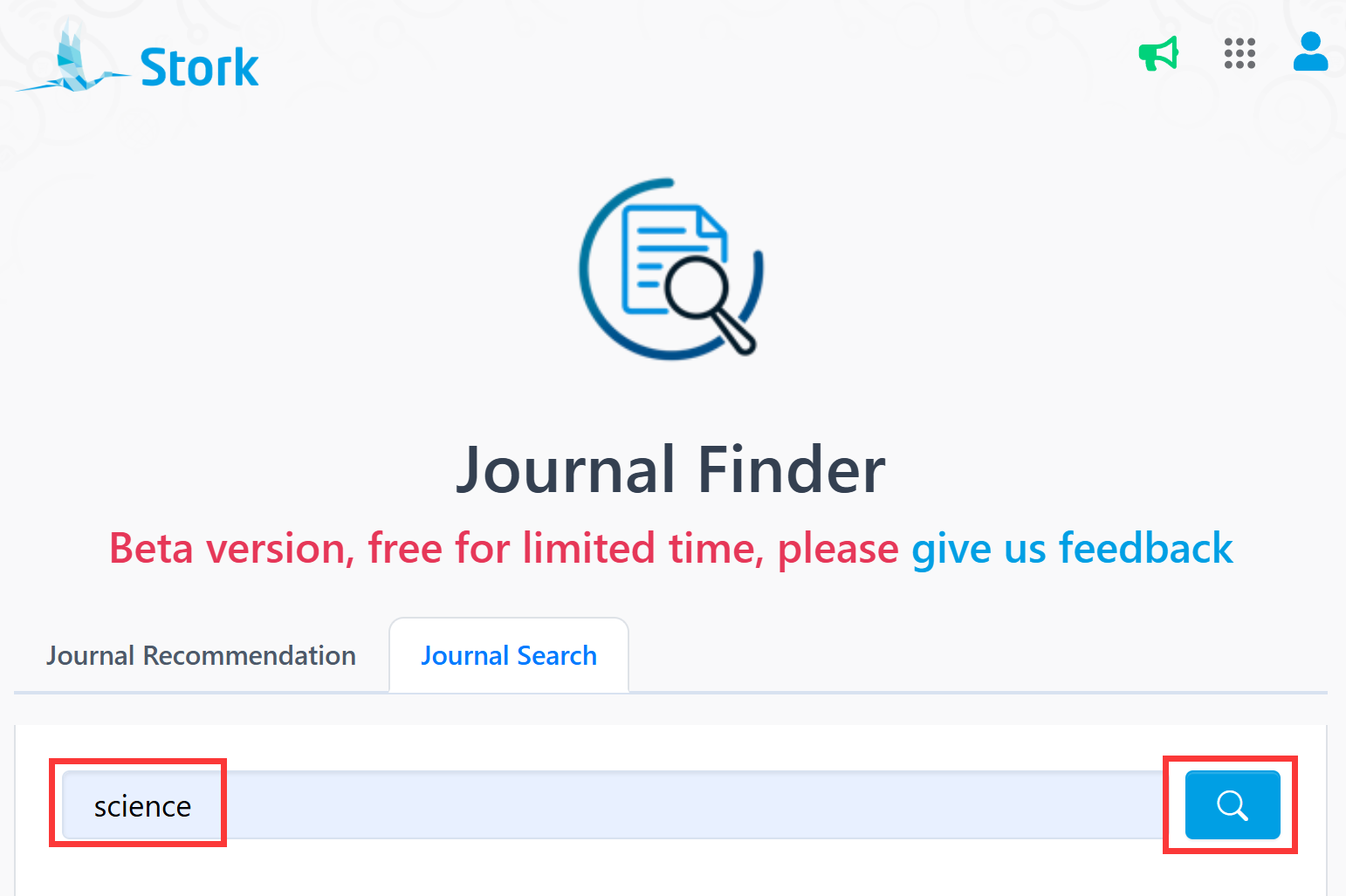
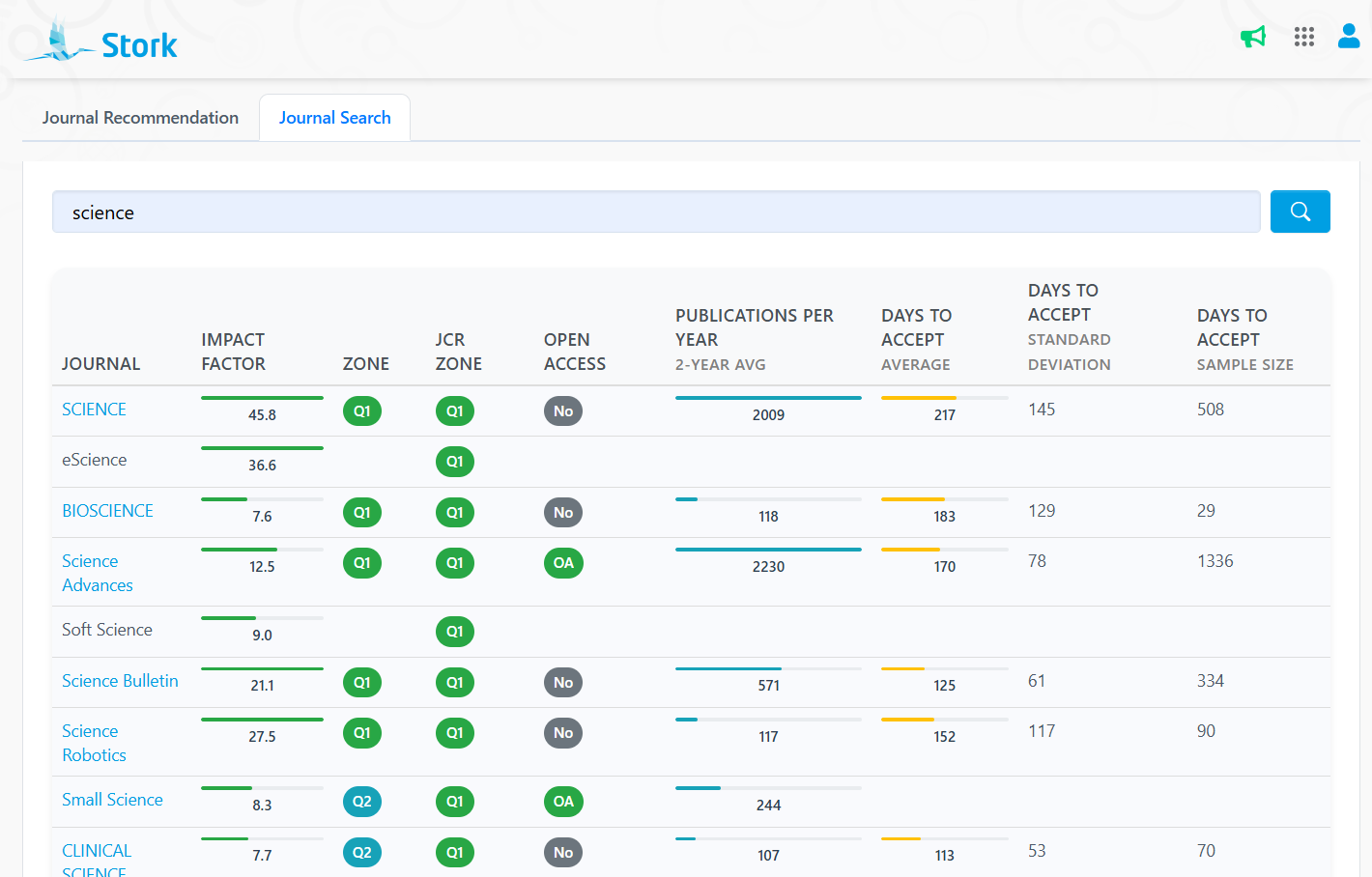
    2. Journal Search

    Even if you're not submitting right now, you can search for any journal by name to view its key metrics.


    Summary


    This feature is especially helpful for:

    • PhD students & early-career researchers who are new to the journal landscape

    • Cross-disciplinary author who aren't sure which journal fits best

    • Clinician-researchers with limited time for journal scouting

    • Anyone with specific ranking requirements      (e.g., for funding or promotion)

    • Those in a hurry to publish, who want to check average turnaround time

    Let Journal Finder take care of the journal hunt—so you can focus on writing great paper.

    How to use

    Journal Finder is an advanced feature offered by Stork (free trial is available). After registering/logging into Stork (https://www.storkapp.me), you can find Journal Finder under the "Advanced Feature" section. Then you can try it out or subscribe. Alternatively, you can visit Journal Finder website directly at https://www.storkapp.me/aijournal/.


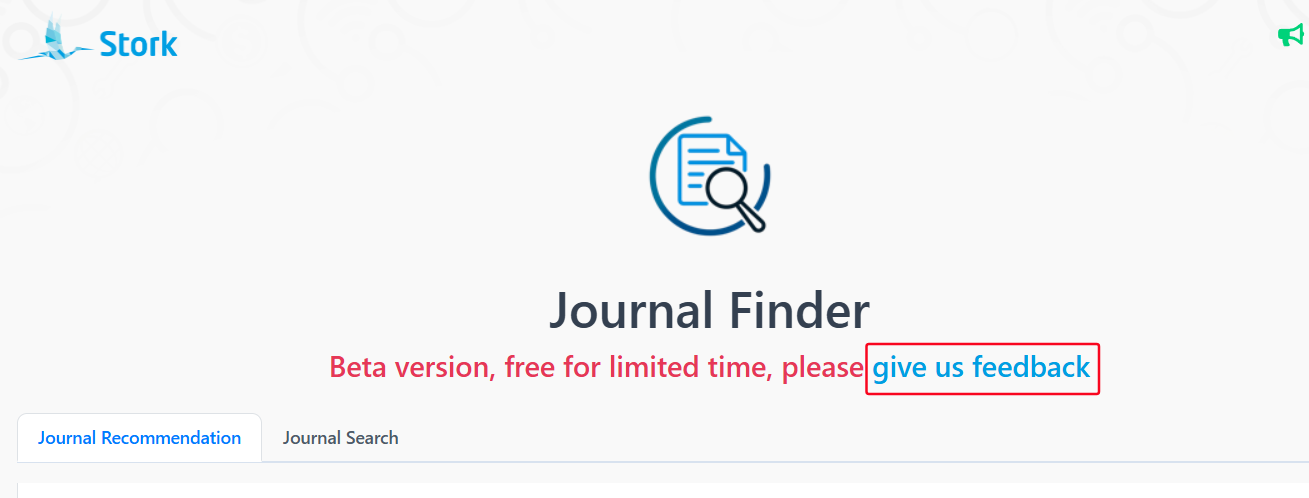
    We're still in beta and free to try, a we'd love your feedback!


  • Three in a row! Writing Assistant helped Guo’s team publish papers


     Info

    "The text in this paper was polished and significantly improved by Stork's Writing Assistant (https:// http://www.storkapp.me/writeassistant/)."


    Recently, Qianqian Guo and her team from The State Key Laboratory of Functions and Applications of Medicinal Plants & School of Pharmaceutical Sciences at Guizhou Medical University in China published three articles citing Writing Assistant of Stork. Details of the articles are as follows:


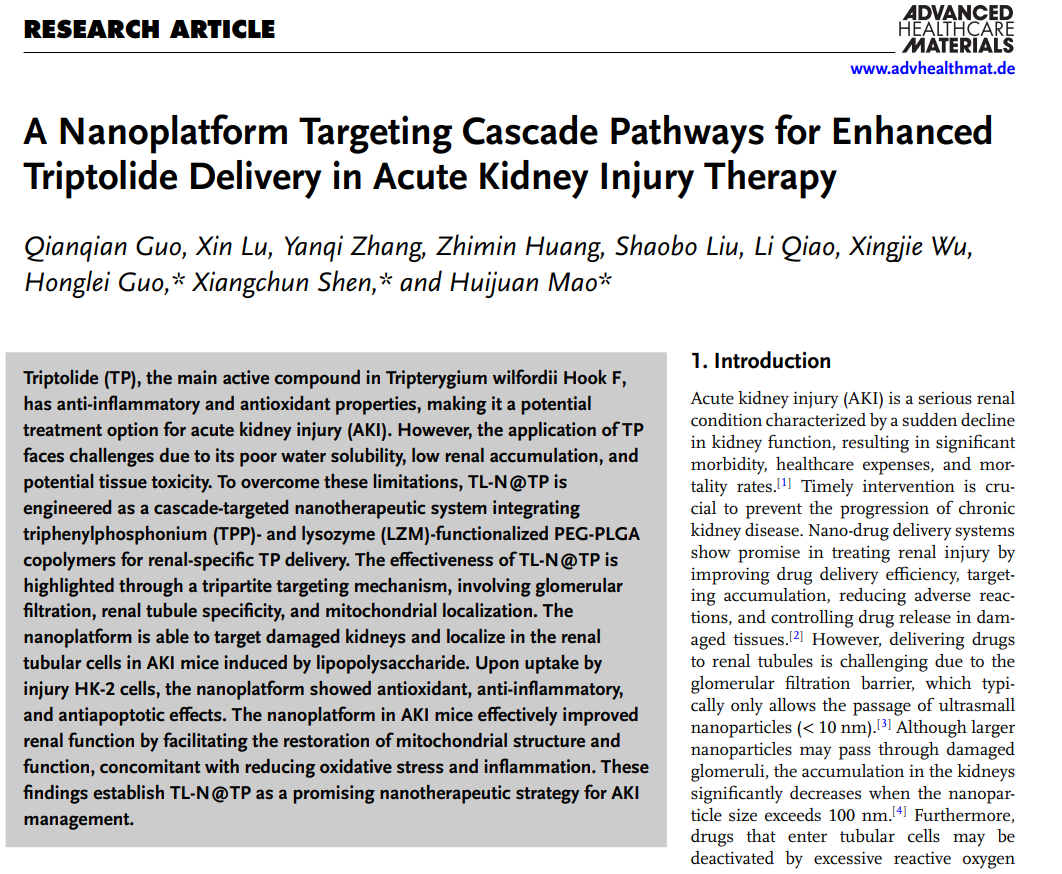
    Title: A Nanoplatform Targeting Cascade Pathways for Enhanced Triptolide Delivery in Acute Kidney Injury Therapy

    Journal: Advanced Healthcare Materials (IF = 9.6)

    Doi: https://doi.org/10.1002/adhm.202500595


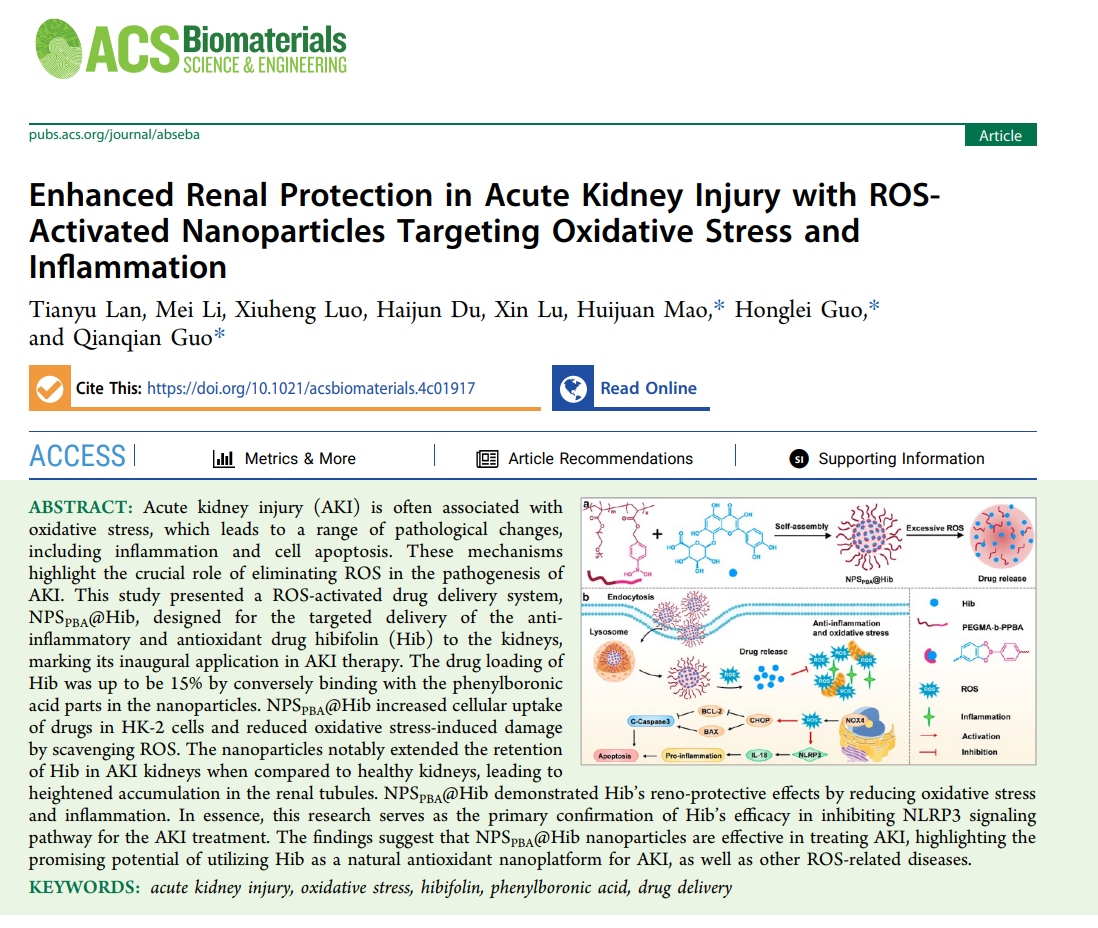
    Title: Enhanced Renal Protection in Acute Kidney Injury with ROS-Activated Nanoparticles Targeting Oxidative Stress and Inflammation

    Journal: ACS Applied Nano Materials (IF =5.5)

    Doi: https://doi.org/10.1021/acsbiomaterials.4c01917


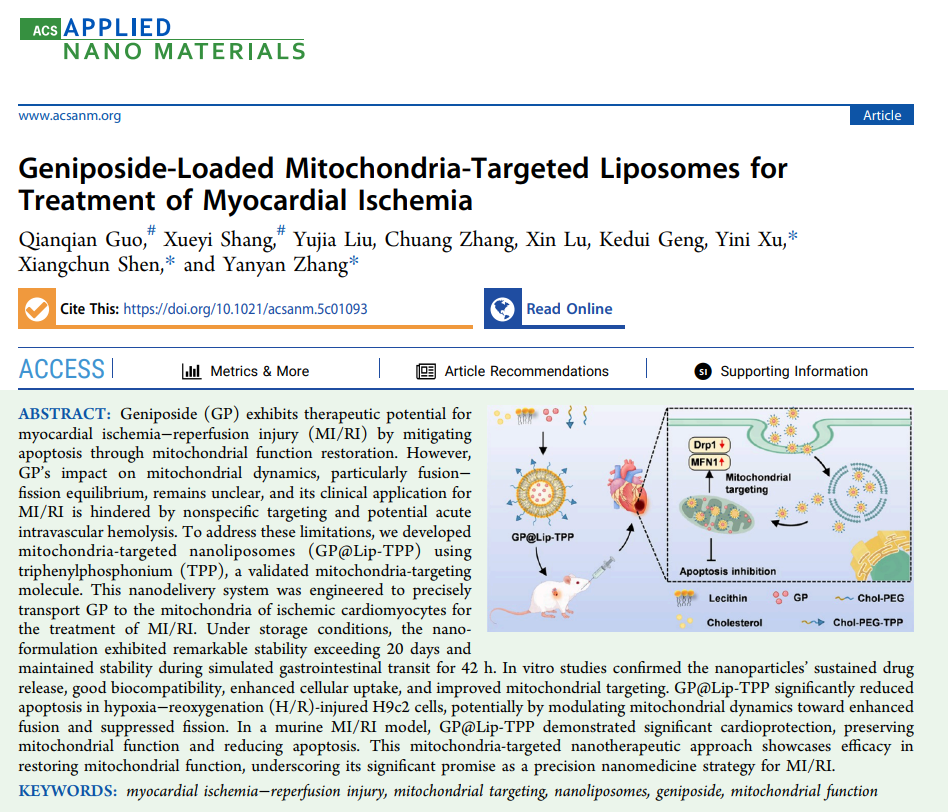
    Title: Geniposide-Loaded Mitochondria-Targeted Liposomes for Treatment of Myocardial Ischemia

    Journal: ACS Applied Nano Materials (IF = 5.5)

    Doi: https://doi.org/10.1021/acsanm.5c01093


    These articles cited Stork in the Acknowledgments section:


    "The text in this paper was polished and significantly improved by Stork's Writing Assistant (https:// http://www.storkapp.me/writeassistant/)."


    Stork's Writing Assistant can help you with text polishing, grammar correction, and paragraph expansion, while also offering a Word Add-in for a smoother writing experience.


     【User Reviews】

    Eric Li, Ph.D

    Stanford University

    "Writing Assistant is an excellent tool for scientists and researchers to improve the quality of their publication writing. I highly recommend Writing Assistant for those whose native language is not English or who lack writing skills and ideas."

    Juanjuan Du, Professor

    Tsinghua University

    "In the past, the task of writing was often time-consuming. Fortunately, Writing Assistants have made this process much simpler by providing multiple sentences with the same meaning. This has made writing much more efficient and enjoyable."

    Xiaoyan Zheng, Processor

    GWU

    "Writing Assistant is an exceptional platform for verifying spelling and grammar. It also provides users with a variety of suggestions to alter their tones or enhance their writing's clarity. Highly recommended!"
    Xiaomeng Pei, Associate Research Fellow

    Hong Kong Polytechnic University

    "When I first started writing papers, in order to make the sentences more accurate, I would revise a sentence back and forth many times but still not be completely satisfied. If you are also facing the same problem, try Writing Assistant. It will undoubtedly assist you in effortlessly and efficiently writing the most genuine and seamlessly fluent English papers!"


     【How to use】

    Writing Assistant is an advanced feature offered by Stork (free trial is available). After registering/logging into Stork (https://www.storkapp.me), you can find Writing Assistant under the "Advanced Feature" section. Then you can try it out or subscribe. Alternatively, you can visit Writing Assistant website directly at https://www.storkapp.me/writeassistant/


     Tips

    To date, nearly 50 scientific papers have cited Stork. If you cite Stork in your paper, please let us know at support@storkapp.me, and we'll offer you a discount based on the journal's impact factor when you subscribe to Writing Assistant or other advanced features.


  • Stork helped Cheng’s team publish in Environmental Research

     Info

    "We acknowledge Stork (https://www.storkapp.me) for their contributions to the literature analysis and linguistic editing."


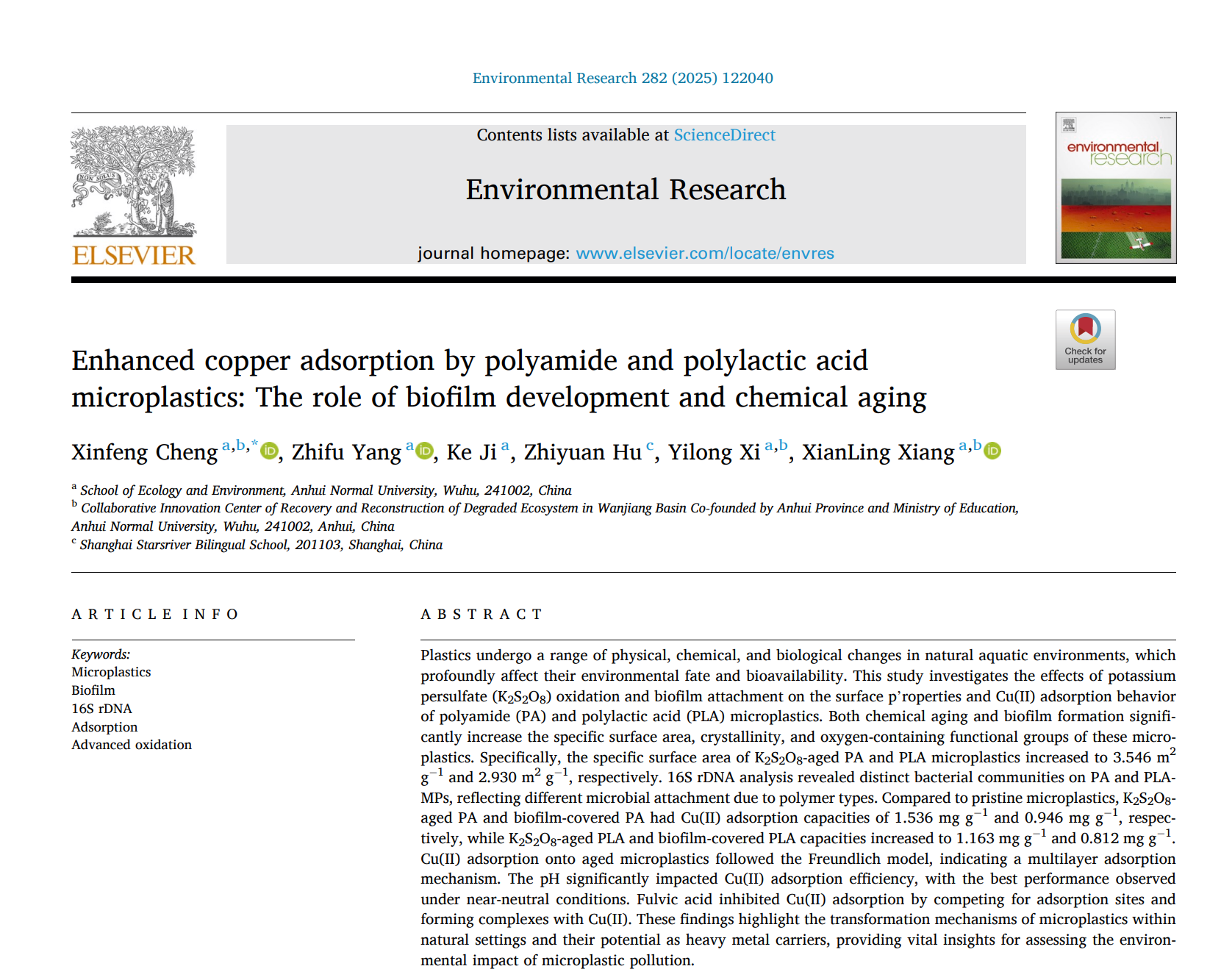
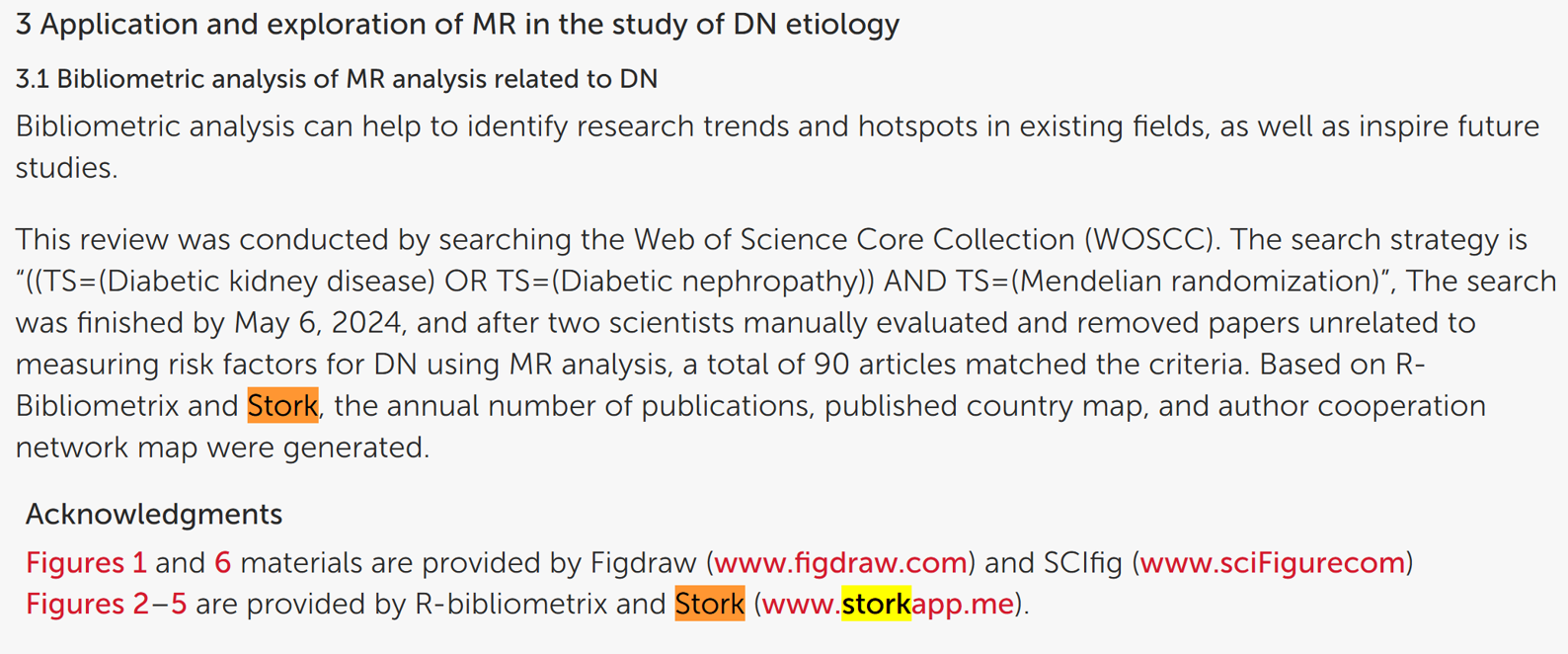
    Recently, Xinfeng and his team from School of Ecology and Environment, and Collaborative Innovation Center of Recovery and Reconstruction of Degraded Ecosystem in Wanjiang Basin Co-founded by Anhui Province and Ministry of Education at Anhui Normal University in China published a paper titled " Enhanced copper adsorption by polyamide and polylactic acid microplastics: The role of biofilm development and chemical aging" in the journal Environmental Research (IF = 7.7). The paper cited Writing AssistantBig Analysis, and Citation Network of Stork. You can access the paper here: https://doi.org/10.1016/j.envres.2025.122040


    This article acknowledged Stork in the Acknowledgment section:


    "We acknowledge Stork (https://www.storkapp.me) for their contributions to the literature analysis and linguistic editing."


    Stork's Writing Assistant can help you with text polishing, grammar correction, and paragraph expansion, while also offering a Word Add-in for a smoother writing experience.


    Big Analysis and Citation Network can support literature analysis:

    • Big Analysis allows a researcher to quickly understand all aspects of a field's progress in a matter of minutes, including growth trends, geographic distribution, experts (and their contact information), genes, diseases, brain regions, etc.

    • Citation Network allows researchers to quickly identify the classic/important papers in a field within a few minutes and do more research with less effort.


     【User Reviews】

    Eric Li, Ph.D

    Stanford University

    "Writing Assistant is an excellent tool for scientists and researchers to improve the quality of their publication writing. I highly recommend Writing Assistant for those whose native language is not English or who lack writing skills and ideas."

    Juanjuan Du, Professor

    Tsinghua University

    "In the past, the task of writing was often time-consuming. Fortunately, Writing Assistants have made this process much simpler by providing multiple sentences with the same meaning. This has made writing much more efficient and enjoyable."

    Joseph Baker
    Stanford University

    "Big Analysis is a fantastic tool for scientists in need of aggregating all aspects of research in their field. Personally, I've used Big Analysis to find papers to include in a systematic review for publication, to aggregate existing data for power analyses, and to finding the name and contact information for other researchers in my field. Together with Stork, Big Analysis is an indispensable tool for all research scientists."

    Xu Cui, Ph.D

    Stanford University

    "Citation Network allows me to quickly find classic literature in a field."


     【How to use】

    Writing Assistant, Big Analysis, and Citation Network are advanced features offered by Stork (free trial is available). After registering/logging into Stork (https://www.storkapp.me), you can find them under the "Advanced Feature" section. Then you can try it out or subscribe. Alternatively, you can visit Writing Assistant website directly at https://www.storkapp.me/writeassistant/, Big Analysis at  https://www.storkapp.me/meta/, and Citation Network at https://www.storkapp.me/citenet/.


     Tips

    To date,  50 scientific papers have cited Stork. If you cite Stork in your paper, please let us know at support@storkapp.me, and we'll offer you a discount based on the journal's impact factor when you subscribe to Writing Assistant or other advanced features.


  • AI Paper Update: Write full papers


    TL; DR

    Stork's AI Paper just got a major update: (a) Write a full paper in one go; (b) Accept file uploads (e.g. Word drafts, PowerPoint figures, and Excel results files); (c) More powerful AI with clearer logic, more concise language and better relevance.


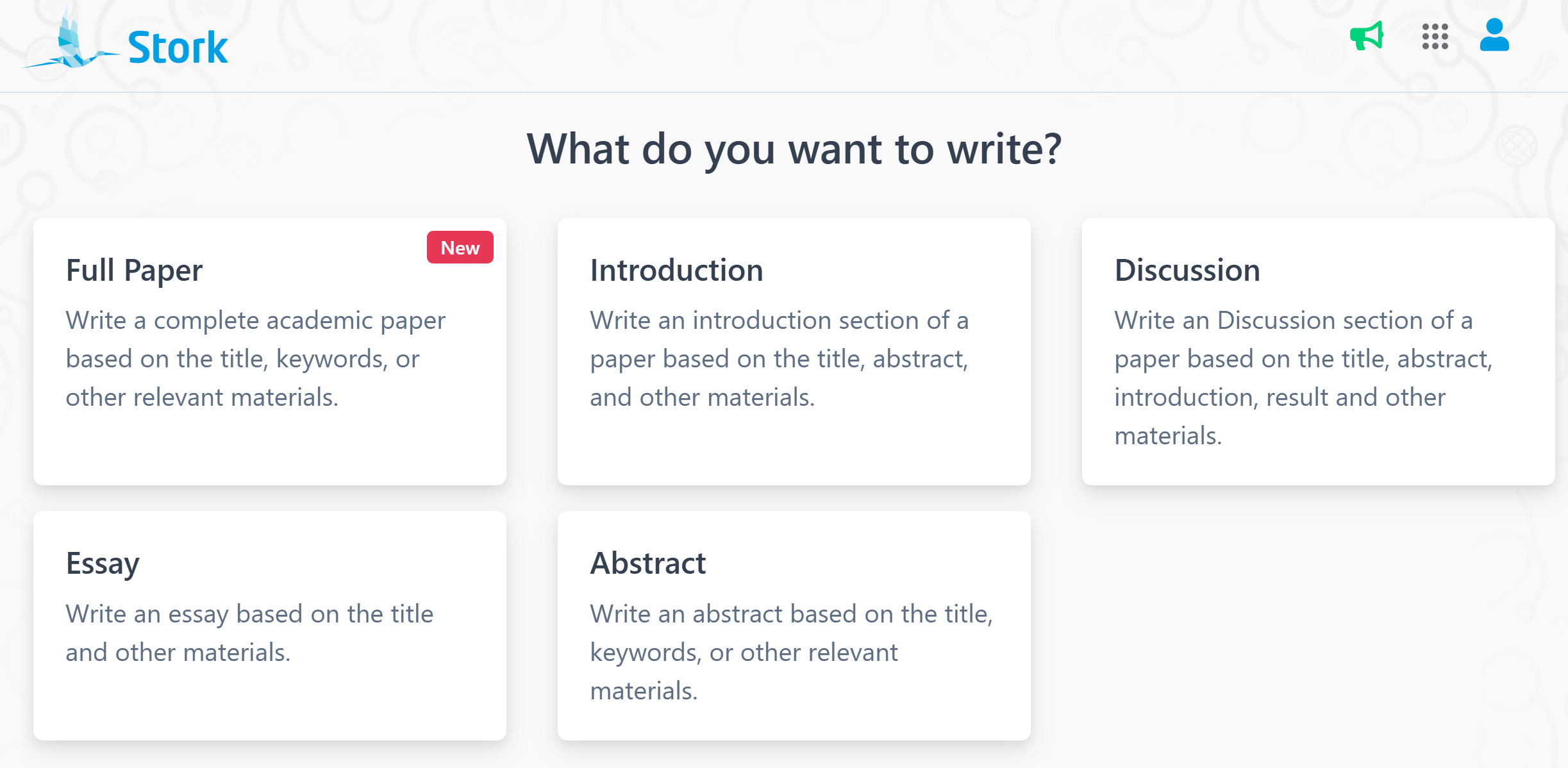
    Whether you need write an introduction, a discussion, an abstract or an essay, AI Paper helps generate high-quality content based on your title, keywords or other relevant materials.

    Taking things a step further, AI Paper now supports full-paper writing, file uploads, and a more powerful AI – with clearer logic, tighter language, and better relevance.


    Write Full Papers


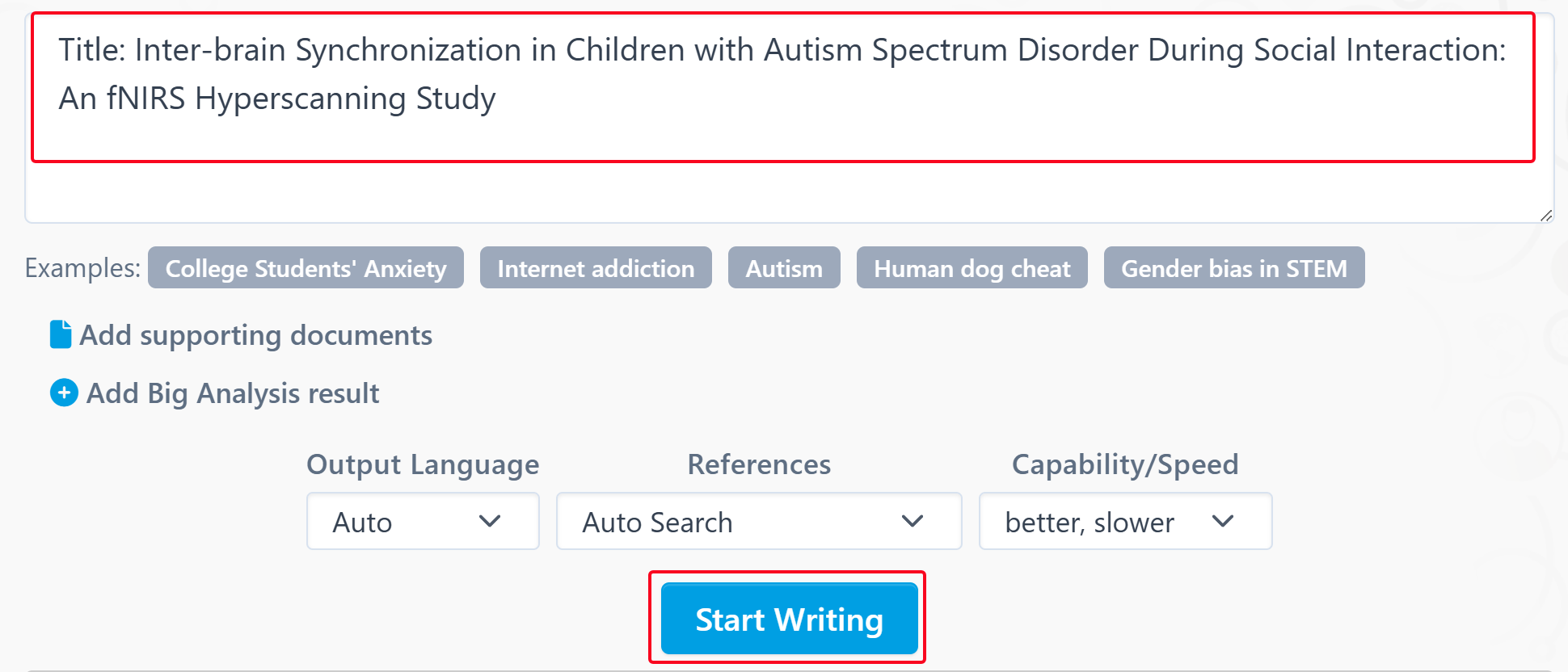
    Visit the AI Paper homepage at https://www.storkapp.me/aipaper/, click "Full Paper", enter your title and any supporting materials, and click “Start Writing.” AI Paper will search and read related literature, then generate a complete paper for you.


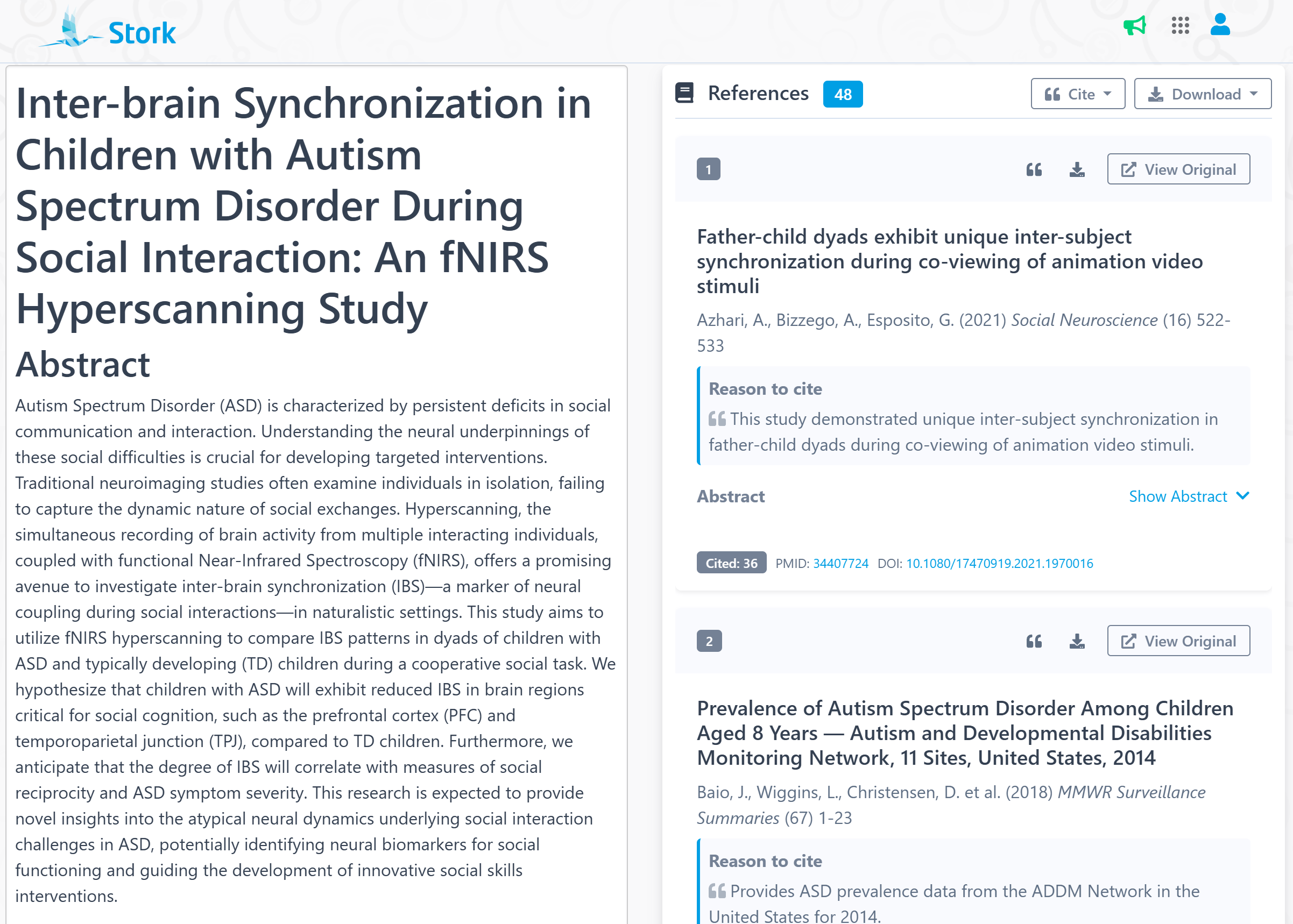
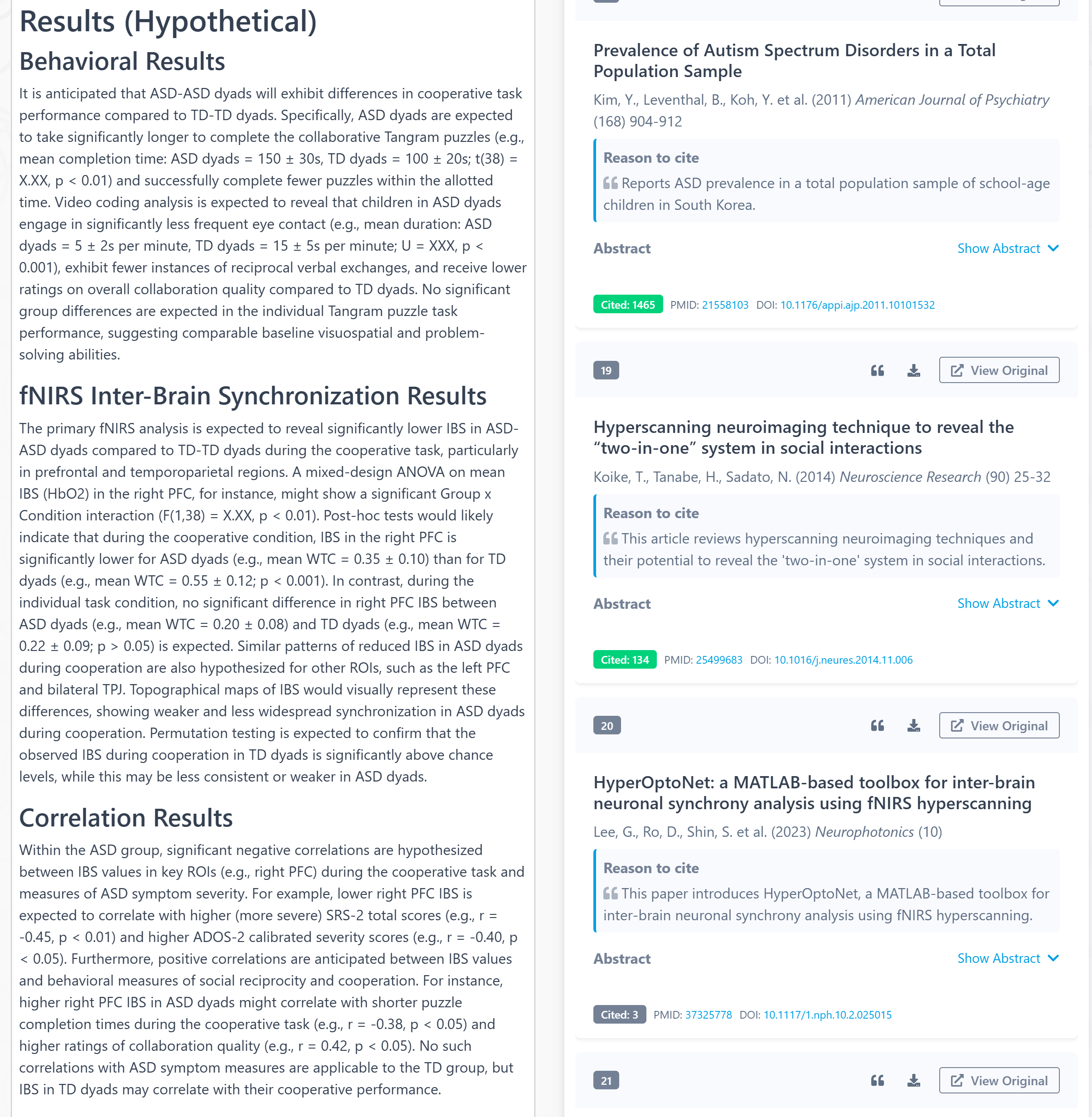
    The output includes: abstract, keywords, introduction, methods, results, figures and descriptions, discussion, conclusion, and a list of real, relevant references in right-hand panel. (Note: sample data is used in the results section.)

    Parts like methods and results are often the easiest to reference. For example, in the participant description, you can use the text generated by AI Paper as-is, simply replacing the numbers with those from your own study.


    For writing beginners, it's often unclear what details need to be included. Take the fNIRS Hyperscanning Acquisition part for example—AI Paper might generate something like:


    " The sampling rate for fNIRS data acquisition will be approximately 10 Hz. Anatomical landmarks (e.g., nasion, inion, preauricular points) and the 10-20 system will be used to ensure consistent cap placement across participants."


    If you’re new to scientific writing, you might not even realize you're supposed to report things like sampling frequency. It’s like having an experienced researcher whispering what to write.


    Similarly, if you're unfamiliar with how to report certain types of data analyses, AI Paper provides useful examples with proper structure.


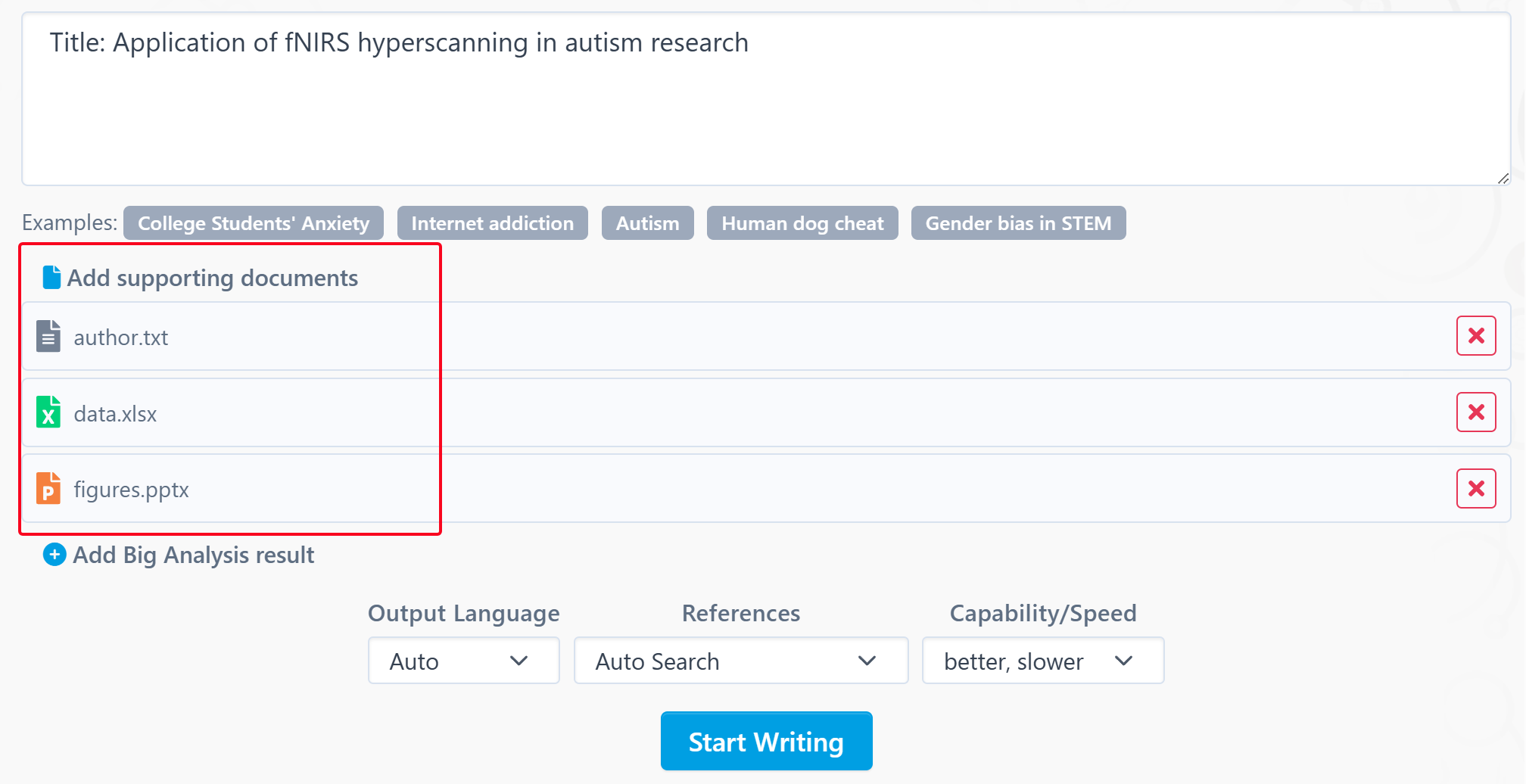
    Upload Supporting Files


    To help AI Paper better understand your study, you can now upload up to 5 supporting files. These can include Word drafts, figures from PowerPoint and data from Excel.


    AI Paper will read your files and use that information to generate more relevant, customized, and professional content—essentially acting like a research assistant who’s already read your notes.


    More powerful AI

    The language model behind AI Paper has been upgraded to one of the most powerful models in the world. Based on current testing, the new model delivers:

    📍 Clearer logic and better structure; 

    📍 More accurate and relevant references;

    📍 More concise language.

    Stork will continue to improve AI Paper to bring researchers the best writing experience possible.


    【How to Use】

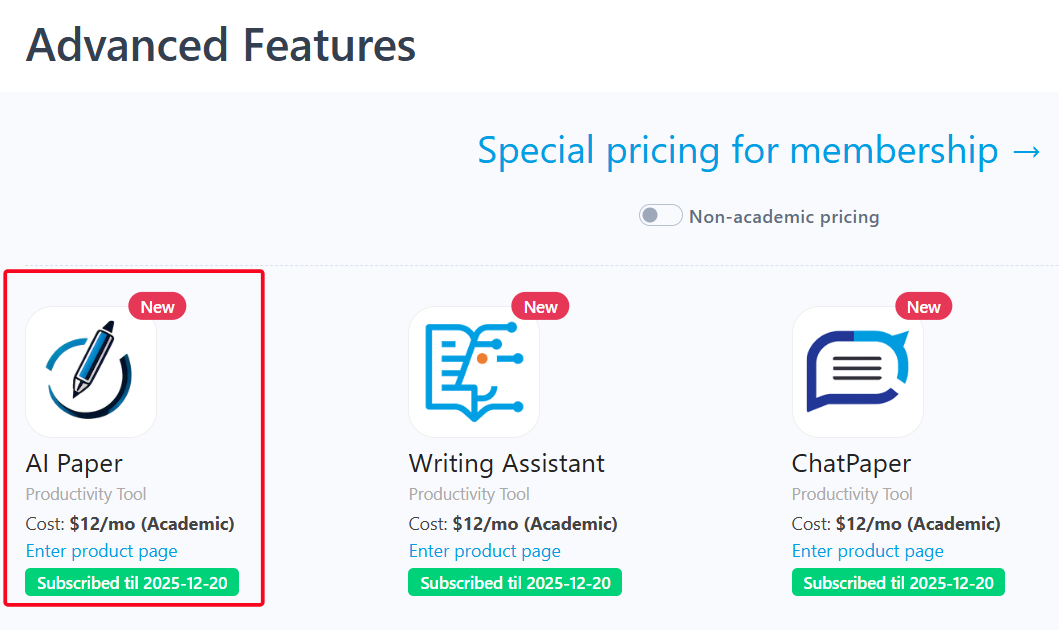
    AI Paper is an advanced feature offered by Stork, which requires subscription (registered users can try 10 articles for free). After registering/logging in to Stork (https://www.storkapp.me), you can find AI Paper under the advanced features section. Then you can try it out or subscribe. Alternatively, you can visit the official AI Paper website directly at https://www.storkapp.me/aipaper/


  • Writing Assistant helped Kou’s team publish in IJCHP


     Info

    "While peparing this work, the authors utilized Stork to check for language grammar errors and enhance readability."


    Juan Kou Associate Research Fellow

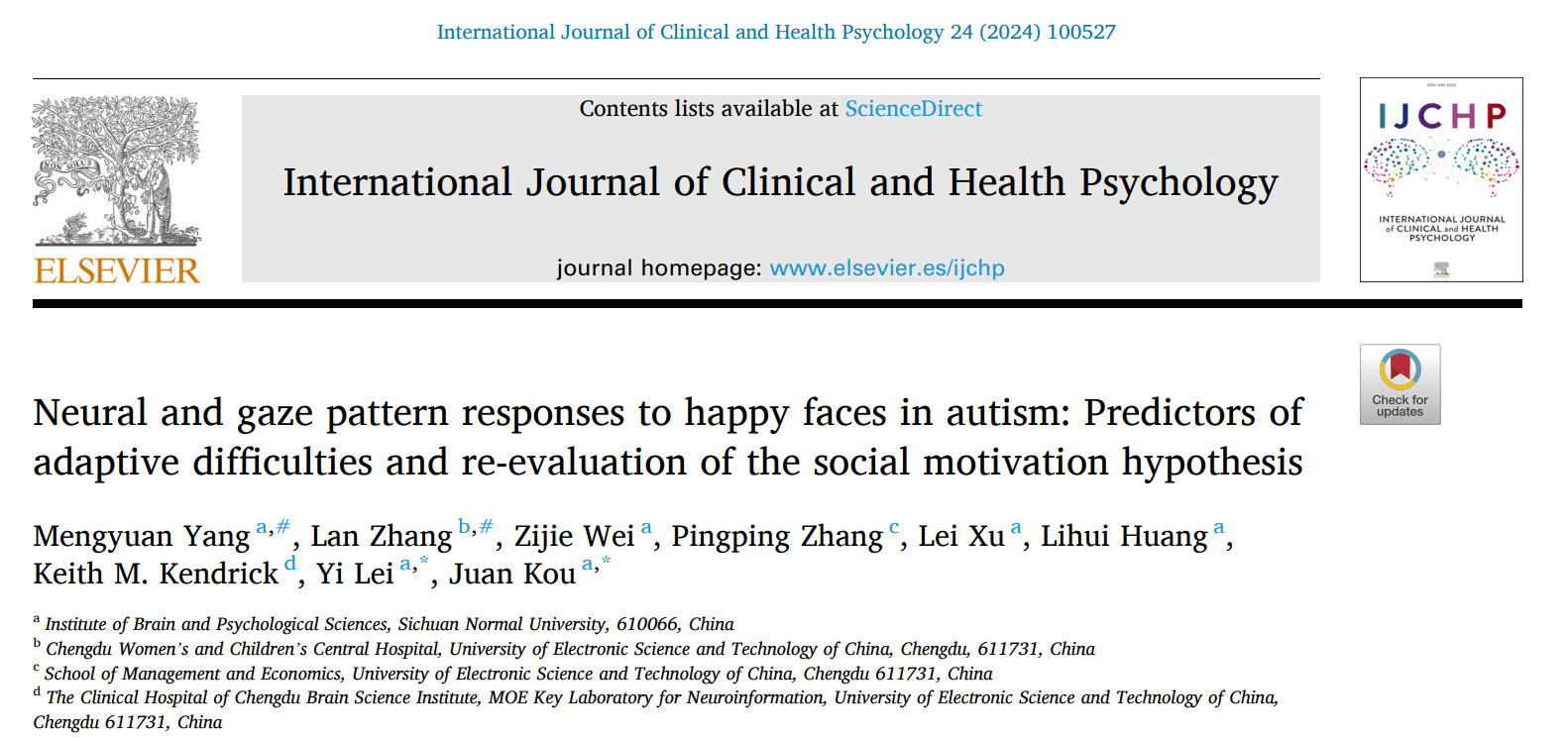
    Recently, Juan Kou and her team from the Institute of Brain and Psychological Sciences at Sichuan Normal University in China published a paper titled “Neural and gaze pattern responses to happy faces in autism: Predictors of adaptive difficulties and re-evaluation of the social motivation hypothesis” in the journal International Journal of Clinical and Health Psychology (IF = 5.3). The paper cited Writing Assistant of Stork. You can access the paper here: https://doi.org/10.1016/j.ijchp.2024.100527


    This article cited Stork in the Declaration section:


    “While preparing this work, the authors utilized Stork to check for language grammar errors and enhance readability.”


    Stork’s Writing Assistant can help you with text polishing, grammar correction, and paragraph expansion, while also offering a Word Add-in for a smoother writing experience.


    Note: According to a recent news feature published in Nature (https://www.nature.com/articles/d41586-025-01463-8), the use of AI tools with proper researcher disclosure is now accepted by the vast majority of academic journals.


     【User Reviews】

    Eric Li, Ph.D

    Stanford University

    “Writing Assistant is an excellent tool for scientists and researchers to improve the quality of their publication writing. I highly recommend Writing Assistant for those whose native language is not English or who lack writing skills and ideas.”

    Juanjuan Du, Professor

    Tsinghua University

    “In the past, the task of writing was often time-consuming. Fortunately, Writing Assistants have made this process much simpler by providing multiple sentences with the same meaning. This has made writing much more efficient and enjoyable.”

    Xiaoyan Zheng, Processor

    GWU

    “Writing Assistant is an exceptional platform for verifying spelling and grammar. It also provides users with a variety of suggestions to alter their tones or enhance their writing’s clarity. Highly recommended!”

    Xiaomeng Pei, Associate Research Fellow

    Hong Kong Polytechnic University

    “When I first started writing papers, in order to make the sentences more accurate, I would revise a sentence back and forth many times but still not be completely satisfied. If you are also facing the same problem, try Writing Assistant. It will undoubtedly assist you in effortlessly and efficiently writing the most genuine and seamlessly fluent English papers!”


     【How to use】

    Writing Assistant is an advanced feature offered by Stork (free trial is available). After registering/logging into Stork (https://www.storkapp.me), you can find Writing Assistant under the “Advanced Feature” section. Then you can try it out or subscribe. Alternatively, you can visit Writing Assistant website directly at https://www.storkapp.me/writeassistant/


     Tips

    To date, nearly 50 scientific papers have cited Stork. If you cite Stork in your paper, please let us know at support@storkapp.me, and we’ll offer you a discount based on the journal’s impact factor when you subscribe to Writing Assistant or other advanced features.


  • Nature Survey Reveals What 5,000 Researchers Really Think About AI Writing


    TL; DR

    A Nature survey of over 5,000 researchers shows that most people accept using AI tools for translation, proofreading, and even writing the first draft—if disclosed. But using AI for peer review is widely frowned upon. Transparency is key.


    AI writing tools are changing the way researchers work—faster drafts, better grammar, smoother translations. But some big questions remain:

    📍 How much AI is too much?

    📍 Is using AI in academic writing ethical?

    📍 Should authors always disclose their use of AI?


    A recent Nature news feature, titled "Is it OK for AI to write science papers? Nature survey shows researchers are split" (https://www.nature.com/articles/d41586-025-01463-8), provides valuable insights. Based on responses from more than 5,000 researchers across disciplines and career stages, the survey explored how AI is being used and what researchers think about it.


    Overwhelming support for editing and translation

    More than 90% of respondents said they were comfortable using generative AI to edit or translate their scientific writing. This includes improving grammar, clarity or structure, especially for those who are not native English speakers.


    "I don't think it's any different than asking a colleague who is a native English speaker to read and revise your text," one respondent noted.


    Two-thirds are OK with drafting—cautiously

    Roughly two-thirds of researchers said it was acceptable to use AI to help write manuscripts, such as generating first drafts or summarizing content.


    But the support was less enthusiastic than for translation and editing. Many researchers emphasized that AI should assist, not replace, the author’s thinking and expertise.


    One respondent put it bluntly: "You can use AI to help you write your paper, but not to think for you."


    Most researchers reject AI-written peer reviews

    When it comes to peer review, attitudes shift.

    More than 50% of respondents disapproved of using AI to write referee reports, citing concerns about confidentiality and scholarly responsibility.


    Should you disclose AI use?

    This was one of the most debated questions in the survey.

    While many felt that basic editing or translation didn't require disclosure, most agreed that using AI to generate content—such as paragraphs or entire drafts—should be disclosed.


    Journal policies vary widely:

    📍 Lenient: Journals like Springer Nature and IOP Publishing say that light editing doesn't require disclosure, as long as  the authors take responsibility.

    📍 Moderate: Wiley suggests that if AI is used to generate or rewrite text, authors should include a note in the manuscript.

    📍 Strict: The JAMA journals require authors to specify which AI tools were used, how they were used, and to take full responsibility for any AI-generated content.


    "It’s like disclosing a conflict of interest," said one journal editor. "It’s not that we mind if you use AI—we mind if you don’t tell us."


    Are Stork's AI Tools Still Safe to Use?

    Definitely—and wisely. Stork's AI tools are here to help researchers work more efficiently.

    📍For drafting with For Writing Assistant and Translation: They can be incredibly helpful—especially for researchers writing in a second language. In fact, over 40 published papers have used Writing Assistant.

    📍 For drafting with AI paper: It can be a great starting point. But you should personally review, verify, and revise the draft AI generates.

    📍 Before submission: Always check the journal's AI use policy. When in doubt, disclose AI involvement.


    The academic world is still figuring out how best to use AI in research. Surveys like Nature's are just the beginning.

    How do you use AI in your writing process? Please let us know.